
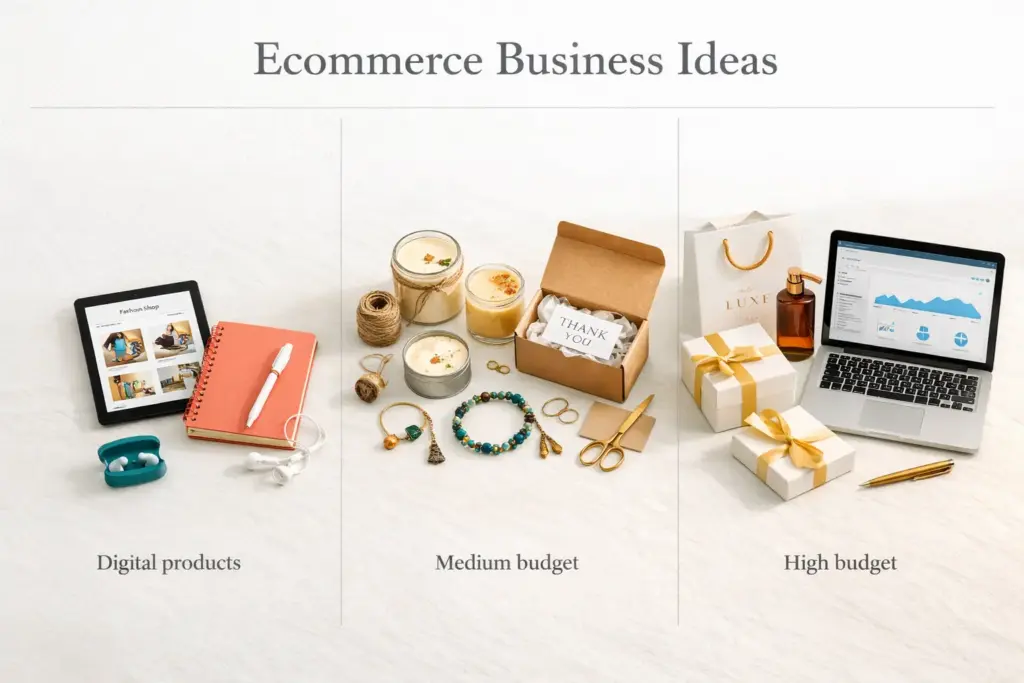
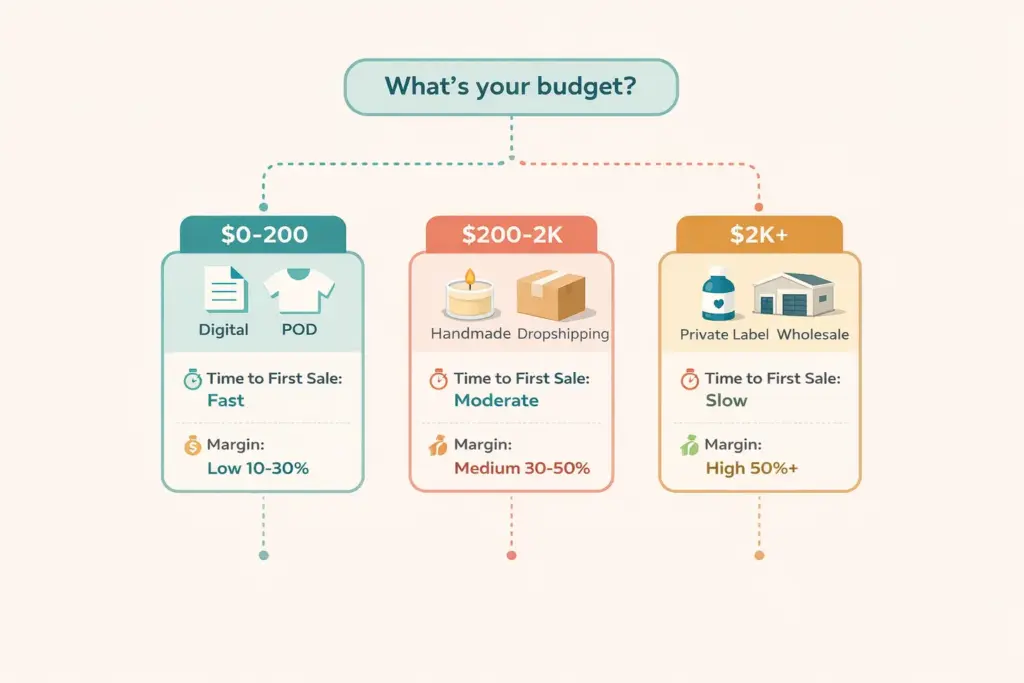
- The best ecommerce business ideas in 2026 match your budget, skills, and patience level. A $0-200 budget limits you to digital products, print on demand, and services. $500-2,000 opens up dropshipping and handmade goods. $2,000+ unlocks private label and wholesale.
- Global ecommerce sales are projected to exceed $7.4 trillion by 2026, and ecommerce businesses produce roughly 42.78% gross profit margins according to NYU Stern School of Business research.
- The ideas with the fastest path to first sale are freelance services (days), digital products (1-2 weeks), and print on demand (1-2 weeks). Private label products take the longest (2-6 months) but offer the highest long-term margins.
- Every idea on this list solves a real customer problem. If your business concept doesn't answer "what pain does this fix?" clearly, it's a hobby, not a business.
Ecommerce business ideas are concepts for online stores or digital businesses that sell products, services, or digital goods to customers through the internet, ranging from zero-inventory models like dropshipping and print on demand to brand-owned physical product lines and everything in between. The right idea for you depends less on what’s trending and more on what matches your budget, skills, and tolerance for complexity.
Global ecommerce sales are projected to exceed $7.4 trillion by 2026, and ecommerce businesses produce roughly 42.78% gross profit margins according to NYU Stern School of Business research. The opportunity is enormous. But picking the wrong idea for your situation, like launching a private label supplement brand on a $300 budget, is a fast way to burn money and motivation.
I’ve organized these ideas by startup budget because that’s the most honest starting point. Most lists throw 20 ideas at you without acknowledging that some require $50 and others require $5,000. If you’re starting an ecommerce business, knowing what you can afford to start narrows your options fast and prevents you from chasing ideas you can’t fund.
Quick Decision Matrix: All 25 Ecommerce Ideas Compared
Before the deep dives, here’s every idea at a glance. Find your budget row, scan for ideas that match your skills, and read the detailed section below for the ones that interest you.
| Idea | Startup Cost | Margins | Time to First Sale | Difficulty |
|---|---|---|---|---|
| Digital templates/printables | $0-50 | 80-95% | 1-2 weeks | Low |
| Freelance services store | $0-50 | 85-95% | Days | Low |
| Online courses | $0-200 | 80-95% | 2-4 weeks | Medium |
| Print on demand apparel | $0-200 | 20-40% | 1-2 weeks | Low |
| Print on demand home decor | $0-200 | 25-45% | 1-2 weeks | Low |
| Ebooks and guides | $0-100 | 85-95% | 2-4 weeks | Low |
| Affiliate content store | $50-200 | 5-30% commission | 2-3 months | Medium |
| Dropshipping (AliExpress) | $100-500 | 15-30% | 1-3 weeks | Medium |
| Dropshipping (US suppliers) | $200-500 | 20-35% | 1-2 weeks | Medium |
| Handmade candles/soap | $100-500 | 50-70% | 1-3 weeks | Low-Medium |
| Handmade jewelry | $100-500 | 60-80% | 1-2 weeks | Medium |
| Thrift/vintage reselling | $50-500 | 50-80% | Days | Low |
| Curated subscription box | $500-2,000 | 30-50% | 4-8 weeks | High |
| Personalized gifts store | $200-1,000 | 50-75% | 2-3 weeks | Medium |
| Niche pet products | $500-2,000 | 45-65% | 3-6 weeks | Medium |
| Specialty food/coffee | $500-3,000 | 50-70% | 4-8 weeks | Medium-High |
| Eco-friendly products | $500-2,000 | 40-65% | 3-6 weeks | Medium |
| Private label beauty | $2,000-10,000 | 60-80% | 2-4 months | High |
| Private label supplements | $2,000-10,000 | 60-80% | 2-4 months | High |
| White label tech accessories | $1,000-5,000 | 40-60% | 4-8 weeks | Medium |
| Wholesale reselling | $1,000-5,000 | 25-50% | 2-4 weeks | Medium |
| SaaS or digital tools | $2,000-20,000 | 70-90% | 3-6 months | Very High |
| Refurbished electronics | $1,000-5,000 | 30-50% | 1-2 weeks | Medium |
| B2B industrial products | $2,000-10,000 | 30-50% | 1-3 months | High |
| Marketplace platform | $5,000-50,000 | 10-25% per transaction | 3-6 months | Very High |
Ecommerce Business Ideas Under $200
These are the best ecommerce ideas for people starting with almost nothing. Every option below can generate real revenue without inventory, warehouse space, or significant upfront investment.
1. Digital Templates and Printables
Budget spreadsheets, Notion dashboards, social media content calendars, printable planners, and resume templates sell consistently on Etsy and Gumroad. You create the product once and sell it infinitely with zero marginal cost per sale. A well-designed Notion template pack priced at $19-49 can generate thousands per month once it gains traction.
Why it works: People pay to save time. A $15 budget template that saves someone three hours of spreadsheet building is a bargain for the buyer and pure profit for you.
2. Freelance Services Storefront
Packaging your skills (writing, design, development, consulting) as fixed-price service packages and selling them through your own site gives you more control and higher margins than freelance marketplaces. A “Logo Design Package” at $500 beats selling the same work for $200 on Fiverr after their 20% cut.
3. Online Courses
The global online learning market exceeds $200 billion. If you can teach anything, fitness, cooking, coding, photography, marketing, courses are the most scalable ecommerce idea available. Platforms like Teachable and Thinkific handle hosting and payments. You focus on content. A $97-297 course needs far fewer customers than a $15 product to generate meaningful income.
4. Print on Demand Apparel and Home Decor
Print on demand lets you sell custom t-shirts, mugs, posters, phone cases, and home decor without inventory. You design, a production partner prints and ships. Margins are thinner (20-40%) but the startup cost is essentially zero. The sellers making real money target micro-niches: specific dog breeds, profession humor, local pride, fandom crossovers.
5. Ebooks and Digital Guides
Digital products like ebooks, recipe collections, fitness guides, and niche how-to content cost nothing but time to create. One food blogger turned viral keto recipe videos into a cookbook generating ongoing passive revenue. The key is specificity. “A guide to cooking” won’t sell. “30 Weeknight Keto Dinners Under 20 Minutes” will.
6. Affiliate Content Store
Build a niche content site reviewing products, create comparison guides, and earn commissions when readers buy through your links. Startup cost is just hosting and a domain. Revenue takes 2-3 months to materialize because you need search traffic, but once built, it generates income with minimal maintenance. The best affiliate sites combine genuine expertise with honest product reviews.
Ecommerce Business Ideas: $200 to $2,000
With a few hundred dollars, you can move beyond purely digital models into physical products. These ecommerce ideas require some upfront investment but offer higher margins and stronger brand potential.
7. Dropshipping Store
Dropshipping lets you sell physical products without holding inventory. Your supplier ships directly to the customer. Budget goes toward your Shopify subscription ($39/month), a dropshipping app, and initial ad testing ($200-500). The model works best for lightweight accessories, gadgets, and home goods where shipping costs don’t eat your margins.
8. Handmade Candles, Soap, and Bath Products
Soy candles cost $3-5 to make and sell for $18-35. Handmade soap runs about $3 per bar and retails for $5-10. Handmade products command premium prices because buyers pay for uniqueness and craft. The bundling opportunity is huge: gift sets push average orders from $12 to $35+ with minimal extra effort.
9. Handmade Jewelry
Material costs of $1-5 per piece, selling prices of $15-60+, and a product that fits in an envelope for cheap shipping. Personalized jewelry (name necklaces, birthstone pieces, engraved items) commands the highest prices because mass-market sellers can’t replicate them.
10. Thrift and Vintage Reselling
Reselling vintage clothing, retro electronics, and brand-name goods from thrift stores, estate sales, and garage sales for 3-10x what you paid. eBay, Poshmark, and Mercari are the primary platforms. The skill is knowing what’s valuable before you buy it.
11. Personalized and Custom Gifts
Engraved cutting boards, custom portraits, monogrammed leather goods, and personalized ornaments. A Cricut machine ($200-400) or laser engraver ($300-500) pays for itself quickly when you’re adding $10-20 in perceived value per item. Gifting events (Valentine’s Day, Mother’s Day, weddings, Christmas) drive seasonal revenue spikes with near-zero return rates.
12. Eco-Friendly Product Store
Consumers are willing to spend an average of 9.7% more for sustainably sourced products according to PwC research. Reusable kitchen products, biodegradable packaging alternatives, zero-waste bathroom essentials, and sustainable fashion basics all fit this space. A “Zero-Waste Starter Kit” bundled at $45-65 that costs $15-20 to assemble delivers strong margins with a compelling brand story.
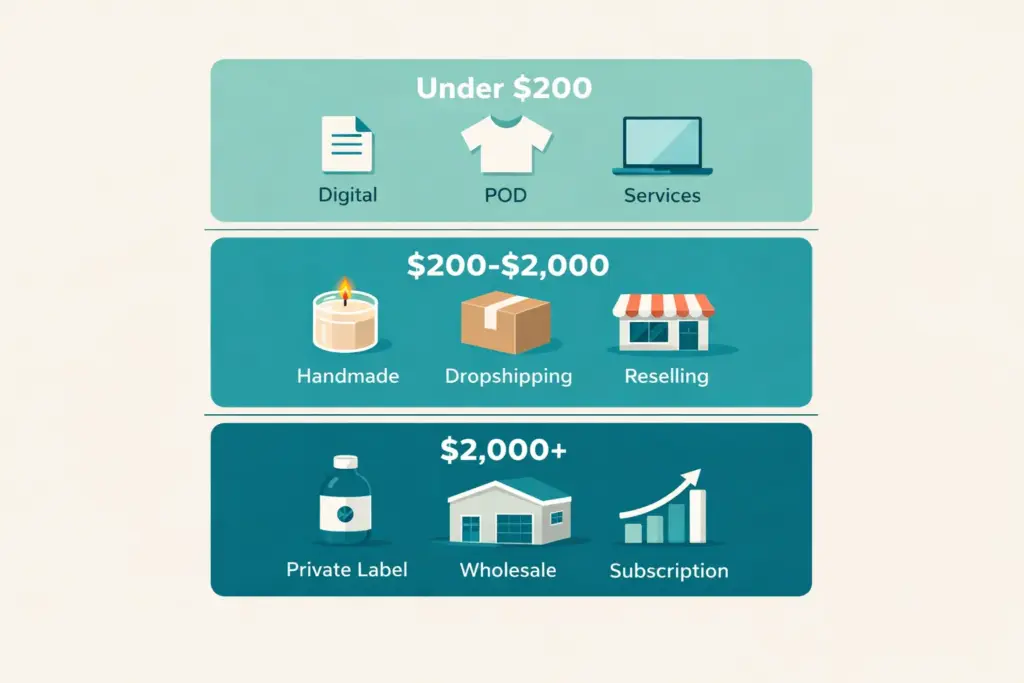
Ecommerce Business Ideas: $2,000 and Up
With more capital, you can build brand-owned product lines with higher margins and stronger competitive moats. These successful online business ideas require patience, but they build real equity.
13. Private Label Beauty and Skincare
The clean beauty market continues its upward trajectory, with 68% of consumers actively seeking products made with clean ingredients. Private label lets you define the product formulation, packaging, and branding while a contract manufacturer handles production. Margins run 60-80%, but the upfront investment in formulation, packaging design, and initial inventory is significant. Start narrow: one hero product for a specific skin concern rather than a full product line.
14. Private Label Supplements
Health and wellness supplements deliver 60-80% margins when you go private label. The catch: FDA compliance, third-party testing, and transparent ingredient sourcing are non-negotiable. Consumers don’t buy random supplements from unknown brands without trust signals. The sellers winning here invest in education-first content and third-party certifications before spending on ads.
15. Curated Subscription Box
Monthly subscription boxes build predictable recurring revenue that compounds over time. The key is genuine curation value. “Monthly Japanese snacks” beats “random snack box” because specificity attracts a passionate audience. Startup costs include sourcing the first 3-6 months of inventory, packaging design, and a subscription management platform. Margins improve as subscriber count grows and you negotiate better supplier pricing.
16. Specialty Coffee and Tea
Single-origin, small-batch, and direct-trade coffee commands 3-5x markups over grocery store brands. The repeat purchase rate is built-in (coffee drinkers buy monthly, minimum). Subscription models make revenue predictable. The ecommerce niches guide covers why consumables with brand loyalty potential are among the most profitable long-term plays.
17. Niche Pet Products
Pet owners spend freely and don’t cut their pet’s budget during economic downturns. Premium pet treats, supplements, grooming tools, and accessories generate strong margins with high repeat purchase rates. The opportunity is in niching down: “organic treats for senior dogs with joint issues” is far more defensible than “dog treats.”
18. White Label Tech Accessories
White label means buying existing products and adding your branding. Phone cases, laptop stands, cable organizers, and charging accessories offer decent margins when you differentiate through design, packaging, or bundling. New device launches create instant demand spikes you can ride with fast inventory turns.
19. Wholesale Reselling
Buying products at wholesale prices and reselling at retail markup. The product range is nearly unlimited. Success depends on finding products with strong demand, manageable competition, and enough margin room after platform fees and shipping. Amazon FBA makes the logistics side straightforward once you understand the fee structure.
20-25: Advanced Ecommerce Ideas
SaaS or digital tools. Building software tools for specific audiences (Shopify apps, niche calculators, industry-specific platforms). Highest margins (70-90%) but requires development expertise or budget.
Refurbished electronics. Buying used tech, restoring it, and reselling at a discount to new. Budget-conscious buyers get premium products cheaper, you get 30-50% margins. Requires technical knowledge and quality control processes.
B2B industrial products. Selling specialized products to businesses. Higher order values, longer sales cycles, and less price sensitivity than consumer markets. Requires industry knowledge and relationships.
Marketplace platform. Building a platform where other sellers list their products (like a niche Etsy). Highest startup cost and complexity, but the commission-based model scales enormously if you achieve critical mass.
Niche food and beverage. Specialty sauces, artisan snacks, functional beverages. Requires compliance with food safety regulations and often a commercial kitchen, but the repeat purchase economics are excellent.
How to Pick the Right Ecommerce Business Idea
Reading a list of 25 ideas can feel more overwhelming than helpful. Here’s the framework I use to narrow things down:
What can you afford? Your startup budget eliminates most options immediately. Under $200? Focus on ideas 1-6. Under $2,000? Ideas 7-12 open up. Over $2,000? The full list is available.
What do you already know? A photographer selling Lightroom presets has an unfair advantage. A fitness trainer selling workout programs does too. Start where your existing skills create credibility.
How fast do you need revenue? Services and digital products generate income in days to weeks. Physical products take weeks to months. Private label can take 2-6 months from concept to first sale.
How much time can you invest? Side hustle ideas (POD, digital products, dropshipping) can run on 10-15 hours per week. Handmade products and private label brands need 20-40+ hours per week to build properly.
Choose where to sell: your own store on a dedicated ecommerce platform, marketplaces like Etsy and Amazon, or both. According to Statista’s ecommerce data, the number of digital buyers is expected to reach four billion by 2030, so the audience keeps growing regardless of which channel you choose.
Does it solve a real problem? Every successful online business idea answers a customer pain point. “I can’t find clean skincare for rosacea.” “I need a budget template that actually works.” “I want specialty coffee delivered monthly without thinking about it.” If you can’t articulate the problem your idea solves, keep looking.
Ecommerce Business Ideas to Avoid in 2026
Generic commodity stores. Selling the same USB cables and phone chargers available on Amazon for less. You can’t win on price against Amazon’s logistics. Compete on uniqueness, brand story, or curation instead.
Fad-chasing stores. Building an entire business around a TikTok viral product. By the time you source it, the trend is often already declining. Build on evergreen demand and occasionally add trending products to an established catalog.
Broad general stores. “We sell everything!” stores confuse customers and dilute your marketing efforts. Niche stores consistently outperform general ones because they attract a specific audience willing to pay more from a brand that understands them.
Regulated products without compliance homework. Supplements, cosmetics, CBD, food, and children’s products all carry regulatory requirements. Selling without proper certifications risks fines, lawsuits, and platform bans. Check our legal setup guide before entering regulated categories.
Frequently Asked Questions
What are the most profitable ecommerce business ideas?
Digital products (templates, courses, ebooks) deliver the highest margins at 80-95%. For physical products, private label beauty and supplements hit 60-80% margins. Print on demand and dropshipping offer lower margins (15-40%) but require almost zero upfront investment. The most profitable idea for you depends on your budget and skills, not just raw margin percentages.
What ecommerce business ideas work with no money?
Digital templates, printables, ebooks, freelance service storefronts, and print on demand all work with under $50 in startup costs. You invest time instead of money. Print on demand is the best zero-budget option for physical products because you pay nothing until a customer orders.
What are the best ecommerce business ideas for beginners?
Print on demand, digital products, and dropshipping have the lowest learning curves. Print on demand is the easiest because you only need design skills and a Shopify store. Digital products work best if you have teachable expertise. Dropshipping is the most accessible way to sell physical products without inventory risk.
How much does it cost to start an ecommerce business idea?
It ranges from $0 (digital products on free platforms) to $50,000+ (marketplace platforms or private label brands). Most beginners can launch a functional store for $200-1,000 covering a platform subscription, domain, basic branding, and initial marketing. Our startup costs guide breaks down every expense by business model.
What ecommerce business ideas have the fastest time to first sale?
Freelance services (days), thrift reselling (days), digital products (1-2 weeks), and print on demand (1-2 weeks) offer the fastest path to revenue. Dropshipping takes 1-3 weeks including store setup and ad testing. Private label products take 2-6 months from concept through manufacturing to first customer sale.
Are ecommerce business ideas still profitable in 2026?
Yes. Global ecommerce sales are projected to exceed $7.4 trillion, and ecommerce businesses average 42.78% gross margins according to NYU Stern data. The difference in 2026 is that success requires niche focus, strong branding, and genuine value rather than generic stores competing purely on price. The opportunity is bigger than ever for sellers who pick a specific audience and serve them deeply.
Related Reads
- What to Sell Online: Product Ideas by Business Model
- Trending Products to Sell in 2026
- Most Profitable Ecommerce Niches
- Digital Products to Sell Online
- How to Start an Ecommerce Business
- Ecommerce Startup Costs Breakdown
Enjoying this? Get more like it every week.
One email per week with ecommerce strategies, tool picks, and seller insights. No spam.