
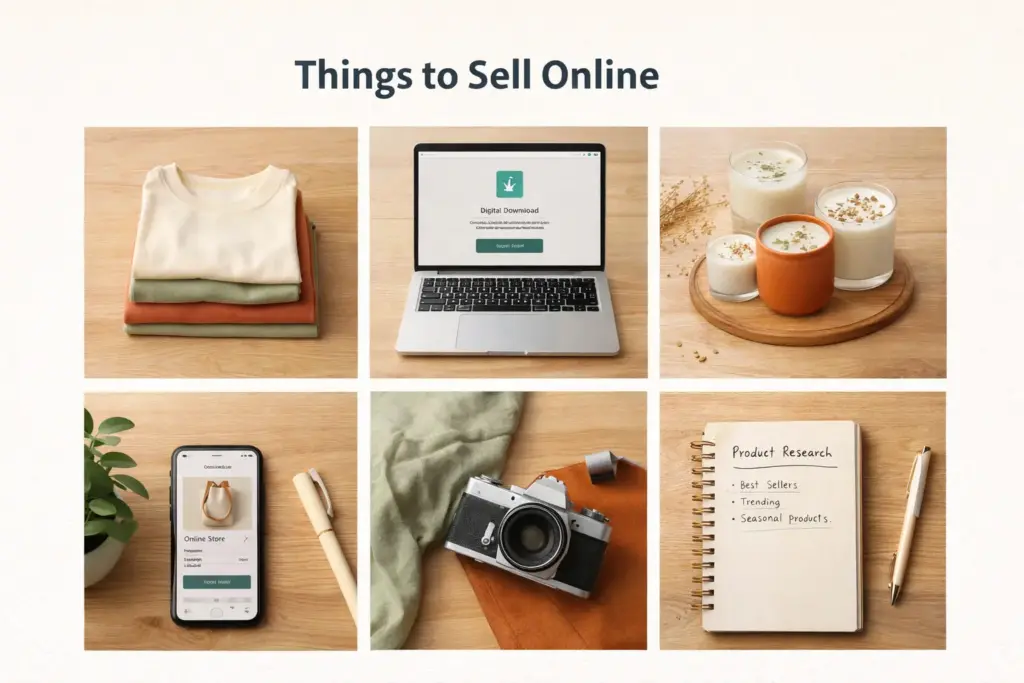
- The best things to sell online depend on your business model, not just trending product lists. Physical goods, digital products, handmade items, and services each have different margin profiles and startup requirements.
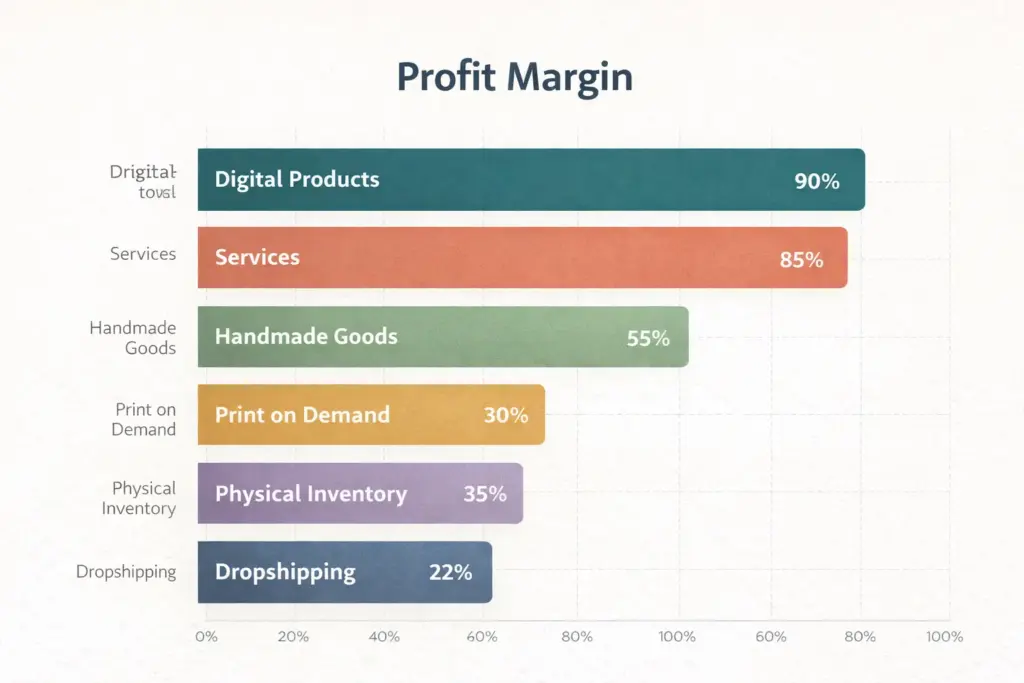
- Digital products carry 70-95% margins with zero inventory, while physical product margins typically fall between 20-50% depending on sourcing method.
- Use Google Trends, Amazon Best Sellers, and marketplace sold-listing data to validate demand before investing in any product.
- Starting with products you can source or create for under $200 total investment reduces risk while you learn what your specific audience actually buys.
Finding things to sell online is a process that involves equal parts research and self-awareness. Most “what to sell” articles hand you a list of 20 trending products and call it a day. That’s not useful if you don’t know whether you want to hold inventory, ship boxes from your garage, or sell files that download automatically at 3 a.m.
The products that make money for one seller can drain another seller’s bank account. A handmade candle business and a digital template shop have almost nothing in common besides an internet connection. So instead of dumping 50 random items into a list, I’ve organized every idea below by ecommerce business model. Pick the model that fits your budget, skills, and patience level first. Then find your product within it.
Global retail ecommerce is projected to reach roughly $6.88 trillion in 2026, according to eMarketer. That number keeps climbing because more people buy online every year and more sellers enter the market. The opportunity is real, but so is the competition. The gap between sellers who pick profitable products and those who guess? It usually comes down to research methods, which I’ll cover after the product ideas.
How to Use This Guide
Skip straight to the business model that matches your situation. Each section lists specific products with estimated margins, startup costs, and honest drawbacks. At the end, you’ll find a step-by-step product research process you can use to validate any idea before spending money.
| Business Model | Startup Cost | Typical Margins | Best For |
|---|---|---|---|
| Physical products (own inventory) | $500-$5,000+ | 25-50% | Sellers who want brand control |
| Dropshipping | $100-$500 | 15-30% | Beginners testing product-market fit |
| Print on demand | $0-$200 | 20-40% | Designers and creative sellers |
| Digital products | $0-$100 | 70-95% | Experts, creators, educators |
| Handmade and crafted | $100-$1,000 | 40-70% | Artisans and hobbyists |
| Services sold online | $0-$50 | 80-95% | Freelancers and consultants |
| Reselling and flipping | $50-$500 | 30-60% | Bargain hunters with an eye for value |
Physical Products to Sell Online (Own Inventory)
Holding your own inventory gives you the most control over quality, branding, and shipping speed. It also ties up cash and requires storage space. These are popular items to sell online in 2026 if you’re willing to invest upfront.
Health and Wellness Products
The global health and wellness market is projected to reach $11 trillion by 2034, according to Precedence Research. Within that massive space, a few subcategories stand out for online sellers.
Supplements and functional foods. Mushroom supplements, collagen powders, and adaptogenic blends continue growing in search volume. Margins run 40-60% for private label products, but you’ll need to work with a certified manufacturer and understand FDA labeling rules. Don’t skip that part.
Matcha and specialty teas. Matcha has moved from trend to staple. Google Trends shows sustained upward interest over the past three years, not a temporary spike. Tea is lightweight, shelf-stable, and has repeat-purchase built in. Margins typically sit around 50-65% for private label brands.
Skincare with active ingredients. Niacinamide body lotions, retinol serums, and tallow-based moisturizers are seeing sharp search growth. GoDaddy’s 2026 trending product data showed niacinamide body lotion with over 2,100% year-over-year search growth. The catch: skincare has strict regulations and high customer expectations. Your packaging and formulation need to be professional from day one.
Tech Accessories
Phone cases, screen protectors, chargers, and laptop stands are among the best things to sell online because they combine low unit costs with massive demand. The global mobile accessories market is expected to exceed $111 billion by 2026. A few specifics worth considering:
- Wireless charging pads and multi-device docks (repeat buyers upgrade with each new phone)
- Ergonomic laptop stands for remote workers (steady demand, not seasonal)
- Bluetooth earbuds and headphone accessories (carrying cases, replacement tips, stands)
- MagSafe-compatible accessories for Apple users (high willingness to pay for ecosystem products)
The downside? Tech accessories face brutal price competition on Amazon. You need strong branding or a unique angle (eco-friendly materials, niche designs, bundles) to stand out from the ocean of generic listings.
Pet Products
Pet owners spend freely. Custom collars, organic treats, interactive toys, and grooming tools all sell consistently. The pet industry doesn’t follow typical economic cycles the way luxury goods do. People cut their own budgets before they cut their pet’s.
Grooming gloves are an interesting niche because no dominant brand owns the space yet. The entry point is low, and the product photographs well for social media marketing. If you pair it with ecommerce marketing strategies targeting pet influencers, you can build traction without a huge ad budget.
Home and Kitchen
Reusable drinkware, custom cutting boards, and organizational products continue performing well. Stainless steel drinkware saw a 90% jump in search interest last year, according to Google Trends data. Drinkware sets are also trending, particularly for gifting seasons.
Floor mats (both indoor and car) are a quiet winner. They’re not glamorous, but millions of people move into new homes and buy new cars every year. Margins are healthy, returns are low, and the product is dead simple to source and ship.
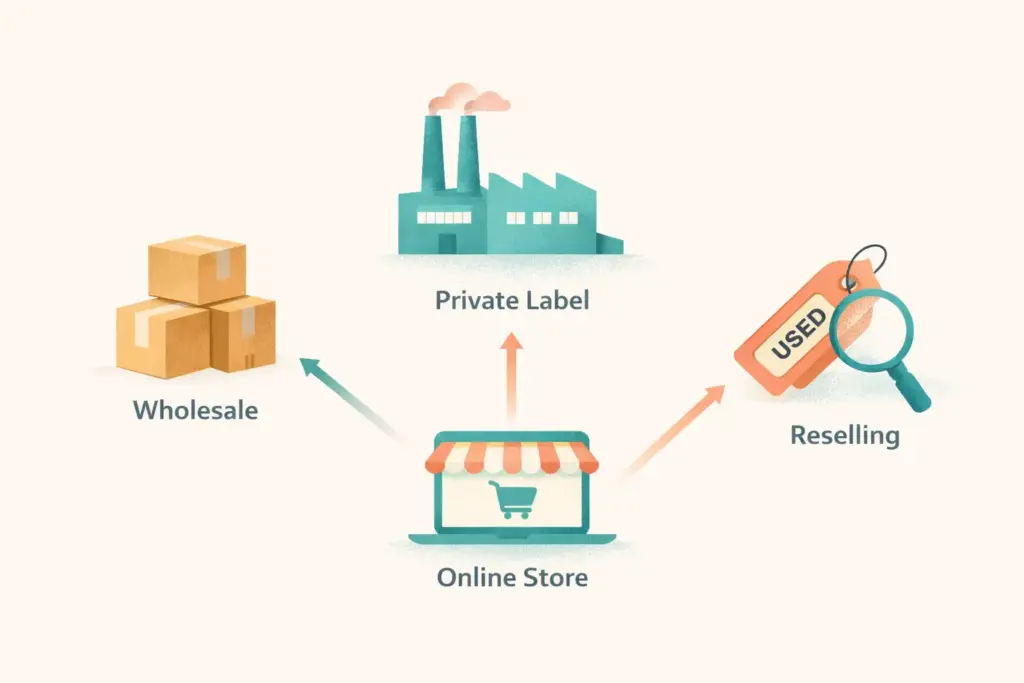
Things to Sell Online Through Dropshipping
Dropshipping lets you test product ideas without buying inventory upfront. Your supplier ships directly to your customer. Margins are thinner (15-30%), but you avoid the risk of sitting on unsold stock. These products work well with the dropshipping model:
Problem-Solving Gadgets
Products that fix a specific annoyance tend to convert well in ads because the pain point is easy to demonstrate. LED motion sensor lights, posture corrector braces, portable blender bottles, and magnetic screen doors all fit this pattern. They’re compact, affordable to ship, and simple to showcase in short video content.
Seasonal and Trending Items
Dropshipping is ideal for testing seasonal products because you’re not stuck with leftover inventory. Cowboy hats saw a 49% sales increase driven by celebrity adoption and western fashion trends. Dashboard accessories grew 140% on Shopify. These numbers shift yearly, which is exactly why the dropshipping model fits. Test fast, scale what works, drop what doesn’t.
Phone Accessories (Volume Play)
Screen protectors, cases, and car mounts are good items to sell online through dropshipping because the replacement cycle is short. Roughly 72% of consumers buy a screen protector with each new phone, and more than half of mobile users upgrade every 2-3 years. The unit economics work even at low margins because order volume is massive.
If you’re exploring dropshipping suppliers, focus on suppliers with US or EU warehouses for faster shipping. Slow delivery is the number one reason dropshipping stores lose customers.
Print on Demand Products to Sell Online
Print on demand lets designers and creative sellers put custom artwork on products without touching inventory. The production partner prints and ships each order individually. Here’s what’s selling:
Custom Apparel
T-shirts remain the top-selling print on demand product. That’s not changing anytime soon because they’re a form of self-expression. But the growth areas are more interesting. Embroidered sweatshirts saw 40% search growth over the last year. Oversized tees are up 150% over five years. And athleisure pieces (joggers, hoodies, sports bras) blend comfort with style in a way that keeps demand steady.
The sellers making real money in POD apparel aren’t designing for everyone. They’re targeting micro-niches: dog breed-specific shirts, profession humor, hyper-local designs, fandom crossovers.
Custom Drinkware
Mugs and tumblers are best products to sell online in the POD space because production costs are low and emotional attachment is high. Research suggests nearly 60% of people feel connected to their favorite mug. Stainless steel options with custom designs command premium pricing, especially in gift-giving seasons.
Posters and Wall Art
Production costs for paper posters are minimal, and shipping is cheap compared to most physical products. The key is presentation. Flat mockup images perform poorly. Sellers using room-context mockups that show the poster in a real interior space see dramatically higher click-through rates.
Accessories and Novelty Items
Phone cases, tote bags, stickers, and socks round out a strong POD catalog. Stickers in particular have almost zero production cost and appeal to younger buyers who collect them. Die-cut stickers with niche designs can generate steady passive income.
Digital Products to Sell Online
If you want the highest margins with zero shipping headaches, digital products are the answer. Once you create the product, every additional sale is almost pure profit. Margins typically fall between 70-95%.
Online Courses
The global online learning market exceeds $200 billion in market share. If you have expertise in any teachable skill, courses are the most scalable digital product you can sell. Platforms like Teachable and Thinkific handle hosting and payments. You focus on content.
Courses command higher prices than ebooks because buyers perceive structured education as more valuable. A $29 ebook on photography can become a $197 course with the same information presented as video lessons with worksheets. The content isn’t that different. The packaging is.
Templates and Planners
Notion templates, Canva templates, budget spreadsheets, social media content calendars, and digital planners sell consistently on Etsy and Gumroad. They’re fast to create (especially if you already use these tools) and serve the productivity-obsessed audience that keeps growing. Competition is high, but so is demand.
Ebooks and Guides
Self-help, fitness, finance, and niche skill development ebooks perform well because they solve specific problems at a low price point. The economics are simple: write once, sell forever. One food blogger turned her viral keto recipe TikToks into a cookbook that generates ongoing passive revenue.
Lightroom Presets, LUTs, and Design Assets
Adobe reported that Lightroom’s freemium monthly active users grew 35% year-over-year, crossing 70 million. Every one of those users is a potential buyer of time-saving presets. Preset packs typically sell for $10-25 individually or $30-69 as bundles, with margins around 70-90% after platform fees. Design elements, fonts, and icon packs follow the same economics.
AI-Enhanced Digital Products
AI prompt packs, custom GPT templates, and AI-generated design element bundles represent the newest category. The generative AI market is valued at $16.87 billion and projected to reach $109 billion by 2030, according to Grand View Research. Creators are selling curated packs of AI-generated backgrounds, textures, and illustrations to other creators who need themed assets without the learning curve.
Sheet Music and Audio Files
Musicians can sell sheet music, sample packs, sound effects, and backing tracks. One composer built an audience through short music clips on TikTok and Instagram, then directed fans to purchase full scores. The shift from emailing free PDFs to selling downloads on a platform turned a hobby into a revenue stream.
Handmade and Crafted Things to Sell Online
If you make things with your hands, there’s an audience willing to pay a premium for the story and craft behind your product. Handmade items command higher profit margins (40-70%) than mass-produced equivalents because buyers are paying for uniqueness, not just function.
Candles and Home Fragrance
Soy candles, beeswax candles, and reed diffusers have low material costs and high perceived value. A candle that costs $3-5 to make can sell for $18-35. The craft is accessible to beginners, and the product photographs beautifully for social media.
Handmade Jewelry
Beaded bracelets, resin jewelry, wire-wrapped stones, and stamped metal pieces all find buyers on Etsy and independent stores. Personalized jewelry (name necklaces, birthstone pieces, engraved items) commands the highest prices because it can’t be replicated by Amazon sellers.
Soap and Bath Products
Artisan soap bars, bath bombs, and body scrubs appeal to the self-care market. They’re consumable, which means repeat purchases. And they make excellent gifts, which expands your customer base beyond the direct buyer.
Woodworking and Home Decor
Cutting boards, plant stands, floating shelves, and picture frames sell well when the craftsmanship is visible. Custom pieces (personalized signs, engraved items) move especially fast during wedding season and holidays.
Pottery and Ceramics
Handmade mugs, planters, and decorative bowls attract buyers who value artisan goods. Pricing is premium because each piece is genuinely unique. The challenge is production speed. You can’t scale pottery the way you scale digital products, so pricing needs to account for your time.
Services You Can Sell Online
Services aren’t physical products, but they’re absolutely things to sell online and often the fastest path to revenue because you’re selling your time and skills with zero product development.
- Freelance writing and editing. Businesses always need content. Always.
- Graphic design. Logo design, social media graphics, brand kits. Package them as fixed-price offerings for faster sales.
- Virtual assistance. Email management, scheduling, customer support. The remote work explosion created permanent demand.
- Consulting and coaching. If you’ve built expertise in any field, people will pay for direct access to your knowledge.
- Web development. Small businesses need websites. Agencies charge $5,000-$50,000. A freelancer charging $1,500-$3,000 undercuts them while still earning well.
The key with services is productizing them. Instead of billing by the hour, create packages with clear deliverables, fixed prices, and defined revision limits. That turns a freelance hustle into a scalable business.
Products to Resell and Flip Online
Reselling is one of the lowest-barrier ways to start selling online. You find undervalued items and sell them for more than you paid. No manufacturing, no design skills, no technical setup required.
Thrift Store and Estate Sale Finds
Vintage clothing, retro electronics, collectible books, and brand-name items at thrift prices can be flipped for 3-10x what you paid. The skill is knowing what’s valuable before you buy it. eBay’s sold listings feature shows you exactly what items sell for, so you can check prices on your phone while standing in the store.
Clearance and Liquidation
Retail stores regularly clearance out perfectly good merchandise at deep discounts. Buying clearance items and reselling on Amazon or eBay is called retail arbitrage, and plenty of sellers build full-time income doing it. Liquidation pallets from major retailers offer bulk buying at even steeper discounts, though the quality is less predictable.
Books
Used books remain one of the most reliable good items to sell online. Textbooks, out-of-print titles, and niche non-fiction command surprising prices. Apps like ScoutIQ let you scan barcodes at thrift stores and instantly see the Amazon selling price and rank.
Retro and Vintage Electronics
Old gaming consoles, vintage audio equipment, and discontinued tech products attract collectors willing to pay premium prices. The retro gaming trend continues driving demand for older consoles and cartridges, with collector’s editions and discontinued titles commanding the highest prices.
How to Find Your Own Products to Sell Online
Product lists are a starting point. But the sellers who build real businesses don’t just copy what someone told them to sell. They research trends and validate ideas with data before spending money. Here’s the research process I recommend.
Step 1: Use Google Trends to Validate Demand
Type your product idea into Google Trends and look at the interest curve over the past five years. You want to see either steady demand or gradual upward movement. Avoid products that show a single spike followed by decline. That’s a fad, not a business.
Compare variations of your product to see which phrasing has more search interest. “Yoga pants” vs. “leggings” vs. “athletic tights” will show you which term your audience actually uses, and that matters for your product listings and ad targeting.
Step 2: Check Marketplace Sold Data
Amazon’s Best Sellers page updates hourly and shows you what people are actually buying right now, not just browsing. The Movers and Shakers page highlights products with the biggest recent jumps in sales rank.
On eBay, filter search results by “Sold Items” to see actual sale prices and volume. This is more useful than listing prices because it shows what buyers actually paid. Etsy’s “Popular Right Now” section does something similar for handmade and creative goods.
Step 3: Analyze Competition and Margins
Search your product idea on Amazon and count the number of reviews on the first page results. If the top sellers have 10,000+ reviews, breaking in will be extremely difficult and expensive. Look for products where the top sellers have under 500 reviews. That signals demand with beatable competition.
Calculate your margins before you commit. If you can source a product for $5, sell it for $20, and your platform fees plus shipping cost $7, your margin is $8 per unit (40%). That’s healthy. If the math doesn’t work on paper, it won’t work in practice either.
Step 4: Test Before You Invest
Don’t order 500 units of anything before you’ve proven people will buy it. Start with a small batch (10-25 units) or use a dropshipping model to test demand first. Run small ad campaigns ($50-100) targeting your ideal customer and measure the response. If people click but don’t buy, the product or pricing needs work. If nobody clicks, the audience targeting needs work. If both numbers look good, scale up.
Research Tools Worth Using
| Tool | What It Shows You | Cost |
|---|---|---|
| Google Trends | Search interest over time, regional data, related queries | Free |
| Amazon Best Sellers | Top-selling products by category, updated hourly | Free |
| eBay Sold Listings | Actual sale prices and volume for any product | Free |
| Jungle Scout | Amazon sales estimates, competition analysis, product tracking | From $49/month |
| Helium 10 | Keyword research, product tracking, market intelligence | Free tier available |
| eRank | Etsy-specific trending keywords and search volume | Free tier available |
| Amazon Product Opportunity Explorer | Niche demand, competition saturation, search term data | Free (Seller Central) |
What NOT to Sell Online (Common Mistakes)
Not every product that looks profitable on paper works out. Here are the traps I’ve seen new sellers fall into:
Products with razor-thin margins and high return rates. Clothing in general sizes (S/M/L/XL) has notoriously high return rates online because fit varies by brand. Unless you have a differentiated sizing system or niche audience, generic apparel is a margin killer.
Heavy, fragile, or oversized items. A beautiful ceramic vase might look great in photos, but shipping costs eat your margin and breakage creates customer service nightmares. If you sell fragile items, build shipping costs into your pricing from the start.
Regulated products without proper compliance. Supplements, cosmetics, CBD products, food items, and children’s products all carry regulatory requirements. Selling without proper labeling, testing, or certifications can result in fines, lawsuits, or marketplace bans. Do the compliance homework before you list anything.
Products that compete purely on price. If the only reason someone would buy from you instead of Amazon is a lower price, you’ve already lost. Amazon will always win the price war. Compete on uniqueness, brand story, customization, or customer experience instead.
How to Sell Online for Free (or Nearly Free)
You don’t need a big budget to start sourcing products to sell online. Several platforms let you list and sell without upfront costs:
Facebook Marketplace and local selling apps charge zero listing fees and connect you with nearby buyers. Great for testing physical products, reselling, and building initial cash flow.
Etsy charges $0.20 per listing. If you’re selling handmade goods, vintage items, or digital products, the built-in audience is worth the small fee. Check our guide to selling things online for platform-by-platform breakdowns.
Gumroad and Payhip let you sell digital products with no monthly fee. They take a percentage of each sale, which means you pay nothing until you earn something.
Social media direct selling. Instagram, TikTok, and Pinterest can drive sales without a website. Add payment links to your bio and fulfill orders manually until volume justifies a proper ecommerce platform.
The key to selling online for free is starting scrappy and reinvesting profits. Your first $500 in sales funds your next inventory purchase, better product photos, or a proper storefront. Don’t wait until everything is perfect. Start with what you have.
Choosing Your First Product: A Decision Framework
If you’re still stuck after reading 47 product ideas, use this framework to narrow things down:
What do you already know? Your existing skills and knowledge create unfair advantages. A former chef selling kitchen tools understands the product at a level that generic resellers can’t match. A photographer selling Lightroom presets knows exactly what the buyer needs. Start where you have expertise.
What can you afford to lose? Your startup budget determines your business model. Under $200? Start with digital products, services, or print on demand. Under $1,000? Add handmade goods or dropshipping. Over $2,000? You can consider private label physical products.
How patient are you? Digital products and services generate revenue fastest (days to weeks). Dropshipping and POD take 2-4 weeks to start seeing orders. Private label physical products can take 2-6 months from concept to first sale because of manufacturing and shipping timelines.
Do you want to be hands-on or hands-off? Handmade products require your time for every unit. Digital products scale infinitely after creation. Dropshipping and POD are somewhere in between. Match your product to the lifestyle you want, not just the profit you want.
Frequently Asked Questions
What are the best things to sell online for beginners?
Digital products (templates, ebooks, printables), print on demand apparel, and resold items from thrift stores or clearance sales are the best starting points. They require minimal upfront investment and let you learn the mechanics of selling online without major financial risk.
What things to sell online make the most money?
Digital products carry the highest margins at 70-95% because there’s no cost of goods after creation. For physical products, private label health and beauty items and specialty food products typically deliver 40-65% margins. The highest revenue depends on volume, which is where tech accessories and consumable products win.
How do I find products to sell online with low competition?
Search your product idea on Amazon and check the review counts of top sellers. Products where top listings have under 500 reviews signal beatable competition. Use Google Trends to find rising search terms that haven’t peaked yet, and check eBay sold listings to confirm people are actually buying.
Can I sell things online for free without a website?
Yes. Facebook Marketplace charges zero fees. Etsy charges $0.20 per listing. Gumroad and Payhip take a small percentage only when you make a sale. You can also sell directly through Instagram and TikTok using payment links in your bio.
What popular items to sell online have the lowest startup costs?
Services (writing, design, consulting) cost nothing to start. Digital products cost only your time to create. Print on demand requires no upfront investment because you don’t pay until a customer orders. These three business models let you start with essentially zero capital.
How do I know if a product will sell online before I invest?
Use Google Trends to verify sustained demand, check Amazon Best Sellers and eBay sold listings for actual sales data, and run a small test campaign ($50-100 in ads) before ordering bulk inventory. If you can’t confirm demand through data, don’t invest based on a gut feeling alone.
Related Reads
- Trending Products to Sell in 2026
- Digital Products to Sell Online
- How to Start Dropshipping
- High Profit Margin Products
- Best Products to Resell for Profit
- Ecommerce Business Models Explained
Enjoying this? Get more like it every week.
One email per week with ecommerce strategies, tool picks, and seller insights. No spam.