
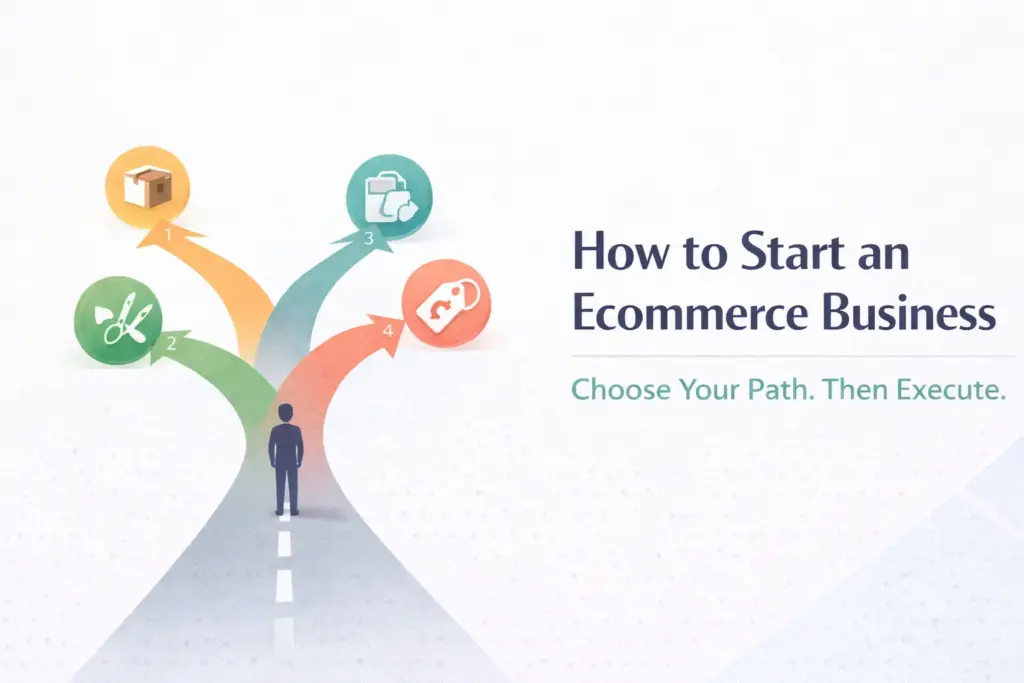
- Starting an online business is not one process. It's four completely different paths depending on your business model: selling physical products you source, selling items you make, selling digital products, or reselling/dropshipping. Each path has different startup costs, timelines, and first steps.
- The global ecommerce market reached $6.7 trillion in 2025 and is projected to hit $8 trillion by 2027 (eMarketer). Independent sellers in the Amazon store averaged over $290,000 in annual sales in 2024.
- Realistic startup costs: $0-$500 for dropshipping or digital products, $200-$2,000 for handmade/physical products, $2,000-$10,000 for private label brands. You don't need thousands to start.
- The fastest path to revenue: list products on an existing marketplace (Etsy, Amazon, eBay) before building your own store. Validate demand first. Build the brand second.
Three people told me last month they wanted to “start an online business.” One wanted to sell handmade candles. One wanted to resell vintage sneakers. One wanted to sell a digital course on photography. They all Googled the same query, but they need completely different advice.
An ecommerce business is any business that sells products or services over the internet. It can range from a side hustle selling on Etsy to a full-scale brand doing millions on Shopify and Amazon. The global ecommerce market reached $6.7 trillion in 2025 and is projected to grow to nearly $8 trillion by 2027 (eMarketer). More than 60% of sales in the Amazon store come from independent sellers, and those independent sellers in the US averaged over $290,000 in annual sales in 2024. The opportunity is massive, but your path into it depends entirely on what you’re selling and how you want to operate.
This is the Start & Launch hub guide that connects everything. Instead of giving you one generic checklist, I’ll help you pick your path first, then walk through the steps that actually apply to YOUR business model.
Step 1: Choose Your Business Model (This Determines Everything)
Before you register an LLC, pick a platform, or design a logo, answer one question: how are you going to get products to sell? Your answer puts you on one of four paths, and each path has different startup costs, timelines, and priorities.
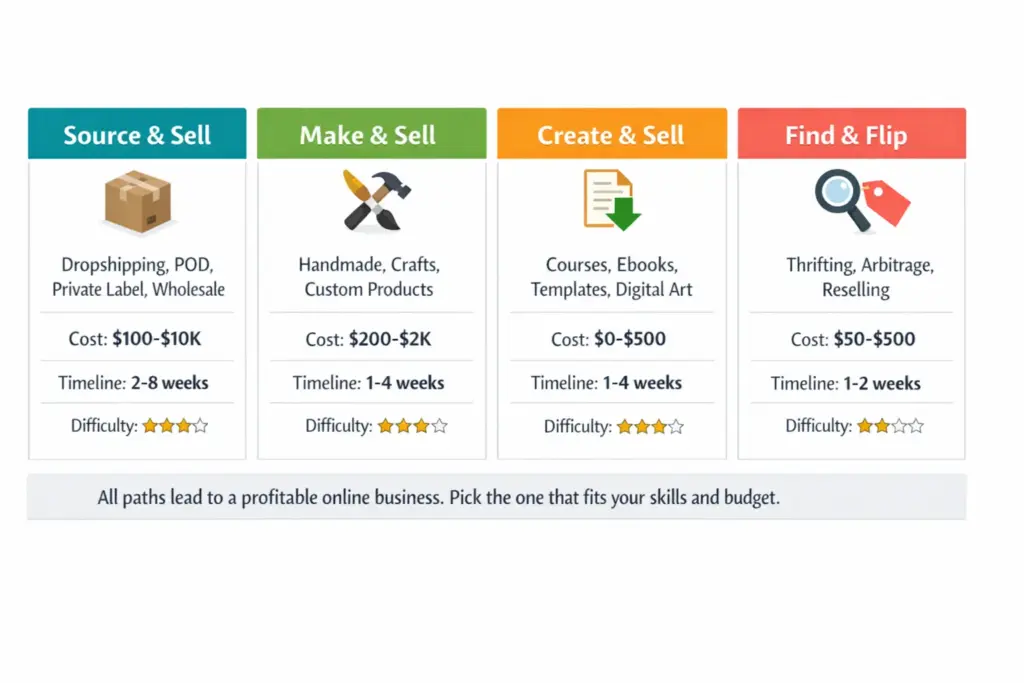
Path A: Selling physical products you source. You find manufacturers or wholesalers, buy inventory (or use dropshipping/POD to avoid inventory), and sell under your own brand or as a reseller. This includes dropshipping, print on demand, private label, and wholesale. Startup cost: $100-$10,000 depending on the sourcing model. Timeline to first sale: 2-8 weeks.
Path B: Selling things you make. Handmade jewelry, candles, art, food products, woodworking, clothing you sew. Your product is your craft. Startup cost: $200-$2,000 (materials, packaging, photography). Timeline to first sale: 1-4 weeks on Etsy. See our things to make and sell guide for what’s working in this space.
Path C: Selling digital products. Courses, ebooks, templates, presets, printables, software. Create once, sell infinitely with no inventory or shipping. Startup cost: $0-$500 (just your time plus optional tools). Timeline to first sale: 1-4 weeks. See our digital products guide for profitable categories.
Path D: Reselling existing products. Thrifting, retail arbitrage, wholesale reselling, flipping items from clearance sales or liquidation pallets. Your skill is finding undervalued inventory. Startup cost: $50-$500 for initial inventory. Timeline to first sale: 1-2 weeks. See our products to resell guide for what’s worth flipping.
For a deeper comparison of all models, our ecommerce business models guide breaks down the pros, cons, and margins for each approach.
Step 2: Validate Before You Build
The number one mistake new ecommerce sellers make is building an entire business (brand name, logo, website, packaging) before confirming anyone wants to buy their product. I’ve watched people spend $3,000 on branding for a product that generates zero sales.
Validation means proving demand exists before you invest heavily. Here’s how to validate quickly depending on your path:
For physical and handmade products: List 5-10 items on Etsy or eBay. Spend $20-$50 on sample inventory if needed. Run the listing for 2-3 weeks. If you get views and sales (even a few), you’ve validated demand. If crickets, adjust or pivot before spending more.
For digital products: Create a landing page describing your product. Drive some traffic (social media, communities where your audience hangs out). If people sign up for a waitlist or click “buy,” you have demand. Build the full product AFTER validation, not before.
For reselling: Source 10-20 items from thrift stores or clearance for under $100 total. List them on eBay or Facebook Marketplace. Sell-through rate above 50% in 30 days? Scale up.
This validation step saves more money than any other piece of advice in this article. Skip it at your own risk.
Step 3: Handle the Legal Basics
You don’t need a law degree to start an online business, but you do need to handle a few things to avoid problems later:
Business structure. Most new sellers start as a sole proprietorship (the default – no registration needed in most states) or an LLC. An LLC separates your personal assets from business liability for $50-$500 depending on your state. You don’t need an LLC on day one, but it’s worth setting up once you’re generating consistent revenue. Our legal setup guide covers this in detail.
Business name and domain. Pick a name. Check that it’s available as a domain (use Namecheap or Google Domains). Check that nobody has trademarked it (search at USPTO.gov). Register the domain ($10-15/year) even if you’re starting on a marketplace first.
Sales tax. If you sell physical products in the US, you’ll need to collect sales tax in states where you have nexus (physical or economic presence). Platforms like Shopify and Etsy handle collection automatically once configured. Don’t ignore this. It catches up with sellers who try to deal with it later.
Separate finances. Open a business bank account and get a business credit card. Mixing personal and business finances creates tax headaches and makes your business impossible to track accurately. This takes one afternoon and saves endless future pain.
Step 4: Choose Where to Sell
This decision depends on your business model and how fast you want your first sale.
Start on a marketplace if: You want sales fast, you’re testing product-market fit, or you don’t have an audience yet. Etsy (handmade, vintage, crafts), Amazon (mass-market products, private label), eBay (reselling, collectibles), and Facebook Marketplace (local, used items) all have built-in buyer traffic.
Build your own store if: You have an established audience (social media following, email list), you want full brand control, or your products don’t fit marketplace categories. Shopify ($29/month) is the easiest to set up. WooCommerce (free plugin, hosting costs) gives maximum flexibility. See our full ecommerce platform comparison.
The recommended approach: Start on a marketplace. Validate demand. Get your first 20-50 sales and reviews. Then launch your own store as a second channel. Run both. The marketplace provides volume and cash flow. Your own store builds the brand and gives you better margins long-term. Our how to sell online guide covers the platform-by-platform breakdown.
Step 5: Set Up Your Operations
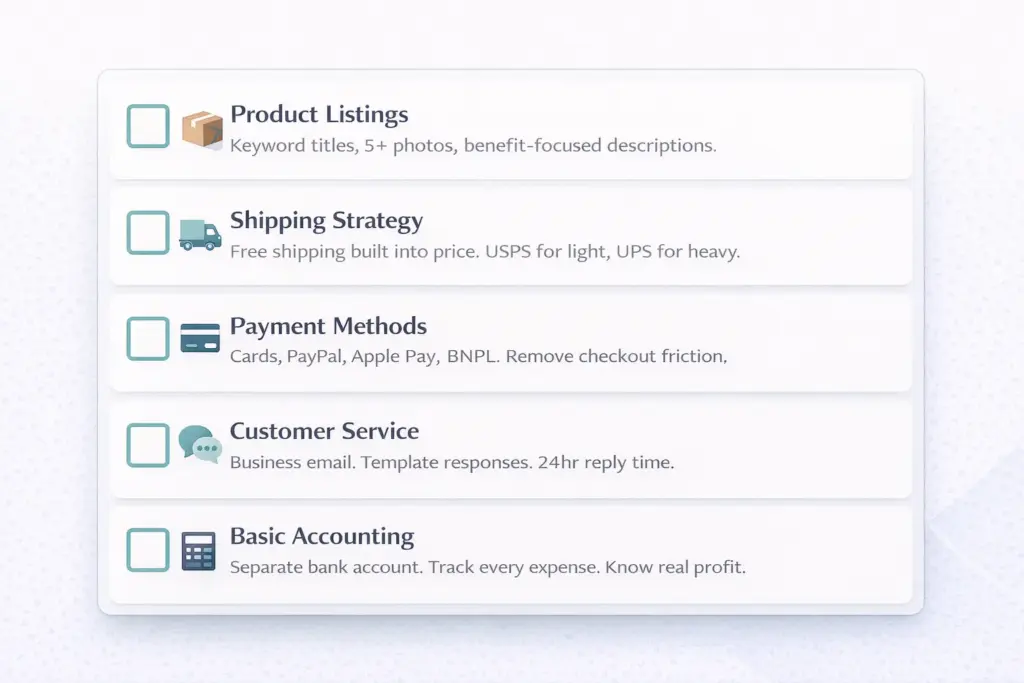
Product listings. Write titles with keywords buyers actually search (not creative branding names). Write descriptions that address the buyer’s questions: what is it, what’s it made of, how big is it, who is it for, what problem does it solve? Add 5+ photos showing the product from multiple angles, in use, and with size reference.
Shipping. Decide your shipping strategy before your first sale, not after. Options: charge exact shipping, offer flat-rate shipping, or build shipping into the product price and offer “free shipping” (buyers prefer this). For US sellers: USPS is cheapest for lightweight items under 1 lb, UPS/FedEx for heavier packages. Use shipping software (Pirate Ship, ShipStation) for discounted rates.
Payments. On your own store, enable every payment method your platform supports: credit cards, PayPal, Apple Pay, Google Pay, Shop Pay, and at least one buy-now-pay-later option. Each method you add removes one more reason for cart abandonment.
Customer service. Set up a dedicated business email. Create template responses for common questions (shipping times, return policy, product details). Respond to customer inquiries within 24 hours. Fast, helpful customer service generates more repeat purchases than any marketing tactic.
Basic accounting. Track every expense and every sale from day one. Use QuickBooks, Wave (free), or even a spreadsheet. Knowing your actual profit per product, per channel, per month is the difference between a business and an expensive hobby.
Step 6: Drive Your First Customers
Products listed. Operations set. Now you need buyers. Here’s where to focus first based on your budget:
$0 budget (organic only): Post about your products on social media platforms where your audience lives. Create short-form video content (TikTok, Instagram Reels) showing your product in use, behind the scenes of making it, or packing orders. Join communities (Reddit, Facebook groups, niche forums) and be genuinely helpful. Share your store when relevant, not spammy. SEO on marketplace listings and your own store brings long-term traffic. This approach is slower but sustainable.
$100-$500 budget: Run a small paid ad test on Meta (Facebook/Instagram) or Google Shopping to validate ad performance before scaling. Spend $5-$10/day for 2 weeks on your best product listing. If you’re profitable at that spend level, slowly increase. If not, improve your listing or product before spending more.
Regardless of budget: Build an email list from day one. Offer a small discount (10-15%) for email signup. Email marketing generates $36-$42 for every $1 spent and is the highest-ROI marketing channel in ecommerce. Even 50 email subscribers are more valuable than 5,000 social followers because you own that relationship. Our ecommerce trends guide covers the marketing automation tools that make this scalable.
Realistic Startup Costs by Path
| Business Model | Startup Cost | Monthly Costs | Time to First Sale |
|---|---|---|---|
| Dropshipping | $0-$300 | $29-$79 (platform + apps) | 2-4 weeks |
| Print on Demand | $0-$300 | $0-$39 (Etsy free, Shopify $29) | 1-3 weeks |
| Handmade Products | $200-$2,000 | $50-$200 (materials + platform) | 1-4 weeks |
| Private Label | $2,000-$10,000 | $100-$500 (platform + inventory) | 6-12 weeks |
| Digital Products | $0-$500 | $0-$39 (platform) | 1-4 weeks |
| Reselling | $50-$500 | $0-$50 (platform fees) | 1-2 weeks |
You don’t need thousands of dollars to start an ecommerce business. The models with the lowest barrier to entry (digital products, print on demand, reselling) let you start for under $100 and scale as revenue comes in. For a detailed cost breakdown by platform, our startup costs guide covers the full picture.
Frequently Asked Questions
How do I start an online business with no money?
Sell digital products (ebooks, templates, printables) on free platforms like Gumroad or Etsy. Use print on demand with no upfront inventory cost. Resell items you already own on eBay or Facebook Marketplace. All three models require $0 in product investment to start.
How to start an ecommerce business from scratch?
Pick a business model (sourcing, handmade, digital, or reselling). Validate demand by listing 5-10 products on a marketplace. Handle legal basics (business name, bank account). Set up operations (listings, shipping, payments). Drive traffic through organic content or small ad tests. Scale what works.
What is the easiest online business to start?
Reselling items on eBay or Facebook Marketplace is the fastest start. You can list items you already own today with zero investment. For a scalable business, print on demand and digital products both require minimal startup costs and no inventory management.
How much does it cost to start an ecommerce business?
Realistically: $0-$500 for dropshipping, print on demand, or digital products. $200-$2,000 for handmade products. $2,000-$10,000 for private label brands. Platform costs range from $0 (Etsy, marketplaces) to $29-$39/month (Shopify, WooCommerce hosting).
Do I need an LLC to start an online business?
Not to start. You can operate as a sole proprietor from day one. An LLC becomes important when you’re generating consistent revenue because it separates personal and business liability. Most states charge $50-$500 to register an LLC. Set it up once you’re past the validation stage.
How to start an online store with no experience?
Start on a marketplace (Etsy or eBay) rather than your own website. Marketplaces handle checkout, payments, and provide built-in traffic. List 5-10 products, learn by doing, and build skills as you go. Move to your own Shopify or WooCommerce store once you’ve made 20-50 sales and understand your audience.
Related reads: Ecommerce Business Models | Profitable Ecommerce Niches | How to Sell Things Online | Best Ecommerce Platform | Legal Setup LLC & Tax | Ecommerce Trends 2026
Enjoying this? Get more like it every week.
One email per week with ecommerce strategies, tool picks, and seller insights. No spam.