

- Shopify Plus is Shopify's enterprise tier, starting around $2,300 to $2,500/month on a multi-year contract. Above a high revenue threshold (roughly $890,000+/month in some contracts), billing shifts to a variable platform fee of about 0.28% of gross merchandise value. The headline price is only the base; real total spend often runs $4,000 to $20,000/month once apps, transaction fees, and agency development are added.
- The consensus tipping point: Shopify Plus is worth it above roughly $80,000/month in online sales. Below that, the standard Advanced plan ($399/month) delivers most of what you need. The Plus-only features (Checkout Extensibility, Shopify Functions, B2B native catalogs, post-purchase upsells, higher API limits) start paying for themselves once your volume is high enough that small conversion and automation gains outweigh the cost.
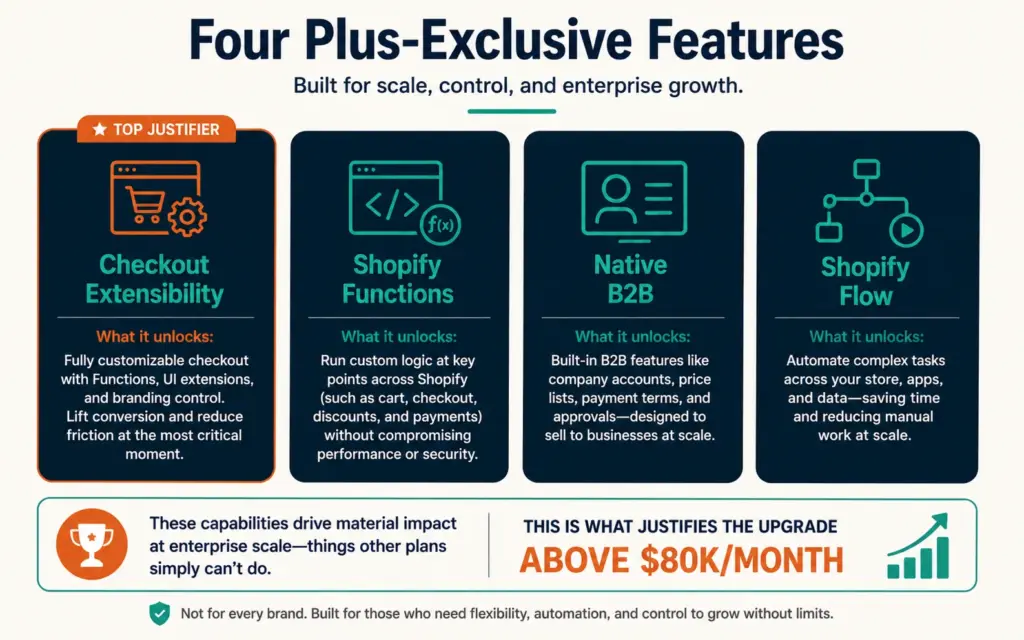
- The features that most often justify the upgrade: Checkout Extensibility (deep checkout customization now that checkout.liquid is retired), Shopify Functions (custom discount and logic), native B2B (buyer portals and catalogs without third-party apps), and Shopify Flow automation. If you won't use these, you're paying for power you don't need.
- The honest caveat from real reviews: Plus still depends on paid apps for some basic features (advanced filtering, subscriptions, detailed analytics), customization beyond the built-ins requires developers, and extra transaction fees apply if you don't use Shopify Payments. Power you don't use is just cost.
This Shopify Plus review cuts through the noise around Shopify’s enterprise tier. If you search for Shopify Plus, you’ll find plenty of articles that quote the $2,300/month price, list a few features, and conclude “worth it for enterprise brands.” That’s not wrong, but it’s not useful either. The real questions are: what does Plus actually cost once everything’s added up, which features genuinely justify the upgrade, and at what revenue does the math start working in your favor? This review answers those honestly, including the parts the marketing glosses over.
Shopify Plus in 2026 looks meaningfully different from the platform most older articles describe. Checkout.liquid, which gave Plus merchants deep checkout control, has been retired and replaced by Checkout Extensibility. The B2B landscape has evolved substantially. And the pricing structure has layers that the headline number doesn’t capture. According to 99minds’ Shopify Plus guide, the platform is a genuinely strong enterprise option in 2026, but it’s not the same platform those older reviews describe. The Shopify vs WooCommerce comparison covers the standard-tier decision; this review focuses specifically on whether the enterprise upgrade is worth it.
Shopify Plus Pricing: The Real Numbers Behind the Headline
Shopify Plus is quote-based enterprise pricing, not a public flat rate. The commonly cited figure is around $2,300 to $2,500/month on a multi-year term, or roughly $2,800/month on a shorter one-year term. But the pricing has a variable component: once your monthly sales exceed a high threshold (around $890,000/month in some contracts), the model shifts from flat fee to a variable platform fee of about 0.28% of gross merchandise value.
The headline number is where budgets start, not where they end. According to Rovela’s Shopify Plus cost breakdown, most Plus merchants still stack paid apps, pay transaction fees if they’re not on Shopify Payments, and often retain an agency for theme edits and integrations. Added up, many Plus stores spend $4,000 to $20,000/month to keep everything running. The base platform fee is only the starting point; the app and agency layer is where budgets quietly balloon. The ecommerce startup costs framework of total cost of ownership applies here: the sticker price is one of several cost categories, not the whole picture.
The Features That Justify the Shopify Plus Upgrade
Eight or so features exist only on Shopify Plus. A few of them are what most often justify the upgrade math:
Checkout Extensibility for Deep Checkout Control
With checkout.liquid retired, Checkout Extensibility is how Plus merchants customize the checkout experience: custom fields, branding, upsells, and logic at the highest-converting moment in the funnel. Standard plans have a fixed checkout. For high-volume stores, even small checkout conversion improvements translate to significant revenue, which is why this feature often pays for the upgrade on its own. The checkout optimization gains available through Checkout Extensibility are a primary reason established brands move to Plus.
Shopify Functions for Custom Logic
Shopify Functions let developers write custom backend logic: complex discount rules, custom shipping logic, validation, and more, running natively on Shopify’s infrastructure. This replaces the need for many third-party apps and enables logic that standard plans can’t support. For brands with sophisticated pricing or promotion needs, Functions are a genuine capability unlock that would otherwise require multiple third-party apps or custom middleware. The catch is that Functions require developer resources to build and maintain, so the capability comes with an implementation cost most standard-plan merchants don’t have to think about. The discount strategy mechanics you can implement with Functions go far beyond standard discount codes.
Native B2B for Wholesale and Buyer Portals
Plus includes native B2B: buyer-specific catalogs, custom pricing per customer, wholesale buyer portals, and quantity rules, without stitching together third-party apps. For brands selling both direct-to-consumer and wholesale, native B2B is a major operational simplification. The Faire wholesale channel handles marketplace wholesale, but native B2B lets you run wholesale on your own store infrastructure.
Shopify Flow and Higher API Limits
Shopify Flow automates repetitive operational tasks (order tagging, fraud checks, inventory alerts, customer segmentation) without code, letting you build if-this-then-that workflows that would otherwise require a developer or a paid third-party automation app on standard plans. Plus also doubles API limits (40 GraphQL requests/second on the Admin API, uncapped Storefront API for headless), which matters for high-traffic stores and headless architectures. The ecommerce automation that Flow enables saves meaningful staff time as order volume grows.
When Shopify Plus Is Worth It: The Revenue Tipping Point
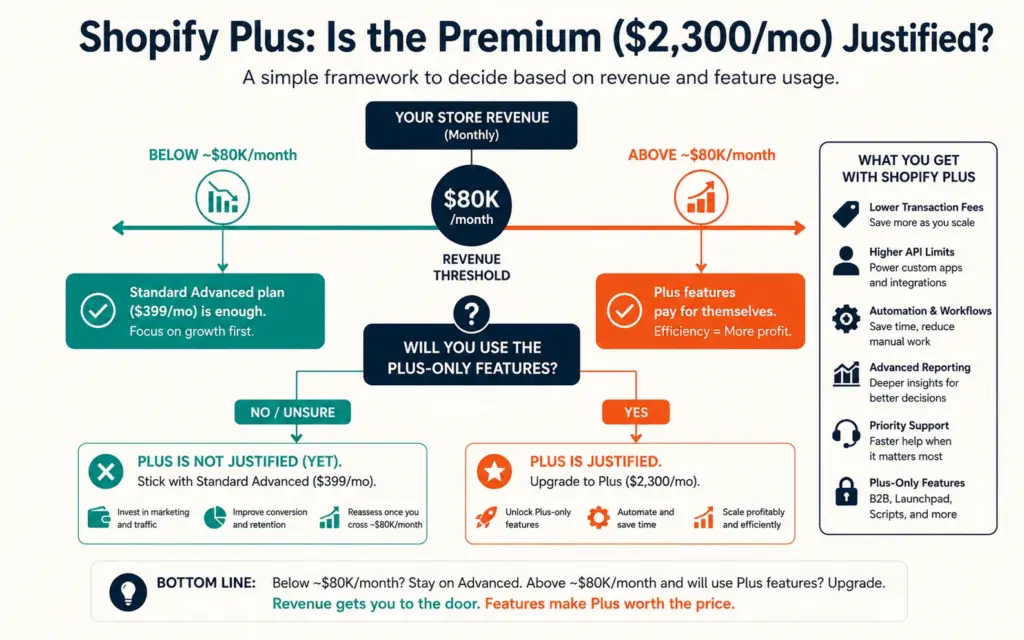
The consensus across independent reviews: Shopify Plus is worth it above roughly $80,000/month in online sales. Below that revenue, the standard Advanced plan ($399/month) delivers most of what you need, and the Plus premium isn’t justified. Above it, the Plus-only features (Checkout Extensibility, Functions, B2B, post-purchase upsells) typically pay for themselves through conversion gains, automation savings, and operational efficiency at scale.
The logic is straightforward. Plus costs roughly $2,300/month more than Advanced. For that to make sense, the Plus features need to generate at least that much additional value. At $80,000+/month in sales, a small checkout conversion improvement from Checkout Extensibility, plus automation savings from Flow, plus the operational value of native B2B, can easily exceed the cost difference. Below $80,000/month, the same features generate less absolute value than they cost. Run this calculation for your own store: estimate the conversion lift and time savings the Plus features would deliver at your volume, and compare to the roughly $2,300/month premium. The profit margin calculator helps you model whether the upgrade adds net profit at your scale.
The Honest Downsides of Shopify Plus
A fair review weighs what you gain against what you keep paying for. Real merchant reviews consistently flag these:
Heavy dependence on paid apps. Despite the enterprise price, Plus still relies on third-party apps for some basic features: advanced product filtering, subscriptions, and detailed analytics. The app costs stack on top of the platform fee.
Customization requires developers. Deep checkout flows, custom backend logic, and integrations need developer time. Checkout Extensibility and Functions are powerful but require technical resources to implement. Budget for an agency or in-house developer.
Transaction fees without Shopify Payments. If you don’t use Shopify Payments (unavailable or impractical in some regions), extra transaction fees apply, which frustrates merchants in certain markets.
Support isn’t always “Plus-level.” Some merchants report that support for complex issues doesn’t always match the premium price. The dedicated support is real but has limits, and merchants expecting white-glove treatment on every technical question are sometimes disappointed by the gap between the enterprise price and the actual support experience.
The core principle from experienced Plus users: power you don’t use is just cost. If you won’t use Checkout Extensibility, Functions, or native B2B, you’re paying enterprise prices for capabilities you don’t need. The best ecommerce platform decision should honestly assess whether you’ll actually use the Plus-only features or whether Advanced meets your needs at a fraction of the cost.
Shopify Plus Alternatives to Consider
If you’re evaluating enterprise ecommerce, Plus isn’t the only option. BigCommerce Enterprise sits in a similar tier with fewer transaction fees but the same paid-app-stack consideration. Adobe Commerce (Magento) is deeply customizable and deeply expensive, requiring significant developer resources. Both are SaaS-versus-flexibility tradeoffs against Plus, and the right choice depends less on raw feature lists than on which platform’s strengths align with how your specific business actually operates and where your team’s technical capabilities lie. Independent analyses find that Shopify’s total cost of ownership runs within about 5% of BigCommerce and roughly 10% cheaper than WooCommerce over three years for a mid-size store once WooCommerce’s hidden developer and maintenance burden is included. The Shopify vs WooCommerce comparison and the headless commerce platforms guide cover these alternatives for brands weighing their enterprise options.
Frequently Asked Questions
Shopify Plus starts around $2,300 to $2,500/month on a multi-year contract, or roughly $2,800/month on a one-year term. Above a high revenue threshold (around $890,000/month in some contracts), billing shifts to a variable platform fee of about 0.28% of gross merchandise value. The base fee is just the start: with paid apps, transaction fees (if not using Shopify Payments), and agency development, real total spend often runs $4,000 to $20,000/month. Pricing is quote-based, so verify with Shopify directly.
The consensus tipping point is roughly $80,000/month in online sales. Below that, the standard Advanced plan ($399/month) delivers most of what you need and the Plus premium isn’t justified. Above it, Plus-only features (Checkout Extensibility, Shopify Functions, native B2B, higher API limits) typically pay for themselves through conversion gains and automation savings at scale. Calculate the specific value those features would add at your volume and compare to the roughly $2,300/month premium over Advanced.
The Plus-only features that most often justify the upgrade: Checkout Extensibility (deep checkout customization, since checkout.liquid is retired), Shopify Functions (custom backend logic for discounts, shipping, and validation), native B2B (buyer portals, custom catalogs, wholesale pricing without third-party apps), Shopify Flow automation, post-purchase upsells, and doubled API limits. If you won’t use these capabilities, you’re paying enterprise prices for power you don’t need, and the standard Advanced plan is the better fit.
Standard Shopify plans (Basic $39, Grow, Advanced $399) cover most small and mid-size stores with a fixed checkout and standard features. Shopify Plus adds enterprise capabilities: customizable checkout via Checkout Extensibility, custom logic via Shopify Functions, native B2B and wholesale, advanced automation with Flow, higher API limits, and dedicated support. The jump in price (from $399 to $2,300+/month) is justified only when your volume is high enough that the Plus-exclusive features generate more value than they cost, generally above $80,000/month in sales.
Yes. Despite the enterprise price, Shopify Plus still depends on third-party paid apps for some features: advanced product filtering, subscriptions, and detailed analytics among them. These app costs stack on top of the platform fee. Deep customization also requires developer time. This is a consistent point in merchant reviews: the base fee doesn’t cover everything, and the app plus agency layer is where Plus budgets often balloon to $4,000 to $20,000/month. Factor these into your total cost assessment.
The main enterprise alternatives are BigCommerce Enterprise (similar tier, fewer transaction fees, but the same paid-app-stack consideration) and Adobe Commerce/Magento (deeply customizable, deeply expensive, developer-heavy). Both trade off differently against Plus on cost and flexibility. Shopify’s total cost of ownership runs within about 5% of BigCommerce and roughly 10% cheaper than WooCommerce over three years for a mid-size store, once WooCommerce’s hidden developer and maintenance burden is counted. Evaluate based on your specific feature needs and technical resources.
Related Reads
- Shopify vs WooCommerce
- Best Ecommerce Platform
- Headless Commerce Platforms
- Checkout Optimization
- Ecommerce Automation
- Ecommerce Startup Costs
Enjoying this? Get more like it every week.
One email per week with ecommerce strategies, tool picks, and seller insights. No spam.