
- Cart abandonment solutions are the technical and behavioral interventions that recover lost sales when shoppers add items but don't complete checkout. Industry average abandonment runs 70.2% across all ecommerce, with mobile reaching 85%. Effective recovery programs reclaim 8 to 18% of abandoned revenue.
- The three layers of cart abandonment recovery are prevention (checkout optimization, exit-intent capture), recovery (email and SMS sequences within 1 to 24 hours), and re-engagement (retargeting ads, lookalike audience expansion).
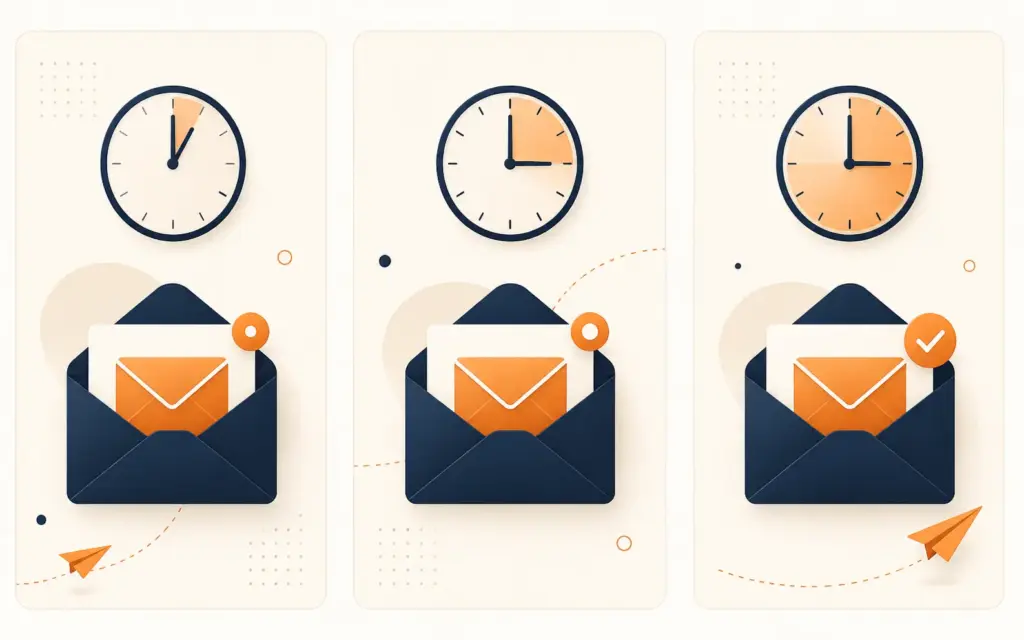
- The single highest-ROI intervention is a 3-email recovery sequence sent at 1 hour, 24 hours, and 72 hours after abandonment. Industry benchmarks show 21 to 28% open rates and 6 to 12% click rates, recovering 5 to 10% of abandoned carts on average.
- Mobile abandonment is the largest opportunity. Sites with mobile abandonment above 80% typically have fixable issues: form fields too small, payment options too limited, or shipping costs revealed too late.
Cart abandonment solutions are the technical and behavioral interventions that recover sales when shoppers add items to their cart but don’t complete checkout. Industry research from Baymard Institute puts the average ecommerce cart abandonment rate at 70.2% across all categories, with mobile devices reaching 85%. For a typical $500k annual ecommerce store, that represents roughly $1.2M in unrecovered revenue every year. Effective cart abandonment programs reclaim 8 to 18% of that lost revenue, making it one of the highest-ROI investments in the conversion stack.
The challenge is that cart abandonment isn’t one problem with one solution. Shoppers abandon for different reasons at different stages: unexpected costs, forced account creation, slow load times, payment trust issues, or genuine “just browsing” behavior. Recovery requires layered interventions matched to each abandonment cause. For broader conversion context, see our ecommerce CRO playbook.
This guide covers the three layers of cart recovery (prevention, recovery, re-engagement), the 12 specific tactics that move the metric, the email and SMS sequences that work in 2026, and the measurement framework that separates real recovery from attribution theater.
Why Shoppers Abandon Carts
Baymard Institute’s most recent research surveyed 4,500+ US shoppers on why they abandon carts. The top reasons:
| Reason | % of Abandonments |
|---|---|
| Extra costs too high (shipping, taxes, fees) | 48% |
| Site wanted me to create an account | 26% |
| I was just browsing or not ready to buy | 25% |
| Delivery was too slow | 23% |
| Didn’t trust the site with credit card info | 19% |
| Checkout was too long or complicated | 18% |
| Couldn’t see total order cost upfront | 17% |
| Returns policy unsatisfactory | 16% |
| Website had errors or crashed | 13% |
| Payment method I wanted wasn’t accepted | 9% |
Notice that “just browsing” is only 25% of abandonments. The remaining 75% are fixable through technical or operational changes. Cart abandonment programs should target that 75% before investing in fancy recovery automation.
Layer 1: Prevention (Checkout Optimization)
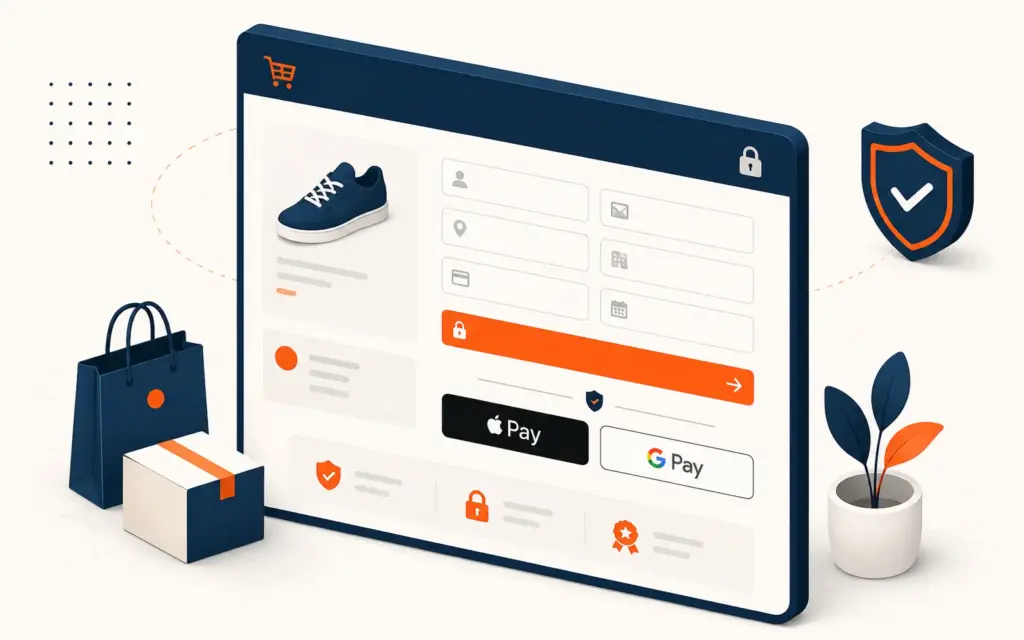
The cheapest abandoned cart is the one that never happens. Prevention solutions reduce abandonment before recovery becomes necessary.
Show total cost early
The single highest-impact change is exposing shipping, tax, and total cost on the cart page, not waiting until the final checkout step. Stores that show estimated shipping in the cart see 22 to 35% lower abandonment than stores that surprise users at checkout. Use IP-based location detection or a “calculate shipping” widget early.
Enable guest checkout
Forced account creation drives 26% of abandonments. Allow guest checkout and offer post-purchase account creation with a single click. Stores that converted from forced-account to guest checkout report 12 to 18% conversion lift in the first 30 days.
Reduce checkout fields
The average ecommerce checkout has 14.88 form fields. Top-performing stores run 6 to 8 fields. Skip phone number for non-shipping items. Auto-detect city and state from zip code. Combine first/last name into a single “Full name” field. Each removed field improves completion rate roughly 1.5%.
Offer the right payment methods
Mobile shoppers convert 30 to 40% better with Apple Pay, Google Pay, or Shop Pay enabled. Buy-now-pay-later options (Klarna, Affirm, Afterpay) lift conversion 20 to 30% on orders above $80. Adding 2 wallet payment methods is the highest-impact change most stores can make. For deeper payment context, see our payment gateway setup guide.
Page speed
Every 1 second of additional checkout page load time costs roughly 7% in conversion. Run a Google PageSpeed audit on your cart and checkout pages quarterly. Target Largest Contentful Paint under 2.5 seconds. For broader technical performance work, see our ecommerce technical SEO guide.
Trust signals at checkout
SSL badges, payment provider logos, and money-back guarantees displayed on the cart and checkout pages reduce abandonment 7 to 14%. Customer review counts (“Trusted by 50,000 customers”) and recent transaction notifications work especially well for first-time buyer trust.
Layer 2: Recovery (Email and SMS Sequences)
Once a cart is abandoned, recovery sequences re-engage the shopper before they forget the product or buy elsewhere. The mechanics work because shoppers who add to cart have already passed the consideration phase; they need a small nudge, not a full sales pitch.
The 3-email recovery sequence
The sequence that performs across categories and price points:
- Email 1 at 1 hour: “You left this in your cart” with product image, simple “Complete checkout” CTA, no discount. Open rate 25 to 35%, click rate 8 to 12%, recovery rate 3 to 5%.
- Email 2 at 24 hours: “Still thinking about it?” with social proof (recent review, popularity signal) and product benefits. No discount yet. Open rate 18 to 24%, click rate 5 to 8%, recovery rate 2 to 3%.
- Email 3 at 72 hours: “10% off if you complete checkout today” with countdown timer and limited code. Discount triggers urgency for buyers who genuinely need a push. Open rate 16 to 22%, click rate 6 to 10%, recovery rate 2 to 4%.
Total recovery from the 3-email sequence typically runs 7 to 12% of abandoned carts. For deeper email work, see our email marketing strategy guide.
SMS recovery sequences
SMS abandoned cart messages outperform email when shoppers have opted in. Typical sequence:
- SMS 1 at 30 minutes: “Hi [name], you left items in your cart. Complete checkout: [link]” Click rate 18 to 28%
- SMS 2 at 24 hours: “Last chance: 10% off if you complete checkout today. Code: SAVE10. [link]” Click rate 12 to 20%
SMS recovery rates run 8 to 14% on opted-in lists, roughly double email performance. The catch is that SMS lists are typically 5 to 10x smaller than email lists, so absolute revenue impact is usually similar to email at scale.
Browser push notifications
For shoppers who didn’t enter an email, browser push notifications provide a recovery channel. Click rates run 4 to 8%, recovery 1 to 3%. Lower than email or SMS but free incremental revenue from non-identified shoppers.
What recovery messages should and should not do
- Do: Show the product image clearly, link directly to the cart (not the homepage), include a clear single CTA, mention scarcity if real (“Only 3 left in stock”), use the shopper’s first name when available
- Do not: Apologize for abandonment, lead with a discount in email 1 (trains shoppers to abandon for discounts), include 4+ different links or CTAs, send recovery emails after the shopper purchases
Layer 3: Re-engagement (Retargeting and Lookalikes)
For abandoned carts that don’t recover through email or SMS within 7 days, retargeting ads provide a final recovery layer.
Dynamic product retargeting
Facebook, Instagram, and Google dynamic retargeting ads show shoppers the exact products they abandoned. Click-through rates run 3 to 6x higher than standard retargeting because the creative is personalized. Recovery rates from dynamic retargeting average 1 to 4% of abandoned carts at $0.30 to $1.20 per click. For deeper retargeting tactics, see our retargeting strategies guide.
Audience exclusion is critical
Exclude purchasers from retargeting audiences within 24 hours. Showing post-purchase ads creates buyer regret and undermines lifetime value. Use customer match lists or pixel events to maintain clean exclusion sets.
Lookalike audience expansion
Once you have a meaningful list of recovered abandoners, build lookalike audiences from that segment. Lookalikes of “abandoners who recovered” tend to be higher-quality acquisition audiences than lookalikes of generic “purchasers” because they share buying intent patterns.
Cart Abandonment Behavior Signals to Track
Sophisticated cart recovery starts with understanding why specific carts abandoned. Track these signals to segment your recovery messaging:
Abandonment timing
- Abandoned at cart page (high intent): Shopper saw shipping cost or wanted to think. Recovery rate highest at 12 to 18%
- Abandoned at checkout step 1 (medium intent): Hit a friction point in shipping or contact info. Recovery 6 to 10%
- Abandoned at payment (very high intent): Almost completed but hit payment friction. Recovery 15 to 25% with the right intervention
Cart value
Higher-value carts (above 1.5x your average order value) deserve more aggressive recovery: longer email sequences, larger discounts in the final email, sales rep outreach for orders above $500.
New vs returning customer
New customers respond to discounts in recovery sequences (15 to 20% off works). Returning customers respond better to free shipping, free gifts, or product upgrade offers. Discounting returning customers trains them to abandon.
Device type
Mobile abandoners often need different messaging than desktop. Mobile shoppers respond well to SMS recovery and Apple Pay/Shop Pay reminders in email. Desktop shoppers respond well to product recommendation emails (“You also viewed these…”).
Measurement Framework
Most cart abandonment tools inflate recovery numbers by attributing too liberally. Use this honest framework:
- Direct attributed recovery: Sales from clicks on recovery emails, SMS, or retargeting ads. This is the floor.
- View-through recovery: Shoppers who saw a recovery message but converted through another channel. Attribute at 50%.
- Halo conversion lift: Compare cohorts who received recovery vs cohorts who didn’t (when feasible). The honest measure.
- Recovery cost: SMS costs ($0.01 to $0.05 per message), email infrastructure ($0.001 per message), retargeting ad costs. Subtract from gross recovery for net ROI.
Mature cart abandonment programs typically run 4 to 8x ROI net of all recovery infrastructure costs. Below 3x usually means the recovery sequences need optimization or the abandonment causes are deeper than recovery can fix. For attribution depth, see our attribution modeling guide.
Common Cart Abandonment Recovery Mistakes
Discounting too aggressively in email 1
Leading with a 15% discount in the first recovery email trains shoppers to abandon for discounts. The conversion lift in the short term doesn’t offset the revenue loss as the behavior pattern spreads. Discount only in email 3 or later, and only when sequence-without-discount data shows it’s needed.
Treating all abandoners identically
A first-time visitor abandoning a $30 cart needs different messaging than a returning customer abandoning a $300 cart. Segment recovery by customer status, cart value, and abandonment stage. Personalized recovery sequences outperform generic by 30 to 60%.
Recovering carts the customer doesn’t actually want
Some shoppers add items as wishlist functionality with no purchase intent. Recovery messaging that pushes too hard creates spam complaints and unsubscribes. Cap recovery at 3 emails and 2 SMS over 5 days. Beyond that, you’re past diminishing returns.
Ignoring mobile-specific issues
If mobile abandonment exceeds desktop by more than 15 percentage points, fix the mobile experience before investing in recovery. Common mobile issues: tiny form fields, no Apple Pay/Google Pay, slow page load, address autofill broken. The fix returns more revenue than any recovery sequence.
Not testing the recovery sequence itself
A/B test recovery email subject lines, send timing, discount levels, and copy continuously. The recovery sequence that worked 18 months ago underperforms today. For testing approach, see our A/B testing for ecommerce guide.
Frequently Asked Questions
Cart abandonment solutions are the technical and behavioral interventions that recover sales when shoppers add items to their cart but don’t complete checkout. They span three layers: prevention (checkout optimization), recovery (email and SMS sequences within hours of abandonment), and re-engagement (retargeting ads). Effective programs recover 8 to 18% of lost revenue.
Industry average cart abandonment runs 70.2% across all ecommerce categories per Baymard Institute research. Mobile devices reach 85% abandonment. Desktop runs lower at 65 to 70%. Top-performing stores in any category typically achieve 50 to 60% abandonment, primarily through checkout optimization rather than aggressive recovery.
Send the first abandoned cart email at 1 hour after abandonment. Earlier feels intrusive; later loses the shopper’s attention to competitors. The 1-hour window captures shoppers who got distracted but still have purchase intent. Subsequent emails at 24 hours and 72 hours complete the standard recovery sequence.
Effective programs recover 8 to 18% of abandoned cart revenue. For a store with $500k annual revenue and 70% cart abandonment, that translates to $30,000 to $90,000 in additional revenue per year. The investment for tools and setup typically pays back within 30 to 60 days at standard ecommerce margins.
Yes, but in the third email at 72 hours, not the first. Leading with a discount in email 1 trains shoppers to abandon for discounts and creates a long-term revenue leak. Reserve discounts for shoppers who didn’t respond to non-discount messaging. Free shipping offers work as well as percentage discounts and don’t train discount-seeking behavior as strongly.
Klaviyo, Omnisend, and Postscript dominate the standalone tools market. Shopify stores can use Shopify Email plus a flow extension. The “best” tool depends on store size: under $500k revenue, native platform tools work fine; $500k to $5M, Klaviyo or Omnisend pay back through better segmentation; above $5M, custom flows in Klaviyo or enterprise tools like Bloomreach justify the cost.
Related Reads
- Checkout Optimization Guide
- Email Marketing Strategy
- SMS Marketing Guide
- Retargeting Strategies
- A/B Testing for Ecommerce
- Payment Gateway Setup
Enjoying this? Get more like it every week.
One email per week with ecommerce strategies, tool picks, and seller insights. No spam.