
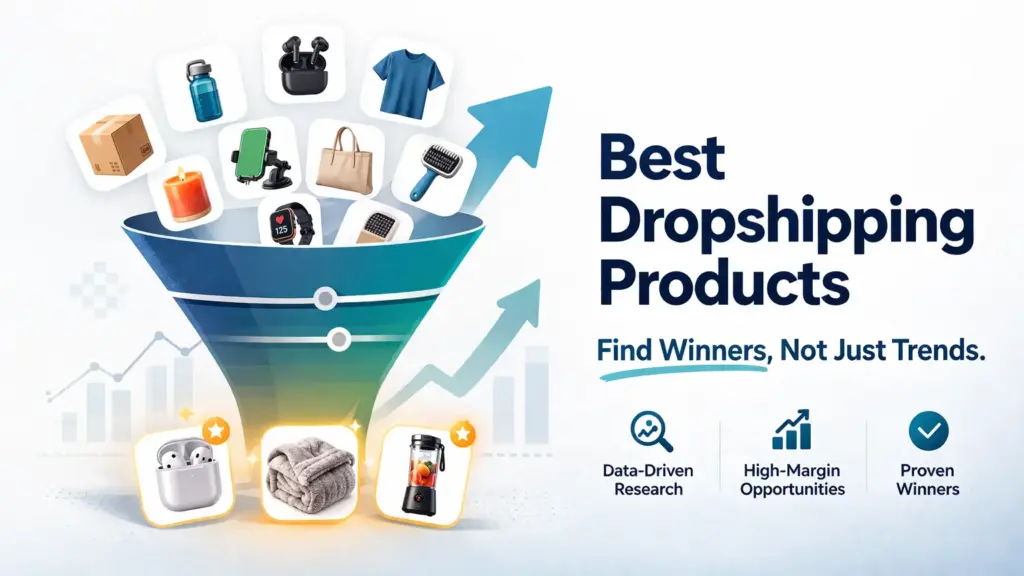
- A "winning" dropshipping product isn't just trending. It checks five boxes: solves a problem or triggers emotion, hard to find locally, lightweight and cheap to ship, has a wow factor in video content, and can sell for 2.5-3x the supplier cost.
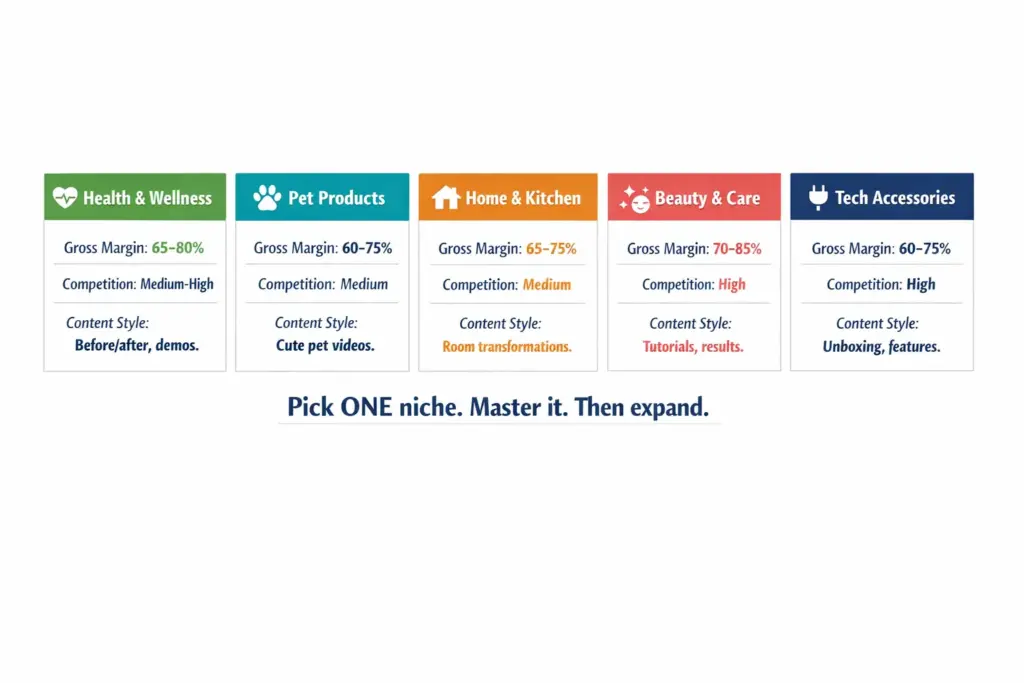
- The best dropshipping niches for 2026: health and wellness (global market over $5.6 trillion), pet products (6.8% annual growth through 2032), home and kitchen (steady demand, high perceived value), beauty and personal care (projected $571 billion by 2026), and tech accessories (constant refresh cycle with new device launches).
- Avoid the biggest product selection mistake: picking a viral product AFTER it's already saturated. By the time it's on every "best dropshipping products" list, hundreds of sellers are already running ads on it. Use Google Trends, TikTok Creative Center, and Amazon Movers & Shakers to find products on the upswing, not at the peak.
- Always order samples before listing. A $5 product that breaks on arrival costs you $20+ in refund, reshipping, and lost customer trust. Quality kills more dropshipping stores than product selection.
I’ve seen someone make $12K in a month selling a posture corrector that cost $3 from their supplier. I’ve also seen someone lose $4K in ad spend selling a “viral” LED lamp that every other store was already advertising. Same business model. Completely different outcomes. The difference was product selection.
The best dropshipping products are items with high perceived value relative to their sourcing cost, strong consumer demand, low shipping complexity, and enough differentiation that you’re not competing with 500 identical stores running the same Facebook ads to the same audience. In 2026, the top-performing dropshipping niches include health and wellness, pet products, home and kitchen, beauty and personal care, and tech accessories. But the specific products that win within those niches change constantly, which is why this guide teaches you the selection framework first, then shows you what’s working now.
If you haven’t set up your dropshipping business yet, start with our complete dropshipping guide. This article assumes you’re ready to pick products and want to pick the right ones.
The 5-Point Winning Product Filter
Before scrolling through any product list, internalize these five criteria. Every successful dropshipping product I’ve seen scores high on at least four of these five.
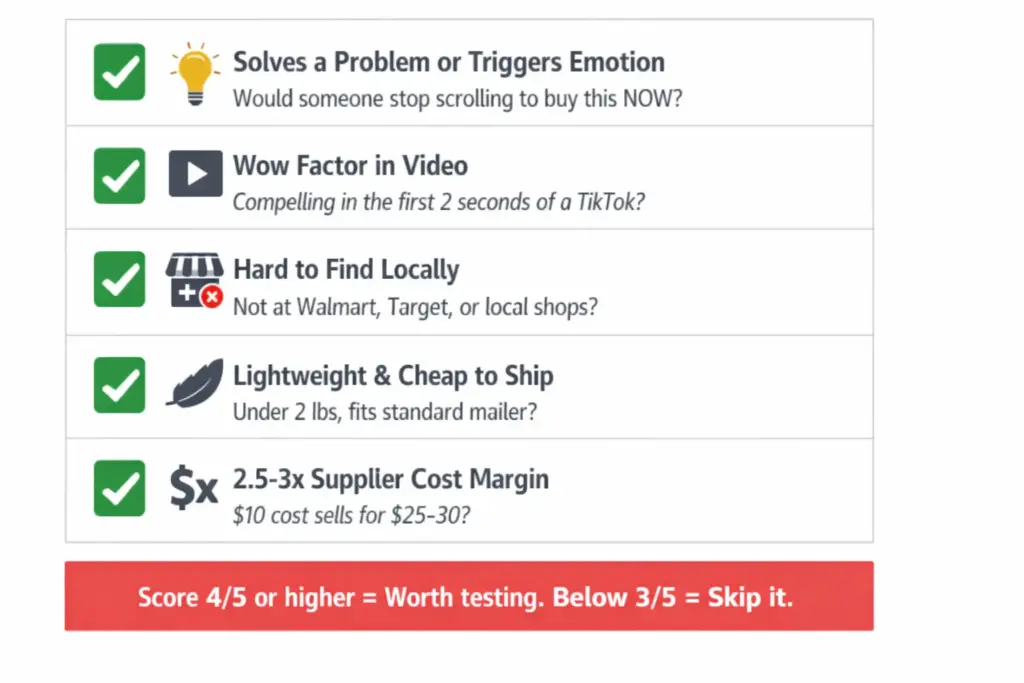
1. Solves a problem or triggers emotion. Products that fix a pain point (posture correctors, vegetable choppers, phone holders) or trigger an emotional response (personalized pet portraits, sentimental jewelry, novelty gifts) sell because people NEED them or deeply WANT them. “Cool looking” isn’t enough. Ask: “Why would someone stop scrolling and buy this right now?”
2. Has a wow factor in video. Dropshipping lives and dies on ad creative, especially short-form video on TikTok and Instagram Reels. The product needs to be visually compelling in the first 2 seconds of a video. A rain cloud aroma diffuser looks magical on camera. A generic phone case does not. If you can’t imagine a TikTok video of this product getting someone to stop scrolling, skip it.
3. Hard to find locally. If a shopper can grab it at Walmart, Target, or their local supermarket, they won’t pay shipping and wait days for delivery from your store. The best dropshipping products are things people discover online and can’t easily buy in person.
4. Lightweight and cheap to ship. Heavy, bulky, or fragile products eat your margins in shipping costs and increase damage/return rates. The sweet spot: items under 2 lbs that fit in a standard mailer or small box. Supplier shipping cost should be under $5 for domestic, under $10 for international.
5. Sells for 2.5-3x supplier cost (minimum). If your supplier charges $10, you need to sell at $25-$30 to cover ads, platform fees, and still profit. Products with high perceived value relative to their actual cost give you this breathing room. Jewelry, beauty tools, and tech accessories excel here because a $3-$8 item can retail for $20-$40.
Best Dropshipping Niches and Products for 2026
These aren’t random picks. Each niche is backed by sustained market growth, proven dropshipping margins, and strong content marketing potential. I’ve organized them by reliability, not hype.
Health and Wellness
The global wellness market is valued at over $5.6 trillion and keeps climbing. People spend on their health before almost anything else, making this the most resilient dropshipping niche across economic cycles.
Products performing well: Posture correctors ($3-$5 supplier, $20-$30 retail, ~75% gross margin). Scalp and body massagers ($8-$15 supplier, $35-$50 retail, ~65% margin). Acupressure mats ($10-$15 supplier, $35-$55 retail). Blue light blocking glasses ($2-$4 supplier, $15-$25 retail). Resistance band sets ($4-$8 supplier, $18-$30 retail). Teeth whitening kits ($5-$8 supplier, $25-$40 retail).
Why it works for dropshipping: Products are lightweight, solve specific pain points, and demonstrate beautifully in video content (before/after, reaction videos). High perceived value because anything “health-related” carries premium pricing expectations.
Watch out for: Avoid making medical claims. Stick to “wellness” and “comfort” positioning. Check supplier certifications for anything that touches skin or goes in the body.
Pet Products
The global pet care market is growing at 6.8% annually through 2032 (Global Market Insights). Pet owners are emotional buyers who spend on their animals like parents spend on children. Repeat purchase potential is massive.
Products performing well: Interactive puzzle toys ($4-$7 supplier, $18-$28 retail). Self-cleaning slicker brushes ($3-$5 supplier, $15-$22 retail). Personalized pet ID tags ($2-$4 supplier, $12-$20 retail). Portable water bottles for dogs ($4-$6 supplier, $15-$25 retail). Calming pet beds ($12-$20 supplier, $40-$65 retail). GPS pet trackers ($15-$25 supplier, $45-$70 retail).
Why it works for dropshipping: Emotional buying decisions mean less price sensitivity. Pet content performs incredibly well on social media (every pet photo gets engagement). Product variety allows you to build a full niche store rather than a single-product operation.
Home and Kitchen
People are investing more in their living spaces, especially with remote work keeping many adults home more often. Home products have high perceived value and photograph well for social content.
Products performing well: Rain cloud aroma diffusers ($10-$15 supplier, $40-$60 retail, ~70% margin). LED sunset/atmosphere lamps ($6-$10 supplier, $25-$40 retail). Magnetic knife holders and kitchen organizers ($5-$8 supplier, $20-$32 retail). Cloud-shaped shelving ($8-$12 supplier, $30-$45 retail). Smart plant watering systems ($6-$10 supplier, $22-$35 retail).
Why it works for dropshipping: Home decor has strong “wow factor” in video. Transformation content (before/after room setups) drives massive engagement. Products often double as gifts, expanding your buyer audience beyond the end user.
Beauty and Personal Care
The beauty industry is projected to reach $571 billion in revenue by 2026 (Statista). Beauty products have some of the highest markups in ecommerce and naturally generate user-created content when customers share their results.
Products performing well: Facial ice rollers ($2-$4 supplier, $12-$20 retail). Exfoliating peeling serums ($4-$5 supplier, $20-$30 retail, ~80% margin). LED light therapy masks ($15-$25 supplier, $50-$80 retail). Electric scalp massagers ($5-$8 supplier, $22-$35 retail). Press-on nail kits ($3-$5 supplier, $15-$25 retail). Heated eyelash curlers ($3-$5 supplier, $15-$22 retail).
Why it works for dropshipping: Beauty content dominates TikTok and Instagram. Before/after demonstrations are the most compelling ad format. Products are small, lightweight, and cheap to ship. Repeat purchase rates are high for consumables like serums and skincare.
Tech Accessories
Every new phone, laptop, or device launch creates a fresh wave of accessory demand. Tech accessories have low supplier costs and high perceived value because consumers associate them with their expensive devices.
Products performing well: 3-in-1 wireless charging stations ($8-$12 supplier, $30-$45 retail). MagSafe-compatible accessories ($3-$6 supplier, $15-$28 retail). Portable mini projectors ($20-$35 supplier, $60-$100 retail). Cable management organizers ($2-$4 supplier, $12-$20 retail). Laptop stands and risers ($8-$12 supplier, $28-$40 retail).
Why it works for dropshipping: Constant product refresh cycle means demand never dries up. Tech audiences are active online buyers. Products solve clear problems (cable mess, dead batteries, poor ergonomics) making marketing straightforward.
How to Validate a Product Before Spending on Ads
Finding a product that looks good on paper is step one. Validating that it will actually sell at profitable margins is step two. Here’s the validation process that saves you from wasting ad budget:
Check Google Trends. Search the product keyword. Is the trend line rising, stable, or falling? Rising or stable over 12+ months means sustained demand. A sharp spike followed by decline means you’re late to a fad. Compare with related products to see which variant has the strongest trajectory.
Check competition saturation. Search the product on Facebook Ad Library (free tool). How many active ads are running for this exact product? Under 20 active advertisers? There’s room. Over 100? The market is likely saturated and ad costs will be high. Also check AliExpress order counts – products with 10,000+ orders are established, but that also means thousands of other dropshippers are already selling them.
Order a sample. This costs $10-$30 and is the single most important validation step. Check build quality, packaging, actual shipping time, and whether the product matches the supplier photos. A $5 product that breaks on first use generates refund requests, negative reviews, and chargebacks that cost far more than the sample.
Test with a small ad budget. Spend $50-$100 on a TikTok or Meta ad campaign targeting your intended audience. Track cost per click, add-to-cart rate, and purchases. If you’re profitable (or close to it) at a small budget, the product has potential to scale. If $100 in ads generates zero sales, the product or your creative needs work – or it’s the wrong product.
Products to Avoid in 2026
Anything already on 50+ “best dropshipping products” lists. Ironic, I know. But if a product shows up on every blog post, it’s already saturated. The products above are categories and examples, not exact items to copy-paste into your store. Use them as starting points for your own research within each niche.
Products with compliance or legal risks. Supplements that make health claims, electronics without proper certifications, products that infringe on trademarks (knockoff branded goods), and anything marketed to children with safety certification requirements. One product liability issue or platform ban can destroy your store.
Heavy, fragile, or oversized items. A beautiful ceramic planter looks great but ships expensively and arrives broken 15% of the time. High return rates on fragile products eliminate your margins even if the product sells well. Stick to durable, lightweight goods.
Products under $15 retail price. At price points below $15, it’s extremely difficult to run profitable ads. After supplier cost, shipping, and ad spend, there’s nothing left. Focus on products in the $20-$60 range where impulse buying is still strong but margins are workable. Our high profit margin products guide covers the pricing math in detail.
Frequently Asked Questions
What are the best products to dropship in 2026?
Health and wellness products (posture correctors, massagers), pet products (interactive toys, GPS trackers), home decor (aroma diffusers, LED lamps), beauty tools (ice rollers, LED masks), and tech accessories (wireless chargers, laptop stands). Focus on products that solve problems and demonstrate well in video.
How do I find winning dropshipping products?
Use Google Trends for demand validation, TikTok Creative Center for viral product discovery, Amazon Movers & Shakers for rising products, and Facebook Ad Library to check competition. Run every product through the 5-point filter: solves a problem, looks great in video, hard to find locally, cheap to ship, and sells at 2.5x+ supplier cost.
What dropshipping niches are most profitable?
Beauty and personal care (70-85% gross margins), health and wellness (65-80%), pet products (60-75%), and tech accessories (60-75%). Profitability depends more on product selection within a niche than the niche itself. A poorly chosen product in a great niche still loses money.
How much should I spend testing a dropshipping product?
Budget $50-$100 per product test on ads, plus $10-$30 for a sample order. If the product shows promise (add-to-carts, low cost-per-click), scale to $200-$500 to confirm profitability. If $100 in ads generates zero engagement, move to the next product rather than throwing more money at it.
Is dropshipping still profitable in 2026?
Yes, but it requires better product selection and marketing than it did five years ago. Average beginner dropshippers earn $500-$2,000/month. Experienced sellers with optimized stores and strong ad creative can reach $10,000-$50,000+/month. The model works. Low-effort execution doesn’t.
What is a good profit margin for dropshipping?
Target 60-75% gross margin on individual products (selling price minus supplier cost). After ad spend, platform fees, and returns, aim for 15-25% net profit margin. Products with gross margins below 50% are difficult to scale profitably because ad costs consume the remaining margin.
Related reads: How to Start Dropshipping | Trending Products to Sell | High Profit Margin Products | Find Wholesale Suppliers | Profitable Ecommerce Niches | Ecommerce Business Models
Enjoying this? Get more like it every week.
One email per week with ecommerce strategies, tool picks, and seller insights. No spam.