
- Your domain name and brand identity are the first trust signals a stranger encounters. Before they read a product description or see a review, they see your name and your look. A professional, memorable, trustworthy first impression makes every subsequent conversion step easier. A cheap or confusing one adds friction to everything.
- Choose a domain that's short, easy to spell, easy to say aloud, and .com whenever possible. .com still carries the most trust and is what people type by default. Avoid hyphens, numbers, unusual spellings, and names that are hard to communicate verbally. If someone can't spell it after hearing it once, it's the wrong name.
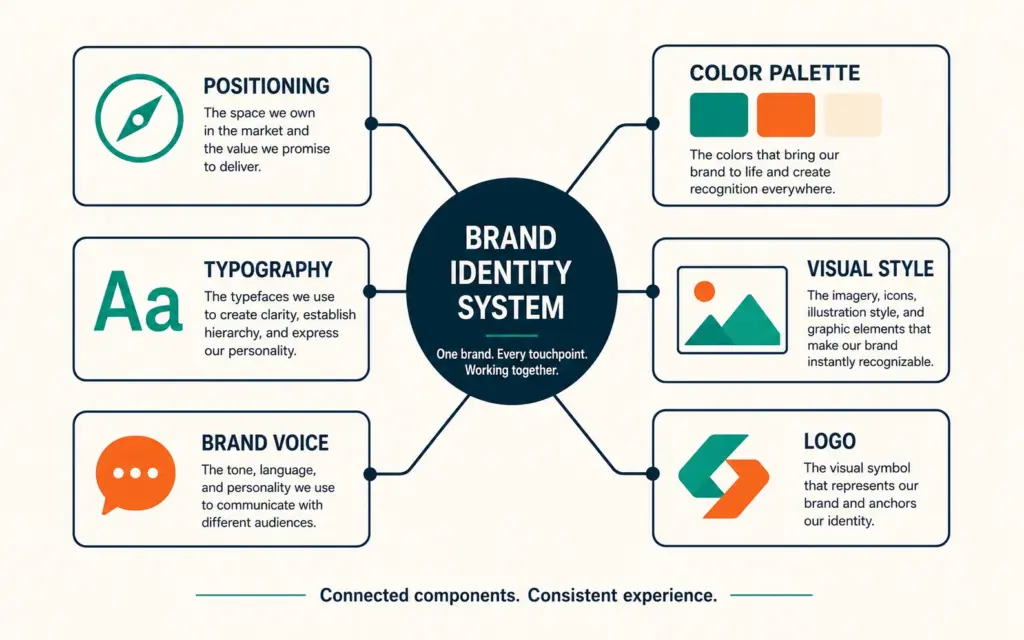
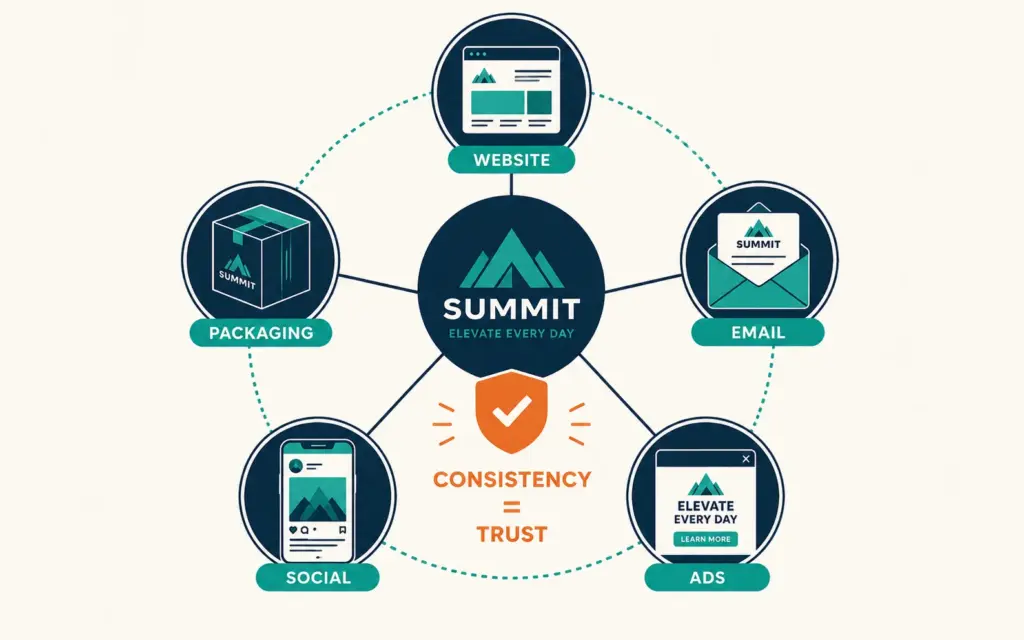
- Brand identity is more than a logo. It's the consistent system of name, colors, typography, voice, and visual style that makes your store recognizable and trustworthy across every touchpoint: website, packaging, email, social, and ads. Consistency is what makes a brand feel established rather than improvised.
- You don't need a $10,000 agency to build a solid brand. A clear positioning statement, a simple color palette (2 to 3 colors), one or two fonts, a clean logo (Canva, Looka, or a freelancer), and consistent application across touchpoints produces a professional brand for under $500. Refinement comes later with revenue.
Domain and branding decisions shape the first impression every visitor forms about your store. Before anyone reads your product descriptions, checks your reviews, or evaluates your prices, they’ve already processed your domain name and your visual identity. Those first signals tell a stranger whether your store feels legitimate and trustworthy or improvised and risky. Getting them right removes friction from every step that follows. Getting them wrong means fighting an uphill trust battle on every page.
The good news: strong branding isn’t reserved for companies with big budgets. A thoughtful name, a clean logo, a simple consistent color and type system, and a clear brand voice produce a professional impression for a few hundred dollars. The expensive part isn’t the design. It’s the clarity of thinking behind it. This guide covers choosing a domain that lasts and building a brand identity that earns trust, both without needing an agency. The first store checklist places branding early in the launch sequence because it touches everything downstream.
How to Choose a Domain Name That Lasts
Your domain is the address customers type, remember, and share. It should work for years, survive your business evolving, and communicate professionalism instantly.
The Five Rules of a Strong Ecommerce Domain
- Short and memorable. Shorter domains are easier to remember, type, and share. Aim for under 15 characters when possible. Every extra word or syllable is friction.
- Easy to spell and say aloud. The “radio test”: if you say your domain out loud and someone can’t spell it correctly, it’s the wrong name. According to Namecheap’s domain naming guidance, short, pronounceable, easy-to-spell domains consistently outperform clever or complex names on recall and direct traffic. Unusual spellings and clever misspellings feel cute but cost you traffic when people can’t find you.
- .com whenever possible. .com still carries the most trust and is the default extension people type. If your ideal .com is taken, consider a slight variation before settling for .net, .store, or .shop. Newer extensions work but start from a small trust deficit.
- No hyphens or numbers. Hyphenated domains (best-coffee-shop.com) and numbers (shop4less.com) are hard to communicate verbally (“is that the number 4 or f-o-r?”) and look less professional.
- Room to grow. Don’t box yourself in. “VeganDogTreats.com” limits you if you expand to cat products or non-vegan lines. A broader brandable name gives you room to evolve without a costly rebrand.
Brandable vs Keyword Domains
A brandable domain (Chewy, Warby Parker, Glossier) is a unique, ownable name that becomes synonymous with your brand. A keyword domain (BestDogBeds.com) includes search terms but is generic and hard to differentiate. In 2026, brandable domains generally win: they’re more memorable, more trademarkable, more defensible, and the minor SEO benefit of exact-match keyword domains has largely disappeared. Build a brand, not a keyword string. The how to start ecommerce business foundations should include brand positioning before domain selection so the name reflects the brand.
Building Brand Identity Beyond the Logo
A logo is one element of brand identity, not the whole thing. Brand identity is the complete system that makes your store recognizable and trustworthy across every touchpoint.
Positioning: What Your Brand Stands For
Before any visual design, clarify your positioning: who you serve, what problem you solve, and what makes you different. A one-sentence positioning statement (“We make affordable, sustainable pet products for eco-conscious dog owners”) guides every subsequent branding decision. Without it, your visual choices are arbitrary. With it, they’re coherent. The niche validation work you’ve done informs your positioning: you already know your audience and their pain points.
Visual System: Colors, Typography, and Style
Color palette: Choose 2 to 3 core colors. One primary (your dominant brand color), one or two accents. Colors carry psychological associations (blue = trust, green = natural, black = premium) and should fit your positioning. Consistency matters more than perfection: using the same colors everywhere makes your brand feel established.
Typography: One or two fonts maximum. One for headings, one for body text. Clean, readable fonts signal professionalism. Avoid decorative fonts that hurt readability. Your ecommerce web design should apply these fonts consistently across your entire site.
Visual style: Photography style, iconography, and overall aesthetic. Bright and playful, minimal and premium, warm and handmade: whatever fits your positioning, apply it consistently. The product photography style is a major part of your visual identity and should match your brand personality.
Brand Voice: How You Sound
Your brand voice is the personality in your writing across product descriptions, emails, social posts, and support. Playful, authoritative, warm, minimalist: pick a voice that fits your positioning and apply it consistently. A consistent voice makes your brand feel like a coherent personality rather than a faceless store. The content marketing and email marketing strategy both depend on a defined brand voice to feel cohesive.
Creating Your Logo Without an Agency
You don’t need to spend thousands on a logo to launch. Options ranked by cost:
- DIY tools (free to $50): Canva, Looka, and Hatchful generate clean logos from templates. Suitable for launch. You can refine later.
- Freelance designer ($100 to $500): Fiverr, 99designs, or Upwork designers create custom logos. Better differentiation than templates at a reasonable cost.
- Design agency ($1,000+): Full brand identity systems. Worth it once you have revenue and need comprehensive brand guidelines, not at launch.
A clean, simple logo beats an elaborate one. Your logo needs to work at small sizes (favicon, social avatar), in one color (for packaging or invoices), and remain recognizable. Simplicity scales. Complexity breaks. Test your logo at favicon size (16×16 pixels) before finalizing it: if it becomes an unrecognizable blob at that size, simplify it. The best ecommerce logos read clearly whether they appear on a browser tab, a shipping label, or a billboard. Start simple, refine with revenue. The financial planning and scaling budget should treat comprehensive branding as a post-revenue investment, not a pre-launch necessity.
Applying Your Brand Consistently Across Touchpoints
Consistency is what transforms individual design elements into a recognizable brand. Apply your identity system everywhere:
- Website: Colors, fonts, logo, and voice throughout.
- Packaging: Branded boxes, tissue, thank-you cards. The unboxing moment is a powerful brand touchpoint that drives social sharing and repeat purchases.
- Email: Branded templates matching your website. The welcome email series is often a customer’s second brand impression after the website.
- Social media: Consistent profile images, color treatment, and voice across platforms.
- Ads: Creative that matches your brand so paid traffic recognizes the same brand when they land on your site.
Inconsistency (different colors on your site vs your ads, a formal email voice vs a casual social voice) makes a brand feel improvised and less trustworthy. A simple brand applied consistently beats an elaborate brand applied haphazardly. Document your choices in a one-page brand guide (colors with hex codes, fonts, logo files, voice notes) so every touchpoint stays aligned as you grow and delegate. The standard operating procedures for your store should include this brand guide as a reference for anyone creating content.
Common Domain and Branding Mistakes
Choosing a domain that’s hard to spell or say. If you constantly have to spell your domain for people, you chose wrong. Test names on friends verbally before buying.
Boxing yourself in with a too-narrow name. A hyper-specific name limits expansion. Leave room to grow your product range without a rebrand.
Inconsistent application. Using different colors, fonts, or voice across touchpoints undermines the trust that consistency builds. Document your brand and apply it everywhere.
Over-investing before validation. Spending $5,000 on branding before proving the business works is premature. Launch with a solid, affordable brand. Invest in comprehensive branding once revenue justifies it.
Ignoring trademark checks. Before committing to a name, search the USPTO trademark database and check that the social handles are available. Discovering your brand name infringes an existing trademark after you’ve launched is an expensive mistake. According to Shopify’s business naming guide, checking domain, trademark, and social handle availability together before committing prevents costly rebrands later.
Frequently Asked Questions
Choose a domain that’s short (under 15 characters ideally), easy to spell and say aloud, and .com whenever possible. Avoid hyphens, numbers, and unusual spellings. Apply the “radio test”: if someone can’t spell it correctly after hearing it once, pick a different name. Favor brandable names (unique, ownable) over generic keyword domains. Leave room to grow so a narrow name doesn’t force a rebrand when you expand your product range.
.com whenever possible. It carries the most trust and is the extension people type by default. If your ideal .com is taken, try a slight variation before settling for .net, .store, or .shop. Newer extensions work but start from a small trust deficit. Never buy a confusingly similar .com to a competitor. Avoid extensions that make your domain harder to communicate or remember.
Under $500 for launch. A DIY or freelance logo ($0 to $500), a simple 2 to 3 color palette, one or two fonts, and consistent application produce a professional brand affordably. Comprehensive brand identity systems from agencies ($1,000+) are worth it once you have revenue and need full brand guidelines. Don’t over-invest in branding before validating the business works. Launch solid and affordable, refine with revenue.
No. A logo is one element. Brand identity is the complete system: name, colors, typography, visual style, and voice applied consistently across every touchpoint (website, packaging, email, social, ads). Consistency across these elements is what makes a brand recognizable and trustworthy. A store with a great logo but inconsistent colors, fonts, and voice across touchpoints feels improvised. A store with a simple logo applied consistently feels established.
Brandable in most cases. A brandable domain (a unique, ownable name) is more memorable, more trademarkable, more defensible, and gives room to grow. Keyword domains (like BestDogBeds.com) are generic, hard to differentiate, and the minor SEO benefit they once offered has largely disappeared. Build a brand people remember, not a keyword string. The exception is if you’re building a narrow, single-category store with no expansion plans, where a keyword domain might aid clarity.
Check three things together: domain availability (is the .com available?), trademark availability (search the USPTO database to avoid infringing an existing trademark), and social handle availability (are the usernames free on Instagram, TikTok, and other platforms you’ll use?). Committing to a name available as a domain but already trademarked, or available everywhere except the social platforms you need, leads to costly rebrands. Verify all three before buying the domain.
Related Reads
- First Store Checklist
- How to Start Ecommerce Business
- Niche Validation
- Ecommerce Web Design
- Product Photography
- Content Marketing
Enjoying this? Get more like it every week.
One email per week with ecommerce strategies, tool picks, and seller insights. No spam.