
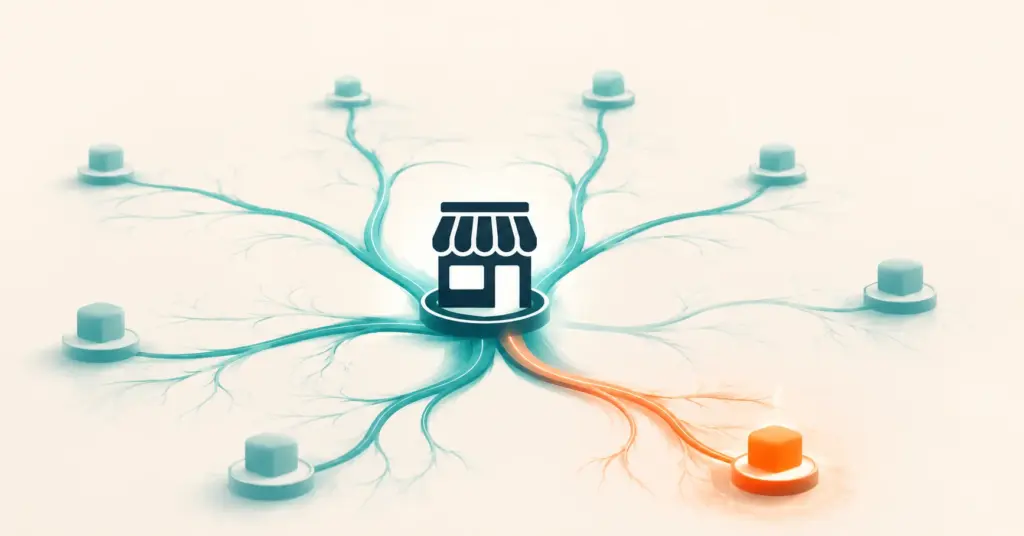
- Marketplace expansion means adding new sales channels (Amazon, Etsy, eBay, Walmart, TikTok Shop) beyond your own store or your first marketplace. Done right, it multiplies reach and diversifies revenue away from dependence on a single channel. Done wrong, it multiplies operational complexity (inventory sync, order management, channel-specific requirements) faster than it multiplies revenue.
- The prerequisite for expansion is a stable, profitable base. If your primary channel isn't running smoothly with solid margins and controlled operations, adding channels amplifies your problems across more surfaces. Master one channel before adding the next. Expansion should be sequential, not simultaneous.
- Choose marketplaces by audience fit, not just size. Etsy suits handmade and vintage, Amazon suits broad demand and Prime shoppers, eBay suits collectibles and used goods, TikTok Shop suits discovery-driven impulse products. Adding a marketplace whose audience doesn't match your product wastes effort. Match the channel to where your buyers actually shop.
- The operational backbone of multichannel selling is inventory synchronization. Overselling (selling stock you don't have because channels didn't sync) damages your seller ratings across platforms. A central inventory system or multichannel tool that syncs stock in real time across all channels is essential before you expand beyond two channels.
Marketplace expansion is the strategy of growing your sales by adding new channels beyond your original store or first marketplace. Instead of relying on a single source of revenue, you list your products across Amazon, Etsy, eBay, Walmart, TikTok Shop, and your own site, reaching buyers wherever they prefer to shop. The appeal is obvious: more channels mean more reach, more sales, and less dependence on any single platform’s algorithm or policy changes. According to BigCommerce’s multichannel research, retailers selling across multiple channels tend to see higher total revenue, but only when the operational systems keep pace with the added complexity. But expansion carries a hidden cost that catches many sellers off guard: each new channel multiplies your operational complexity, and if that complexity outruns the added revenue, expansion actually hurts your business.
The sellers who expand successfully treat it as a deliberate, sequential process built on a stable foundation, not a land grab across every available platform at once. They master one channel first, systematize its operations until they run predictably, and only then add the next channel that genuinely fits their product and their audience. This guide covers when to expand, which marketplaces to choose, how to manage the operational complexity, and how to avoid the overextension that turns expansion into a liability. The multichannel selling guide covers the day-to-day mechanics; this focuses on the expansion strategy.
The Prerequisite: A Stable, Profitable Base
Before adding any channel, your existing channel needs to be running smoothly with solid margins and controlled operations. This is the rule expansion-eager sellers most often break. If your primary channel has thin margins, inventory problems, or customer service backlogs, adding a second channel doesn’t fix those problems. It replicates them across more surfaces and stretches your attention thinner.
Expansion amplifies whatever state your operations are in. A well-run single channel becomes a well-run two-channel operation. A chaotic single channel becomes chaos squared. Confirm your base is stable first: consistent profitability (verify with the profit margin calculator), reliable inventory management, documented fulfillment processes, and manageable customer service load. The ecommerce profit margins on your existing channel need to be healthy enough to absorb the fees and costs a new channel adds, since each marketplace takes its own cut.
Choosing the Right Marketplaces for Your Product
The biggest strategic error is choosing marketplaces by size rather than fit. Amazon is the largest, but that doesn’t make it right for every product. Match the channel to where your buyers actually shop:
- Amazon: Broad demand, Prime shoppers, competitive commodity and branded products. Massive reach but intense competition and fee structure. Best for products with proven demand and margins that survive Amazon’s fees. See the Amazon seller guide.
- Etsy: Handmade, vintage, craft supplies, and personalized products. A buyer base specifically seeking unique, non-mass-produced items. Wrong for generic commodity products. See the Etsy SEO guide.
- eBay: Collectibles, used goods, parts, and hard-to-find items. Auction and fixed-price formats. Strong for categories where buyers hunt for specific or rare items.
- Walmart Marketplace: Broad consumer products, value-oriented shoppers, growing Amazon alternative with less seller saturation in many categories.
- TikTok Shop: Discovery-driven, impulse-friendly products that demonstrate well in video. Content-commerce rather than search-commerce. See the TikTok Shop guide.
Add the channel whose audience matches your product, not just the one with the most users. A handmade jewelry brand belongs on Etsy before Amazon, where its craft story resonates with buyers specifically seeking handmade goods. A video-demonstrable gadget belongs on TikTok Shop, where a fifteen-second demo can drive impulse purchases that no static Amazon listing would capture. The channel shapes how your product is discovered and how it is sold, so the fit between product and channel determines your realistic revenue ceiling on that platform. Matching product to channel audience is what makes expansion pay off. According to Amazon’s multichannel selling guidance, the strongest results come from meeting customers on the channels they already prefer rather than forcing your product onto every available platform.

Inventory Synchronization: The Operational Backbone
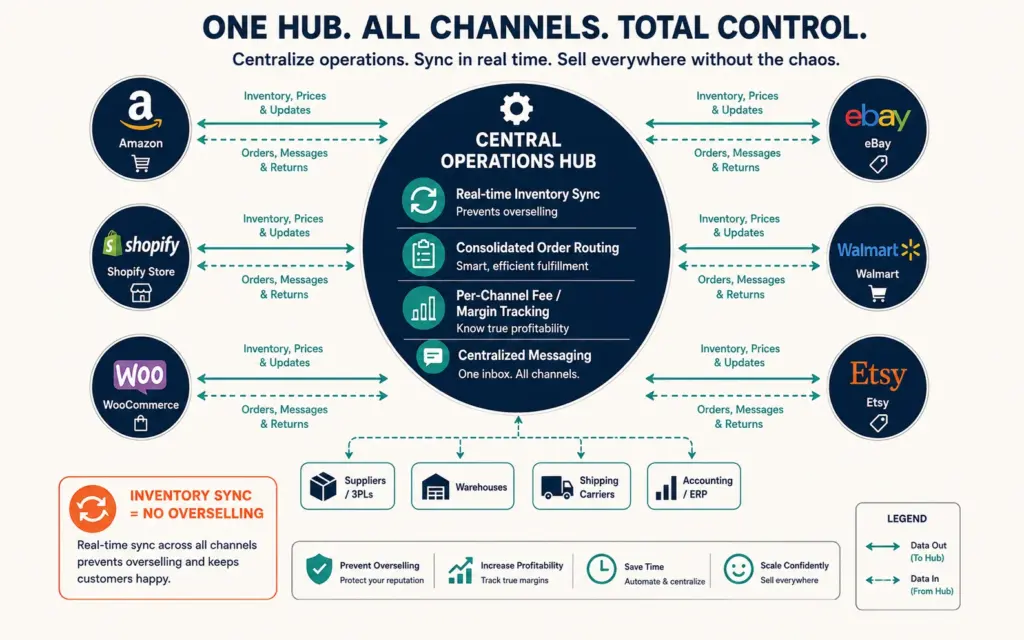
The single most important operational capability for multichannel selling is real-time inventory synchronization. When you sell the same product across multiple channels, your stock must sync across all of them instantly. Otherwise you oversell: two customers on two channels buy the last unit, and you can only fulfill one. Overselling forces cancellations, which damage your seller ratings on platforms where ratings determine visibility and buyer trust.
Before expanding beyond two channels, put a central inventory system in place. Options range from your ecommerce platform’s native multichannel features to dedicated tools like Sellbrite, Linnworks, or ChannelAdvisor that sync inventory, orders, and listings across all your channels from one dashboard. The inventory management guide covers the systems that prevent overselling. This infrastructure isn’t optional at scale: manual inventory tracking across three or more channels is a guaranteed source of costly errors. The failure mode is quiet until it isn’t: everything works fine across two channels tracked in a spreadsheet, then a third channel is added, a popular product sells simultaneously on two of them, and suddenly you’re canceling orders and absorbing rating hits on platforms where a few bad marks can bury your listings. The ecommerce tools and tech stack should include a multichannel management layer once you pass two active channels.
Managing the Operational Complexity of Multiple Channels
Each marketplace has its own requirements, and the cumulative complexity is what overwhelms unprepared sellers:
Channel-specific listings. Each platform has different listing formats, image requirements, category structures, and optimization rules. A listing optimized for Amazon isn’t optimized for Etsy. Budget time for channel-specific listing work.
Order management across channels. Orders flow in from multiple sources and need consolidated fulfillment. A multichannel tool or integrated system routes all orders to one workflow so your order fulfillment process handles them consistently regardless of source.
Channel-specific fees and margins. Each marketplace takes a different cut (Amazon referral fees, Etsy transaction and offsite ad fees, marketplace commissions). The same product has different net margins on different channels. Price and prioritize accordingly.
Customer service across platforms. Each channel has its own messaging system and service expectations. Consolidate where possible, and ensure response times meet each platform’s standards since slow response hurts ratings.
The ecommerce automation tools that sync inventory, route orders, and centralize messaging are what make multichannel operations manageable. Without them, each added channel adds hours of manual work that eventually caps your ability to expand further.
Avoiding Overextension: When Not to Expand
When your base channel isn’t stable. Fix your foundation before adding complexity. An unstable base plus a new channel equals amplified problems.
When you lack inventory sync infrastructure. Expanding beyond two channels without real-time inventory sync guarantees overselling and rating damage. Build the infrastructure first.
When the new channel’s audience doesn’t fit. Adding a marketplace where your product doesn’t match buyer intent wastes effort for minimal return. Fit beats size.
When margins can’t absorb another channel’s fees. If your margins are thin, a new channel’s fees may make sales there unprofitable. Confirm the math before listing.
When you’re already at operational capacity. If you’re barely keeping up with your current channels, adding another will break something. Expand when you have operational headroom, not when you’re maxed out, because the new channel will demand attention exactly when you have none to spare. The hiring ecommerce team or a virtual assistant may need to come before the next channel so you have the capacity to run it well.
Sequential, deliberate expansion built on stable operations and channel-audience fit is what turns multichannel selling into diversified, growing revenue that no single platform change can wipe out overnight. Simultaneous expansion across every platform without the operational backbone is what turns it into a margin-eroding operational nightmare. The ecommerce KPIs to watch during expansion: per-channel profitability, oversell/cancellation rate, and blended margin, so you catch problems before they compound.
Frequently Asked Questions
Expand when your existing channel is stable and profitable with controlled operations: consistent margins, reliable inventory management, documented fulfillment, and manageable customer service. Expansion amplifies your current operational state, so a well-run channel becomes a well-run two-channel operation while a chaotic one becomes worse. Also ensure you have inventory sync infrastructure and operational headroom. Don’t expand to escape problems on your current channel; fix those first, since a new channel replicates them.
Choose by audience fit, not size. Match your product to where its buyers shop: Etsy for handmade, vintage, and personalized items; Amazon for broad demand and Prime shoppers; eBay for collectibles and hard-to-find goods; Walmart for value-oriented broad consumer products; TikTok Shop for discovery-driven, video-demonstrable products. A handmade brand belongs on Etsy before Amazon. Adding the largest marketplace isn’t always right; adding the one whose audience matches your product is.
Use real-time inventory synchronization. When you sell across multiple channels, stock must sync instantly across all of them, or two customers can buy the same last unit, forcing a cancellation that damages your seller ratings. Use a central inventory system: your platform’s native multichannel features or a dedicated tool like Sellbrite, Linnworks, or ChannelAdvisor. This is essential before expanding beyond two channels. Manual inventory tracking across three or more channels guarantees costly overselling errors.
Yes. Each marketplace takes a different cut: Amazon referral fees, Etsy transaction plus offsite ad fees, various marketplace commissions. The same product sold at the same price nets different profit on different channels after fees. Calculate your net margin per channel and price or prioritize accordingly. A product profitable on your own store might be marginally profitable or unprofitable on a high-fee marketplace. Confirm the margin math before listing a product on a new channel.
As many as you can operate well, added sequentially. There’s no ideal number; the constraint is operational capacity and channel-audience fit. Start with your best-fit channel, systematize its operations, then add the next fitting channel once you have inventory sync infrastructure and operational headroom. Many successful sellers run two to four channels effectively. Running more requires strong multichannel tools and often additional staff. Expand when you have capacity, not when you’re already maxed out.
The essential tool is a multichannel management system that syncs inventory, routes orders, and centralizes listings across channels. Options include your ecommerce platform’s native multichannel features or dedicated tools like Sellbrite, Linnworks, and ChannelAdvisor. These prevent overselling, consolidate order fulfillment into one workflow, and let you manage listings from a single dashboard. Without this infrastructure, each added channel adds hours of manual work that eventually caps your ability to expand and creates costly errors.
Related Reads
- Multichannel Selling
- Amazon Seller Guide
- TikTok Shop Guide
- Inventory Management
- Ecommerce Automation
- Ecommerce Profit Margins
Enjoying this? Get more like it every week.
One email per week with ecommerce strategies, tool picks, and seller insights. No spam.