
- High demand low competition products are items with strong buyer interest (300+ monthly sales or BSR 1,000-50,000) but few established sellers (top listings under 500 reviews). These windows exist in emerging niches, seasonal shifts, and underserved micro-audiences.
- The formula is simple: High Search Volume + Low Seller Saturation = Opportunity. But most sellers skip validation and chase products based on someone else's list instead of learning to find their own.
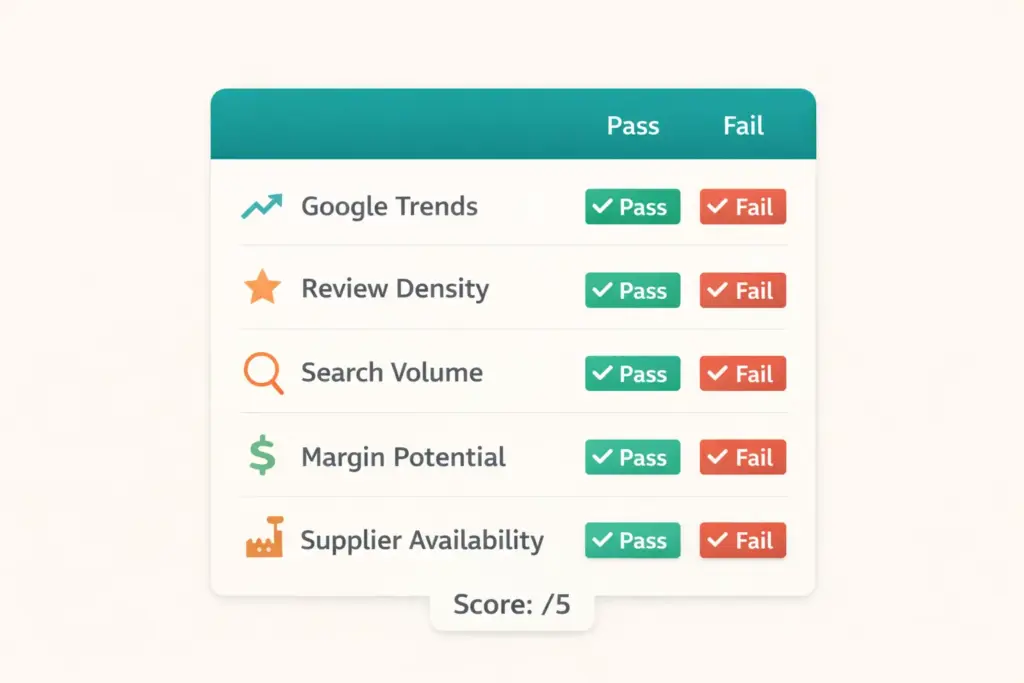
- Use the 5-metric validation scorecard: Google Trends direction, Amazon review density, search volume, margin potential (3x markup minimum), and supplier availability. Products that pass all five are worth testing.
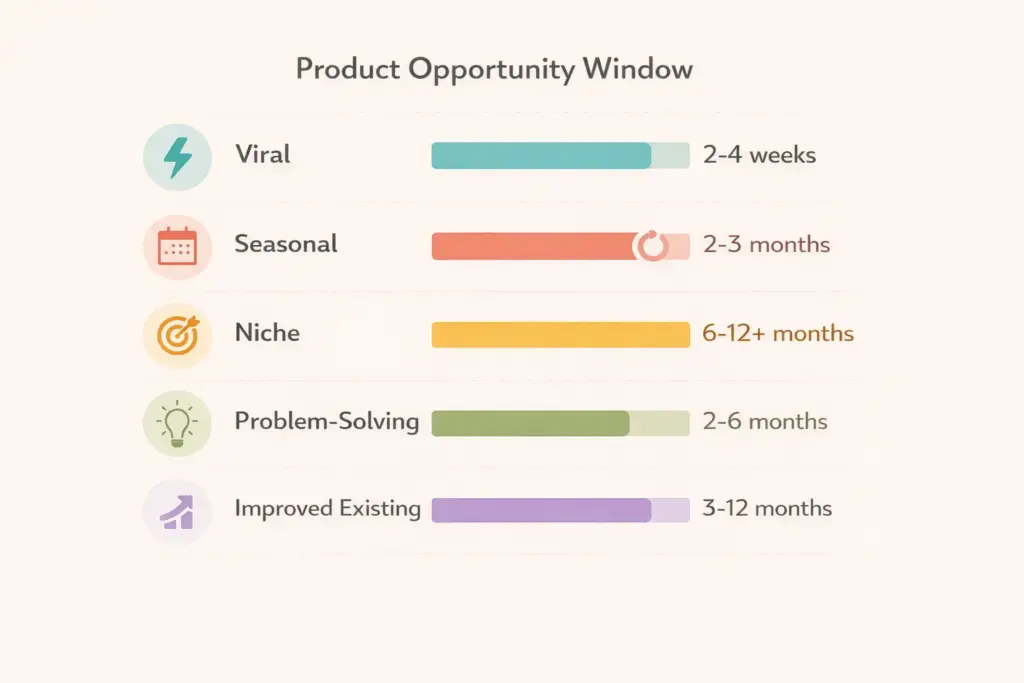
- Low competition windows don't stay open forever. Viral products saturate in weeks. Niche products hold longer. The skill isn't just finding these products but recognizing which type you're looking at and acting at the right speed.
High demand low competition products are items that many buyers actively search for and purchase, but relatively few sellers offer, creating a gap where new entrants can capture sales without fighting established brands on price or review count. These products typically show Amazon BSR rankings between 1,000 and 50,000 in their category, Google Trends interest that’s steady or climbing, and top-selling listings with under 500 reviews.
Here’s the problem with every “high demand low competition products” list on the internet: the moment someone publishes a product as low competition, hundreds of sellers pile in and it stops being low competition. That’s why learning the research method matters more than any specific product recommendation.
This guide teaches you how to find these products yourself using free tools and a repeatable process. I’ve included 15 validated ideas across five categories to get you started, but the real value is the framework you’ll use to find products nobody else has listed in an article yet. If you’re still deciding what to sell online, start here and work through the validation process before committing money to any product.
What Makes a Product High Demand and Low Competition?
Not every popular product is high demand. Not every empty niche is an opportunity. You need both sides of the equation. Here’s how to measure each one.
Measuring Demand
Demand means people are actively searching for and buying a product. Here’s what the numbers look like:
| Metric | Where to Check | What “High Demand” Looks Like |
|---|---|---|
| Amazon BSR | Product details section | BSR 1,000-50,000 in main category |
| Monthly search volume | Google Keyword Planner, Ubersuggest | 1,000+ monthly searches for the product keyword |
| Google Trends | trends.google.com | Steady or rising interest over 12+ months |
| Amazon estimated sales | Jungle Scout, Helium 10 | 300+ units/month for top sellers |
| eBay sold listings | eBay search filter: Sold Items | Multiple sales per week at viable prices |
Measuring Competition
Low competition means you can realistically rank and sell without massive ad budgets or thousands of reviews. Here’s what to look for:
| Metric | Where to Check | What “Low Competition” Looks Like |
|---|---|---|
| Top seller review count | Amazon search results page 1 | Top 10 listings average under 500 reviews |
| Brand dominance | Amazon search results | No single brand holds 50%+ of page 1 |
| Listing quality | Manual review of top listings | Poor photos, thin descriptions, missing A+ content |
| Keyword difficulty | Ahrefs, SEMrush, Ubersuggest | KD under 40 for main product keyword |
| Number of sellers | Amazon search results count | Under 1,000 total results for specific search terms |
The sweet spot is where both tables overlap: products that hit the demand thresholds AND the competition thresholds. That intersection is where profitable opportunities live.
Five Types of High Demand Low Competition Products
Not all low competition windows are the same. Understanding which type you’re looking at determines how fast you need to move and how long the opportunity will last.
1. Viral Products (Act Fast, Short Window)
These surge from social media and cultural moments. When a product goes viral on TikTok, there’s a 2-4 week window where demand skyrockets before dozens of sellers flood in. The opportunity is real but brief. If you can source and list within the first week of a trend, margins are excellent. By week four, competition has usually caught up.
How to spot them: Monitor TikTok’s trending products section, Instagram Explore, and Amazon’s Movers and Shakers page daily. Products jumping 10,000+ BSR positions overnight are potential viral hits.
2. Seasonal Products (Predictable Timing)
Holiday decorations, summer outdoor gear, back-to-school supplies, and gifting items all follow predictable demand cycles. The low competition window opens 2-3 months before peak season because most sellers wait too long to list. If you’re sourced and listed before competitors wake up, you capture the early demand.
How to spot them: Use Google Trends with a 5-year view to identify seasonal patterns. Trending products often have seasonal components that experienced sellers plan around months in advance.
3. Niche Products (Longest Opportunity)
Products serving specific micro-audiences that big brands ignore. Breed-specific dog accessories, left-handed kitchen tools, products for specific hobbies or professions. These low competition niches stay open longer because the market is too small for major brands to care about, but perfectly profitable for a focused independent seller.
How to spot them: Browse Reddit communities, Facebook groups, and forums in your interest areas. What are people complaining about not being able to find? That complaint is your product opportunity.
4. Problem-Solving Products (Technology-Driven)
New tech creates new problems that create new product opportunities. Each iPhone model launch triggers demand for new cases and accessories. Each workplace trend (standing desks, remote work, video calls) creates demand for supporting products. The competition is low because the problem is new.
How to spot them: Follow tech product launches and workplace trends. When Apple or Samsung announces a new device, the accessories market opens up immediately for sellers who move quickly.
5. Improved Existing Products (Quality Gap)
Sometimes the opportunity isn’t a new product but a better version of something that already sells well. Read the 1-3 star reviews on popular Amazon products. Every recurring complaint is a blueprint for a superior version. “The handle breaks after two months.” “The sizing runs small.” “It doesn’t come with batteries.” Fix the complaints, and you’ve got a high demand product with a built-in competitive advantage.
How to spot them: Pick a category where you have knowledge. Read 50+ negative reviews on the top-selling products. The patterns will be obvious.
15 High Demand Low Competition Products for 2026
These are validated against the metrics above as of the time of writing. Remember: competition levels shift. Use these as starting points for your own research, not as a final answer.
Eco-Friendly and Sustainable
- Reusable beeswax food wraps. Growing search interest, repeat purchases, and most Amazon listings have under 300 reviews. Margin potential: 3-4x markup.
- Bamboo utensil travel sets. Steady demand from sustainability-conscious buyers. Lightweight, cheap to ship, easy to private label.
- Compostable phone cases. Combines tech accessory demand with eco-positioning. Competition is thin because most case sellers focus on design, not materials.
Health and Wellness
- Gua sha and facial massage tools (premium materials). High demand, but most listings use cheap jade knockoffs. Natural stone or stainless steel versions with proper material sourcing stand out.
- Posture corrector braces. Remote work created permanent demand. Products that emphasize comfort over rigidity address the main complaint in existing reviews.
- Mushroom supplement blends (lion’s mane, reishi). Growing search volume year-over-year, and the supplement space has room for brands that lead with transparency and third-party testing.
Home and Kitchen
- Under-desk foot hammocks. Unusual products to sell that solve a real problem for remote workers. Low competition because it’s a niche product most sellers haven’t discovered.
- Magnetic spice rack organizers. Tiny kitchen solutions have steady demand. Most listings have poor photography and generic descriptions, meaning a well-branded listing can dominate.
- Silicone pot handle covers. Cheap to source ($0.50-1.00), sells for $8-12, and addresses a universal kitchen pain point. Few branded competitors.
Pet Products
- Breed-specific dog bandanas. “Golden retriever bandana” or “French bulldog accessories” have passionate, niche audiences. Print on demand makes testing risk-free.
- Slow feeder puzzle bowls (unusual shapes). The basic slow feeder bowl market is competitive. Unique designs and shapes still have room.
- Pet nail grinder replacements. Consumable accessories for popular pet tools. Repeat purchase built in, and most sellers focus on the grinder itself, not the replacement parts.
Tech Accessories
- Privacy screen protectors with blue-light filter. Dual-function product that combines two buyer motivations. Search volume growing as screen time awareness increases.
- Magnetic cable organizers for desks. Clean desk aesthetics drive consistent demand. Most current listings are generic with no brand story.
- Laptop camera cover slides (premium materials). Privacy concern is permanent. Cheap plastic covers dominate. Metal or wood options command 3-5x markups.
The 5-Metric Validation Scorecard
Before committing money to any product, score it against these five criteria. Products that pass all five are worth testing. Products that fail two or more should be skipped.
| Metric | Pass | Fail | Tool |
|---|---|---|---|
| Google Trends (12-month) | Steady or rising | Declining or single spike | Google Trends |
| Amazon review density (page 1 avg) | Under 500 reviews | Over 1,000 reviews | Amazon search results |
| Monthly search volume | 500+ searches/month | Under 200 searches/month | Ubersuggest, Keyword Planner |
| Margin potential (3x rule) | Can sell at 3x+ product cost | Less than 2x markup possible | Supplier quotes + competitor pricing |
| Supplier availability | 3+ suppliers on Alibaba/Thomasnet | Single source or no suppliers found | Alibaba, Thomasnet, CJdropshipping |
This scorecard takes 15-30 minutes per product. That’s a small investment compared to the thousands you could lose by skipping validation. Our best selling products research guide covers the Amazon-specific research process in more depth.
How to Find High Demand Low Competition Products (Step by Step)
Step 1: Start With Category Browsing
Open Amazon’s Best Sellers page and drill into subcategories. The deeper you go (Electronics > Computer Accessories > Laptop Stands > Portable Laptop Stands), the more likely you are to find products where competition is manageable. Browse Movers and Shakers for products gaining rank quickly.
Step 2: Filter by Review Count
On the search results page for your product idea, count the reviews on the first 10 listings. If most have under 500, there’s room for a new entrant. If the top five all have 5,000+, the category is locked up by established brands. Move on.
Step 3: Validate With Google Trends
Search your product keyword on Google Trends with a 5-year view. You want steady or rising interest. A single spike that’s already declining means you’re late. A flat line at low interest means there’s no demand to capture.
Step 4: Check Sourcing and Margins
Search your product on Alibaba or Thomasnet. Can you find at least three suppliers? What’s the unit cost at 100-500 units? Can you sell at 3x that cost after platform fees, shipping, and ads? If the margin math doesn’t work, the product doesn’t work. Our pricing strategy guide covers the full cost calculation.
Step 5: Read Negative Reviews for Your Angle
Read the 1-3 star reviews on the top-selling products in your chosen category. Every recurring complaint is your competitive angle. “Breaks easily” means you source a more durable version. “Runs small” means you offer a better sizing guide. “Arrived damaged” means you invest in better packaging. Solving existing buyer frustrations is the fastest path to earning high profit margins in a competitive market.
Step 6: Test Small Before Scaling
Order 10-25 units (or use dropshipping to test with zero inventory). Run a small ad test ($50-100). If people buy, scale up. If they don’t, you’ve lost $50, not $5,000. Explore different business models to find the one that matches your risk tolerance, and pick the right ecommerce platform to build your store on.
Mistakes That Turn Low Competition Into No Sales
Confusing “no competition” with “no demand.” If nobody is selling a product, it might be because nobody wants it. Low competition paired with low search volume means there’s no market, not an untapped goldmine. Always verify demand first.
Copying someone else’s product list. By the time you read about a “low competition” product in a blog post, so have thousands of other sellers. Use published lists as category inspiration, then dig deeper into sub-niches within those categories.
Ignoring the 3x margin rule. A product that costs $15, sells for $25, and has $7 in fees leaves you with $3 profit. That’s $3 per sale before ad costs, returns, and your time. You need 3x markup minimum to build a sustainable business, not just cover costs.
Chasing virality without a backup plan. Viral products generate explosive short-term revenue. But when the trend ends (and it will), you need products with evergreen demand to sustain your business. Build your store on niche or problem-solving products, then ride viral waves as bonuses when they appear.
Launching without differentiation. Finding a low-competition product and listing it with the same generic photos and copy as existing sellers isn’t a strategy. Your advantage must be visible: better images, better descriptions, better packaging, better customer experience, or a better version of the product itself. Check our marketing resources for building a brand that stands out.
Frequently Asked Questions
High demand low competition products are items with strong buyer interest (300+ monthly sales, BSR under 50,000) but limited competition from established sellers (top listings averaging under 500 reviews, no dominant brand presence). These opportunities typically exist in emerging niches, seasonal trends, and underserved micro-audiences.
You can use free tools like Google Trends to validate demand, Amazon Best Sellers and Movers & Shakers to identify trending products, and eBay sold listings for real transaction data. Analyze Amazon search results to evaluate competition by checking review counts. Always validate products using a structured scorecard before investing.
Some of the best low competition niches include eco-friendly alternatives, breed-specific pet products, ergonomic home office accessories, specialty food items, and personalized gifts. The key is niche specificity—broad categories are competitive, but targeted sub-niches attract passionate buyers with less competition.
It varies by product type. Viral products can become saturated within 2–4 weeks, while seasonal products cycle annually. Niche products serving micro-audiences may stay low competition for months or years. Problem-solving products remain viable until major brands enter the market.
Examples of unusual low competition products include under-desk foot hammocks, magnetic cable organizers, breed-specific pet accessories, compostable phone cases, and premium laptop camera covers made from metal or wood. Highly specific and niche products tend to have lower competition.
Yes, but ensure the product is available from reliable suppliers with consistent stock. Platforms like CJdropshipping, Spocket, and AliExpress can help. Look for products with multiple suppliers and strong reviews, and validate them using the same criteria as private label products.
Related Reads
- What to Sell Online: Product Ideas by Business Model
- Trending Products to Sell
- Best Selling Products Research
- High Profit Margin Products
- Most Profitable Ecommerce Niches
- Ecommerce Business Ideas by Budget
Enjoying this? Get more like it every week.
One email per week with ecommerce strategies, tool picks, and seller insights. No spam.