
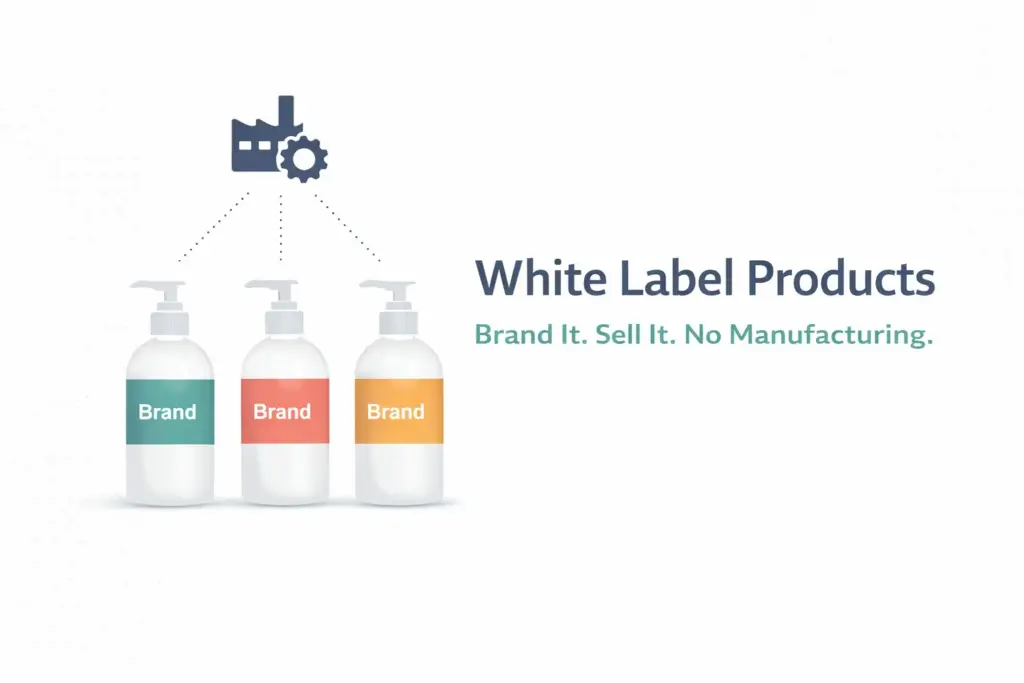
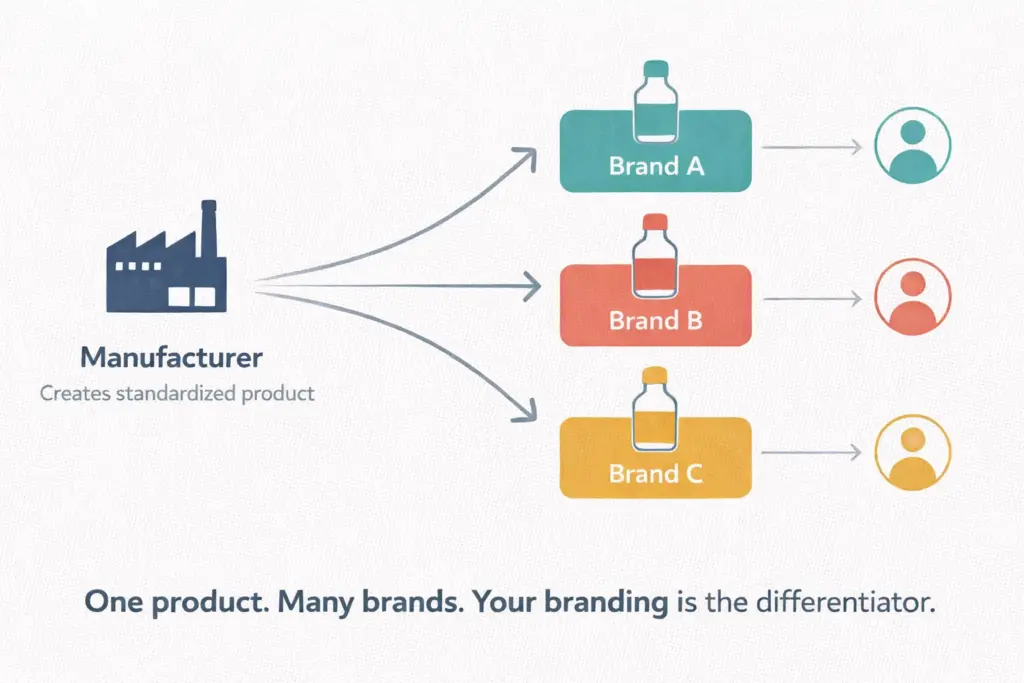
- White label products are generic, pre-made items manufactured by one company that other businesses rebrand and sell under their own brand name. The manufacturer handles production. You handle branding, marketing, and selling. Think store-brand supplements, cosmetics, or coffee - the product inside is identical across brands, but the packaging differs.
- White label products differ from private label in one critical way: white label items are standardized products available to multiple brands. Private label products are manufactured exclusively for one brand with custom formulations, specs, or designs. White label is faster and cheaper to start. Private label gives more differentiation.
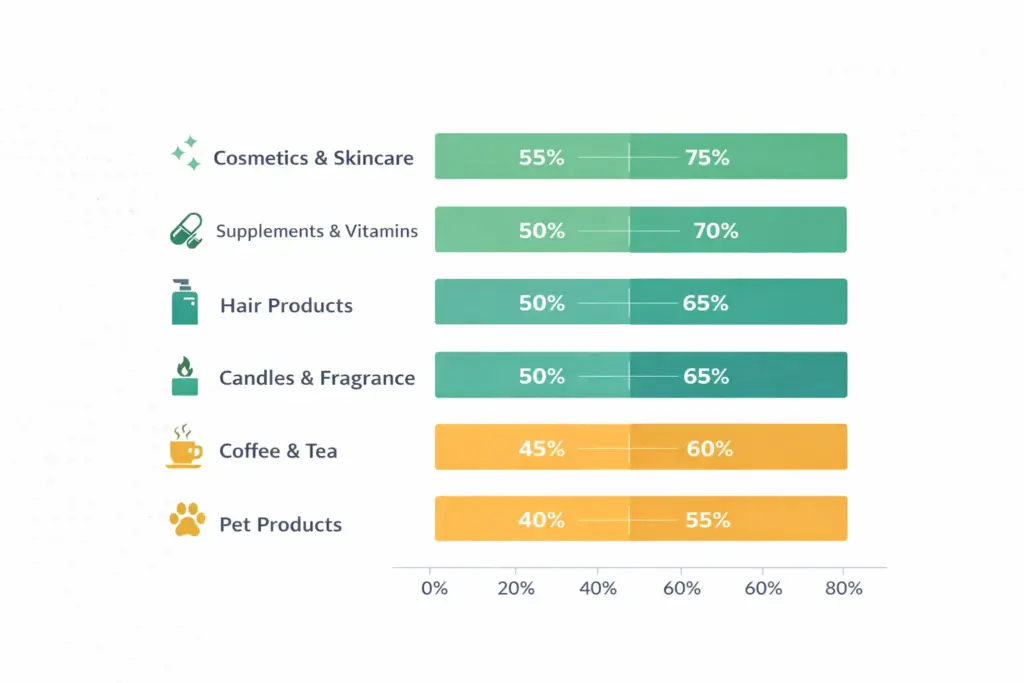
- Best white label product categories for ecommerce: supplements and vitamins (50-70% margins), cosmetics and skincare (55-75%), hair care products (50-65%), coffee and tea (45-60%), pet products (40-55%), and cleaning products (40-55%).
- The main limitation: if 10 other brands sell the exact same product with different labels, your only differentiator is branding, marketing, and customer experience. White label products work best when you have a strong brand story or a specific audience that trusts you.
You’ve probably bought white label products without realizing it. That store-brand vitamin bottle at your pharmacy? White label. The “house brand” coffee at your local grocery store? Almost certainly white label. The skincare line from that Instagram influencer who definitely didn’t build a cosmetics lab in their apartment? White label.
White label products are generic, pre-manufactured goods produced by one company and sold to multiple businesses to rebrand and sell under their own brand names. The core product is identical across all sellers – same formula, same materials, same manufacturing process. What changes is the label, packaging, and branding. For ecommerce sellers, white labeling offers a middle path between dropshipping (zero customization, lowest margins) and private label (full customization, highest investment). You get to build a brand without developing products from scratch.
This guide covers what white label products are, how the model works, the best categories to sell, and honestly when it makes sense versus other sourcing models. If you’re still deciding which ecommerce business model fits you, start there first.
What Does White Labeling Mean? (And How It Actually Works)
The white label process is straightforward:
Step 1: A manufacturer creates a standardized product (a vitamin formula, a face cream, a protein powder). They produce it in bulk, ready for branding.
Step 2: You choose the product from their catalog. You provide your brand name, logo, label design, and packaging preferences.
Step 3: The manufacturer applies your branding to the product and ships it to you (or directly to your fulfillment center). Some manufacturers also handle fulfillment.
Step 4: You list and sell the product as YOUR brand. Customers see your brand name, your packaging, your story. They never know a manufacturer made it for dozens of other brands too.
The manufacturer makes money on production volume. You make money on the brand markup. A white label supplement that costs you $5-$8 per unit can sell for $25-$40 under a strong brand. That markup exists because you’re adding value through branding, trust, marketing, and customer experience – not just reselling a generic product.
White Label Products vs Private Label: The Key Difference
These two terms get confused constantly, even by experienced sellers. The distinction matters because it affects your investment, timeline, differentiation, and margins.
| Factor | White Label Products | Private Label Products |
|---|---|---|
| Product | Standardized, available to many brands | Custom-made exclusively for your brand |
| Customization | Label, packaging, sometimes colors | Formula, ingredients, specs, design, packaging |
| Minimum orders | Often 100-500 units | Usually 1,000-5,000+ units |
| Startup cost | $500-$3,000 | $2,000-$10,000+ |
| Time to market | 2-4 weeks | 2-6 months |
| Differentiation | Low (same product, different label) | High (unique product) |
| Margins | 40-65% | 50-80% |
| Best for | Fast launch, brand testing, lower risk | Long-term brand building, unique positioning |
When to choose white label: You want to test a product category quickly, you have a strong brand or audience but no product development expertise, you’re starting with limited capital, or you want to expand your product line without months of development.
When to choose private label: You want a truly unique product, you’re building for long-term brand value, you need specific ingredients or features your audience demands, or you’re competing in a market where differentiation is essential to justify your price.
Many successful brands start white label and graduate to private label once they’ve validated demand and built revenue. It’s not one or the other forever.
Best White Label Product Categories
White Label Supplements and Vitamins
The global supplement market is projected to reach $230.7 billion within the next few years. White label supplements are the most popular entry point because margins are high and consumers buy based on brand trust, not manufacturer identity.
Products: Multivitamins, probiotics, collagen peptides, protein powders, mushroom supplements (lion’s mane, reishi), magnesium, vitamin D, and targeted formulations (sleep support, energy, immunity).
Typical margins: 50-70%. A white label probiotic costs $4-$8 per bottle and sells for $20-$35. Minimum orders: 100-500 units from most suppliers. Key consideration: Supplements require FDA-compliant labeling and GMP-certified manufacturing. Only work with suppliers who provide certificates of analysis (COA) and comply with FDA dietary supplement regulations.
White Label Cosmetics and Skincare
Beauty is one of the highest-margin white label categories. Consumers are brand-loyal in skincare, which means once they trust your brand, they repurchase consistently.
Products: Serums (vitamin C, hyaluronic acid, retinol), moisturizers, cleansers, face masks, lip products, and SPF products. Clean beauty and organic formulations command premium pricing.
Typical margins: 55-75%. A white label vitamin C serum costs $3-$6 per unit and sells for $18-$35. Minimum orders: 200-1,000 units. Key consideration: Skincare has regulatory requirements in most markets. Ensure your supplier provides safety data sheets, ingredient lists compliant with your target market (FDA in the US, EU Cosmetics Regulation in Europe), and stability testing documentation.
White Label Hair Products
Hair care is a massive repeat-purchase category. Consumers who find a shampoo or treatment they like will buy it for months or years.
Products: Shampoos, conditioners, hair oils (argan, castor), hair growth serums, styling products, and hair masks. Sulfate-free and natural formulations are trending strongly.
Typical margins: 50-65%. A white label shampoo costs $3-$7 per bottle and sells for $15-$28. Minimum orders: 200-500 units. Key consideration: Hair product claims (growth, repair, anti-dandruff) face regulatory scrutiny. Keep marketing claims truthful and supported by the ingredients.
White Label Coffee and Tea
Coffee is the ultimate consumable product. Customers reorder every 2-4 weeks, making customer lifetime value extremely high relative to acquisition cost.
Products: Single-origin coffee beans, blends, ground coffee, cold brew concentrates, matcha powder, specialty tea blends, and mushroom coffee (trending).
Typical margins: 45-60%. A white label 12oz bag of specialty coffee costs $4-$7 and sells for $14-$22. Minimum orders: Often as low as 25-100 bags. Key consideration: Freshness matters. Work with roasters who produce in small batches and have fast turnaround. Stale coffee destroys repeat purchase rates.
Other Strong White Label Categories
Pet products: Supplements, grooming products, dental chews, calming treats. Pet owners spend emotionally, and the “all-natural pet care” angle supports premium pricing. Margins: 40-55%.
Cleaning products: Eco-friendly household cleaners, laundry detergent, dish soap. The sustainability angle differentiates. Margins: 40-55%.
Candles and home fragrance: White label candle manufacturers let you choose scents, wax types, and vessel styles. Margins: 50-65%.
How to Find White Label Suppliers
Alibaba and Made-in-China. Search “[product type] + white label” or “[product type] + OEM.” Filter by verified suppliers, minimum order quantity, and response rate. Always request samples before committing to a bulk order.
Specialized white label platforms. Supliful (supplements and beauty), Printful/Printify (for print-on-demand style white labeling), ThomasNet (US manufacturers), and Maker’s Row (US-based production). These platforms specialize in connecting brands with manufacturers who offer white label services.
Trade shows. Events like Natural Products Expo, Cosmoprof, and PLMA (Private Label Manufacturers Association) let you meet manufacturers, see products firsthand, and negotiate terms. Nothing replaces touching and testing the actual product.
The non-negotiable: Always order samples. Always. A $20 sample order prevents a $2,000 mistake. Test the product yourself for 2-4 weeks before selling it to anyone. Check labeling compliance for your market. Verify the supplier has appropriate certifications (GMP, FDA registration, ISO). Our wholesale suppliers guide covers the full vetting process.
The Honest Limitations of White Label Products
White labeling isn’t a magic business model. Here’s what you’re signing up for:
Low differentiation. If 15 other brands sell the exact same probiotic with different labels, your product isn’t unique. Your brand, marketing, and customer experience ARE the product. Without strong branding, you’re competing on price against identical goods.
Quality control is limited. You don’t control the formula. If the manufacturer changes an ingredient, cuts corners, or has a quality issue, it affects your brand. Build relationships with your suppliers and order periodic quality checks.
Margins are good, not great. White label margins (40-65%) are solid but lower than true private label (50-80%) because you’re not getting exclusive pricing. Multiple brands buying the same product means the manufacturer prices for volume across all clients, not exclusivity for you.
Scaling has a ceiling. Eventually, serious brands graduate from white label to private label because they need unique formulations, exclusive ingredients, or product features that white label can’t provide. White label is an excellent starting point, not necessarily a forever model.
Frequently Asked Questions
What is a white label product?
A white label product is a generic item manufactured by one company and sold to multiple businesses to rebrand and sell under their own brand names. The product is identical across all sellers. Only the branding, packaging, and label change. Common examples include store-brand supplements, cosmetics, and coffee.
What does white labeling mean?
White labeling means purchasing a pre-made product from a manufacturer and selling it under your own brand name. The manufacturer handles production. You handle branding, marketing, and distribution. It allows businesses to offer branded products without investing in product development or manufacturing.
What is the difference between white label and private label?
White label products are standardized goods available to multiple brands. Private label products are manufactured exclusively for one brand with custom formulations or designs. White label is faster and cheaper to start. Private label offers more differentiation and higher margins but requires more investment.
Are white label products profitable?
Yes. Typical white label margins range from 40-70% depending on the product category. White label supplements often deliver 50-70% margins, cosmetics 55-75%. Profitability depends on your branding strength, marketing effectiveness, and ability to drive repeat purchases.
What are the best white label products to sell?
Supplements and vitamins (highest margins, strong repeat purchase), cosmetics and skincare (brand-loyal customers), hair care products (consumable, high reorder rate), coffee and tea (ultimate repeat purchase product), and pet products (emotional buying, growing market).
How do I find white label suppliers?
Search Alibaba for “[product] + white label” or “OEM.” Use specialized platforms like Supliful (supplements/beauty), ThomasNet (US manufacturers), or Maker’s Row. Attend trade shows like Cosmoprof or Natural Products Expo. Always order samples and verify certifications before committing to bulk orders.
Related reads: Private Label Products Guide | How to Start Dropshipping | Find Wholesale Suppliers | Ecommerce Business Models | High Profit Margin Products | Print on Demand Guide
Enjoying this? Get more like it every week.
One email per week with ecommerce strategies, tool picks, and seller insights. No spam.