
- Truly free selling platforms (zero monthly fees, zero listing fees) include Facebook Marketplace, Craigslist, and OfferUp for local sales, plus Gumroad and Payhip for digital products where you only pay a percentage when you make a sale.
- "Free" usually means one of two things: no upfront cost but a commission per sale (Etsy at 6.5% + $0.20/listing, Mercari at 10%), or a free tier with limitations that push you toward a paid plan (Square Online, Ecwid, Big Cartel).
- The platform you choose should match your product type. Handmade goods belong on Etsy. Used items sell fast on Facebook Marketplace. Digital products work best on Gumroad or Payhip. Physical inventory does well on Amazon or eBay.
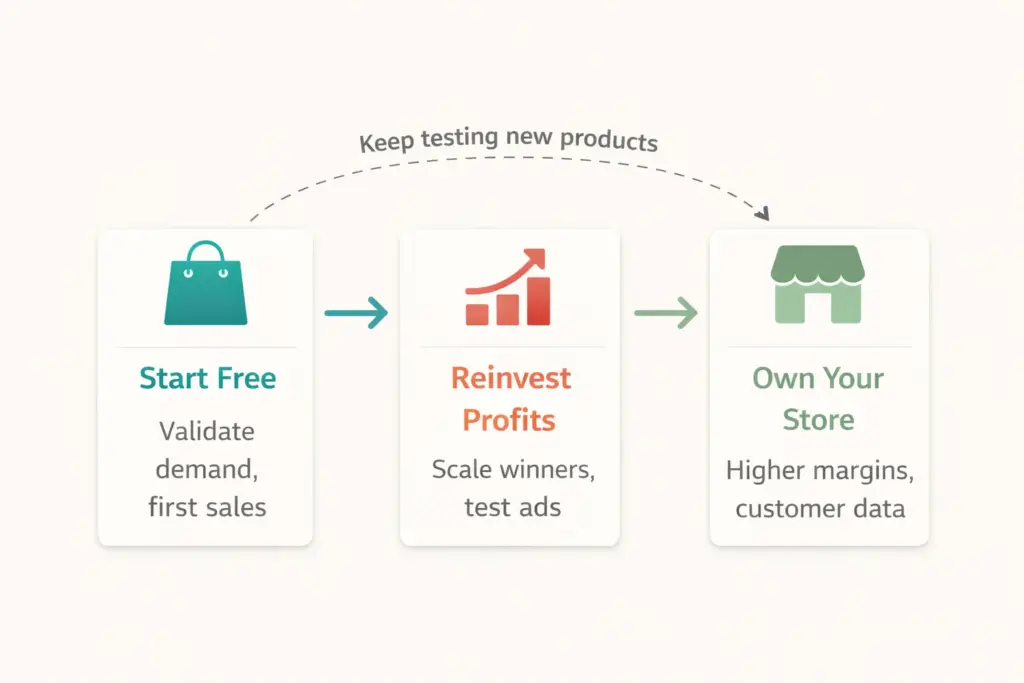
- Free platforms trade lower cost for less control. You don't own the customer relationship, can't customize the experience, and your business depends on someone else's rules. Start free to validate, then build your own store for long-term growth.
Free selling platforms are online marketplaces and store builders that let you list products, reach buyers, and process sales without paying monthly subscription fees, though most charge a percentage commission or small per-transaction fee when you actually make a sale. The distinction matters because “free” almost never means zero cost per sale. It means zero cost to start.
If you’re looking to sell things online without spending money upfront, the options are better than ever. But every platform has a different fee structure, a different audience, and a different set of limitations. Listing your handmade jewelry on Craigslist makes about as much sense as posting your used couch on Gumroad.
I’ve organized these 15 platforms into three categories: truly free (no monthly fees, no listing fees), nearly free (small per-listing or commission-only fees), and free-tier store builders (build your own storefront at zero monthly cost). Each listing includes what you actually pay per sale so you can compare real costs, not just marketing claims.
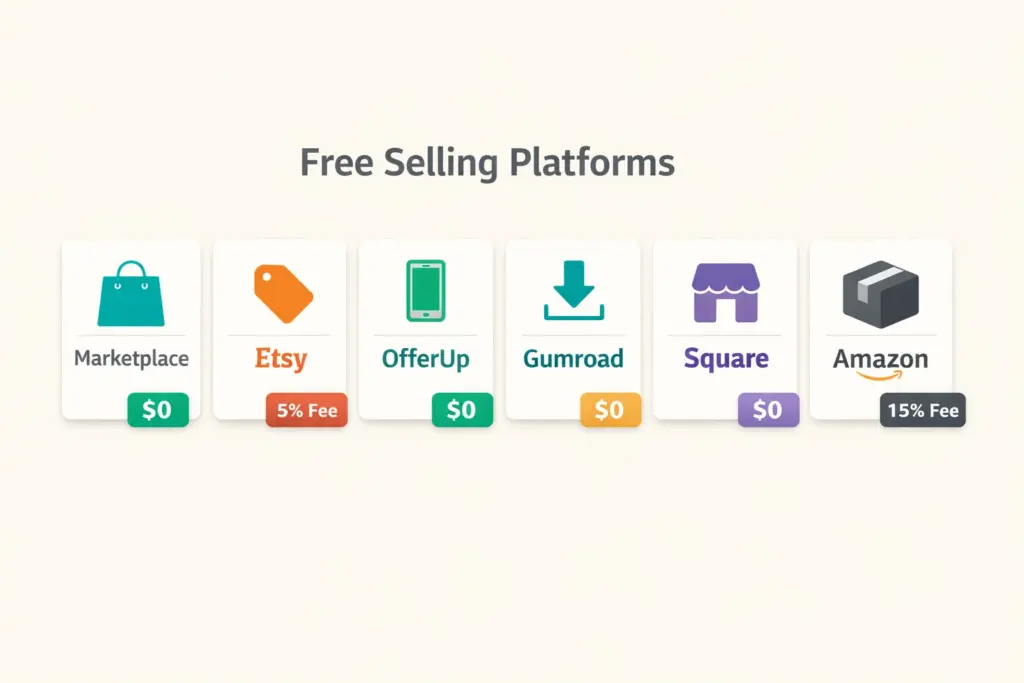
Quick Comparison: All 15 Free Selling Platforms
| Platform | Monthly Fee | Listing Fee | Selling Fee | Best For |
|---|---|---|---|---|
| Facebook Marketplace | $0 | $0 | $0 local / 5% shipped | Local sales, used items |
| Craigslist | $0 | $0 | $0 | Local sales, furniture, electronics |
| OfferUp | $0 | $0 | $0 local / 12.9% shipped | Local sales, mobile-first audience |
| Nextdoor | $0 | $0 | $0 | Hyperlocal neighborhood sales |
| Gumroad | $0 | $0 | 10% flat fee | Digital products, creators |
| Payhip | $0 | $0 | 5% (free plan) | Digital products, courses |
| Etsy | $0 | $0.20/listing | 6.5% + payment processing | Handmade, vintage, crafts |
| Mercari | $0 | $0 | 10% | Used items, clothing, electronics |
| Poshmark | $0 | $0 | 20% (over $15) | Fashion, clothing, accessories |
| Depop | $0 | $0 | 10% | Streetwear, vintage fashion, Gen Z |
| TikTok Shop | $0 | $0 | 5% + payment fee | Viral products, video-driven sales |
| Square Online | $0 (free plan) | $0 | 2.9% + $0.30 | Own storefront, local businesses |
| Ecwid | $0 (free plan) | $0 | Payment processing only | Adding a store to existing website |
| Big Cartel | $0 (5 products) | $0 | Payment processing only | Artists, small catalog stores |
| Amazon | $0 (Individual plan) | $0 | $0.99/item + 15% referral | Physical products at scale |
Truly Free: Zero Monthly Fees, Zero Listing Fees
These free marketplaces charge nothing to list and nothing monthly. You either pay a small commission when an item sells (for shipped items) or pay nothing at all (for local pickup sales).
Facebook Marketplace
Facebook Marketplace is the easiest place to sell for free online with zero barriers to entry. No application process, no listing fees, no monthly fees. For local pickup sales, you keep 100% of the sale price. For shipped items, Facebook charges a 5% selling fee (or $0.40 flat fee for items under $8).
The built-in audience is massive. Over 1.2 billion people use Facebook Marketplace monthly. Your listings appear to buyers in your geographic area without you spending a cent on advertising. The downside is limited branding and no storefront customization. You’re selling within Facebook’s interface, on Facebook’s terms.
Best for: Used items, furniture, electronics, local sales, and testing product demand before investing in a dedicated store.
Craigslist
The original free classifieds site. No fees of any kind for most categories. You list, buyers contact you, you meet and exchange cash or arrange payment. It’s barebones, but it works for items that sell locally: furniture, vehicles, electronics, tools, and appliances.
Best for: Large, heavy, or high-value items that are impractical to ship. Completely local transactions.
OfferUp
OfferUp is a mobile-first marketplace with a cleaner interface than Craigslist and built-in buyer/seller ratings. Local sales are completely free. Shipped items incur a 12.9% service fee. The app-based experience means your listings reach buyers browsing on their phones, which is where most casual shopping happens.
Best for: Electronics, furniture, sporting goods, and anything that sells well through a mobile browsing experience.
Nextdoor
Nextdoor limits your audience to your neighborhood and nearby areas. That sounds like a limitation, but it’s actually a trust advantage. Buyers are verified members of your local community, which reduces no-shows and scam risk. Zero fees on all sales.
Best for: Hyperlocal selling where trust matters. Baby items, household goods, and anything you’d sell at a garage sale.
Nearly Free: Commission-Only Platforms
These platforms charge nothing upfront but take a percentage when you make a sale. The fee only hits when money comes in, which means zero risk until you have revenue.
Gumroad (Digital Products)
If you’re selling digital products like ebooks, templates, courses, music, or design assets, Gumroad charges a flat 10% fee per sale with no monthly cost. You create a product page, share the link, and keep 90% of every sale. It’s the simplest way to monetize digital content without building a website.
Best for: Creators selling digital downloads, courses, memberships, and software. The 10% fee is higher than some alternatives, but the simplicity and $0 monthly cost make it ideal for first-time digital sellers.
Payhip (Digital Products)
Payhip’s free plan charges 5% per transaction, which is half of Gumroad’s rate. It supports digital products, courses, coaching, and memberships. The interface is clean, and you can customize your storefront more than Gumroad allows. If you sell more than a few hundred dollars monthly in digital products, the 5% savings over Gumroad adds up.
Etsy
Etsy charges $0.20 per listing (lasting 4 months) plus 6.5% transaction fee plus payment processing (roughly 3% + $0.25). That adds up to roughly 10-11% total cost per sale. But Etsy’s 96 million active buyers provide built-in traffic you don’t have to generate yourself.
For handmade products, vintage items, and craft supplies, Etsy is the strongest free-to-start marketplace because the audience is already there and searching for exactly what you make. Our guide on starting with no money covers how to use Etsy as your first sales channel.
Mercari
Mercari charges a flat 10% selling fee. Listing is free. The platform works well for used items across all categories: clothing, electronics, toys, home goods, and collectibles. Mercari handles shipping labels and provides buyer/seller protection, which makes the 10% fee feel more justified than raw classifieds.
Poshmark (Fashion)
Poshmark takes 20% commission on sales over $15 (flat $2.95 on sales under $15). That’s steep. But Poshmark’s social selling features (sharing, parties, followers) create a built-in marketing engine that other platforms lack. For fashion and clothing resellers, the audience is highly engaged and expects to pay fair prices for curated wardrobes.
Depop (Streetwear and Vintage)
Depop charges 10% per sale. It skews younger (Gen Z audience) and works best for streetwear, vintage fashion, and trend-driven clothing. If your target buyer is 18-25 and shopping on their phone, Depop’s Instagram-like interface is where they browse.
TikTok Shop
TikTok Shop charges approximately 5% commission plus payment processing. The real value is the organic reach. A single viral product video can generate hundreds of sales overnight without spending on ads. The platform favors products that demonstrate well on video: gadgets, beauty tools, kitchen items, and anything with a visible before-and-after effect.
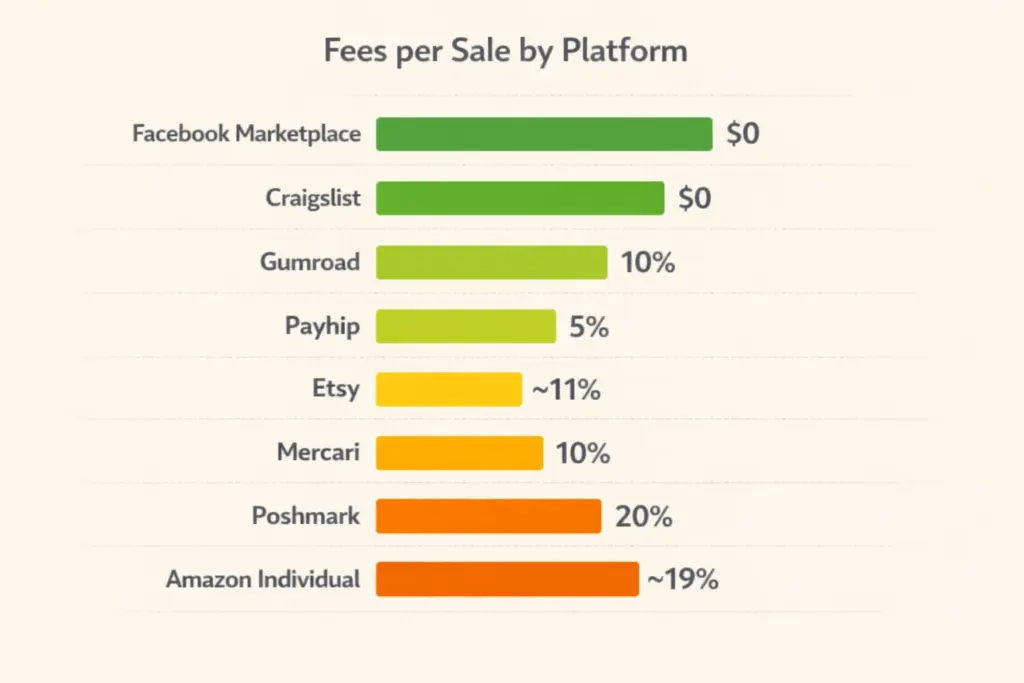
Free-Tier Store Builders: Build Your Own Storefront
These platforms let you create your own branded store with zero monthly fees, though all have limitations that paid plans remove. They’re the bridge between marketplace selling and owning your own ecommerce platform.
Square Online
Square Online offers the most generous free ecommerce plan available. You get a full website, unlimited product listings, and payment processing at 2.9% + $0.30 per transaction. No monthly fee. The catch: no custom domain on the free plan, and your store URL includes “square.site” branding.
Best for: Small businesses and local sellers who want their own storefront without monthly costs. Especially strong if you also sell in person and want online/offline inventory sync.
Ecwid
Ecwid lets you add a store to any existing website (WordPress, Wix, or even a standalone HTML site). The free plan supports up to 5 products with no monthly fee. You only pay payment processing fees when sales come through. It’s a widget approach rather than a full store builder, which makes it ideal for adding ecommerce to a blog or portfolio site.
Big Cartel
Big Cartel’s free plan supports up to 5 products with a single image per product. It’s designed for artists and makers selling a small, curated catalog. If you sell fewer than 5 products (common for artists selling prints, original artwork, or a small jewelry line), Big Cartel is genuinely free with no catches beyond payment processing.
Can I Sell for Free on Amazon?
Can you sell for free on Amazon? Sort of. Amazon’s Individual selling plan has no monthly fee, but charges $0.99 per item sold plus a referral fee (typically 15%). So selling a $25 product costs roughly $4.74 in fees (19%). That’s higher than most other platforms on this list. But Amazon’s 300+ million active buyers and Prime shipping infrastructure can justify those fees through sheer volume.
The Individual plan works for sellers listing fewer than 40 items per month. Beyond that, the Professional plan ($39.99/month) eliminates the per-item fee and becomes cheaper at scale. For a deeper dive, our Amazon best seller research guide covers how to use Amazon’s data for product validation.
How to Choose the Right Free Platform
The “best” free platform depends entirely on what you’re selling and who you’re selling to. Here’s the decision framework:
Selling used personal items? Facebook Marketplace or OfferUp for local. Mercari for shipped items. These are the fastest path to cash in hand.
Selling handmade or craft products? Etsy gives you the best audience match. The $0.20 listing fee is negligible, and the built-in traffic of 96 million buyers saves you from having to build an audience from scratch.
Selling digital products? Payhip (5% fee) or Gumroad (10% fee) depending on whether you value lower fees or simpler setup. Both are genuinely free to start.
Selling fashion and clothing? Poshmark for women’s fashion and premium brands. Depop for streetwear and vintage targeting younger buyers. Mercari for everything else.
Want your own branded store? Square Online (free plan) gives you the most complete free storefront. Big Cartel works for catalogs under 5 products. Both let you sell without monthly fees.
Want maximum reach for physical products? Amazon’s Individual plan and eBay both provide massive built-in audiences, but fees run 13-19% per sale. The trade-off is traffic you don’t have to generate yourself.
The Honest Cost of “Free” Selling
Free platforms come with trade-offs that paid platforms don’t. Before committing to a free-only strategy, understand what you’re giving up:
You don’t own the customer relationship. On marketplaces, the platform owns the buyer data. You can’t email past customers, retarget them with ads, or build a subscription model. Every sale starts from zero.
You’re subject to platform rules. Etsy can change fees overnight. Facebook can shut down your Marketplace access. Amazon can suspend your listing. When your business depends on someone else’s platform, their decisions are your problems.
Branding is limited. Free platforms give you a listing, not a brand experience. You can’t control the checkout flow, the packaging inserts, or the post-purchase communication the way you can on your own store.
Growth has a ceiling. Marketplace fees scale with revenue. Selling $10,000/month on Etsy costs roughly $1,000 in fees. That same volume on your own Shopify store costs about $290 in payment processing plus $39 in platform fees. The more you sell, the more the math favors your own storefront.
The smart strategy: start on free selling platforms to validate demand and make your first sales. Then reinvest profits into building your own store on a dedicated ecommerce platform where you control the customer relationship and keep more of each sale. Understanding your startup costs helps you plan that transition.
Frequently Asked Questions
Facebook Marketplace, Craigslist, Nextdoor, and OfferUp are completely free for local pickup sales. For shipped items, Gumroad (10% per sale) and Payhip (5% per sale) are the cheapest options for digital products. Square Online offers a free store builder where you only pay payment processing fees per transaction.
Etsy is the strongest free marketplace for handmade products with 96 million active buyers specifically looking for handcrafted and unique items. Listing costs $0.20 per item, and total fees run about 10-11% per sale. Big Cartel offers a completely free plan for up to 5 products if you have a small catalog.
Amazon’s Individual selling plan has no monthly fee, but charges $0.99 per item sold plus a referral fee of approximately 15%. A $25 product costs roughly $4.74 in Amazon fees per sale. It’s not truly free, but there’s no upfront monthly commitment. The Professional plan at $39.99/month removes the per-item fee and is cheaper if you sell more than 40 items monthly.
Payhip (5% per sale on the free plan) and Gumroad (10% per sale) are the top choices for digital products. Both charge zero monthly fees and support downloads, courses, and memberships. Payhip offers lower fees and more storefront customization. Gumroad offers simpler setup and a wider creator community.
For local sales with zero fees: Facebook Marketplace or Nextdoor. For shipped physical items at lowest commission: TikTok Shop (5% + processing). For digital products: Payhip at 5% per sale. For your own store with no monthly fee: Square Online free plan at 2.9% + $0.30 per transaction.
Start on free platforms to validate demand and make first sales. The built-in audience reduces your marketing effort to zero. Once you’re consistently selling, build your own store for higher margins and customer ownership. Free platform fees (10-20% per sale) cost more than running your own store ($39/month + 2.9% processing) once you reach $500+/month in sales.
Related Reads
- How to Sell Things Online
- Start an Online Business With No Money
- Digital Products to Sell Online
- Best Ecommerce Platform Comparison
- Ecommerce Business Ideas by Budget
- Products to Resell for Profit
Enjoying this? Get more like it every week.
One email per week with ecommerce strategies, tool picks, and seller insights. No spam.