
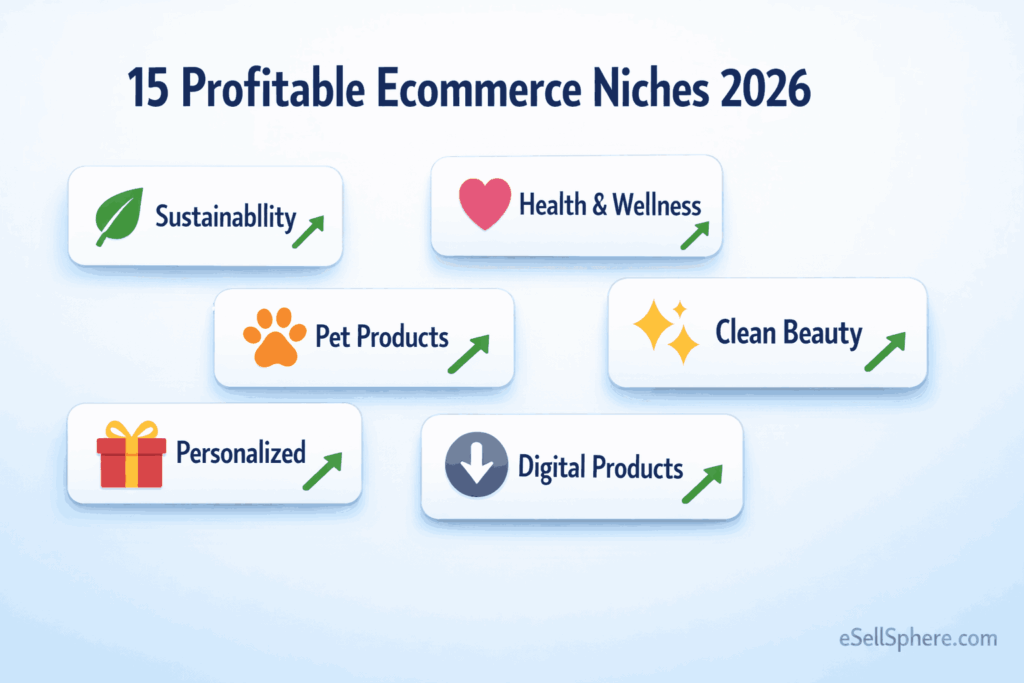
- The most profitable ecommerce niches in 2026 combine high margins (50-95%), strong repeat purchase potential, and room to differentiate from Amazon sellers.
- Digital products (80-95% margins), clean beauty (60-80%), and health supplements (60-80%) top the list for raw profitability.
- Picking a niche based on data beats picking one based on gut feeling. Validate with Google Trends, Amazon competition checks, and real customer conversations before investing.
- Evergreen niches like pet products, baby care, and specialty coffee crush trending niches long-term because demand doesn't disappear overnight.
- Global ecommerce sales are projected to hit $6.88 trillion in 2026, but the winners are niche-focused stores, not general ones trying to sell everything.
I’m going to save you the headache I see hundreds of new sellers go through every month: picking a niche based on vibes instead of data.
A profitable ecommerce niche is a focused market segment where customer demand is strong, competition is manageable, and margins leave room for actual profit after you factor in ads, shipping, and returns. The best ecommerce niches in 2026 combine recurring purchase potential with enough differentiation to avoid getting crushed on price alone. With global ecommerce sales projected to hit $6.88 trillion this year (Statista, 2026), there’s plenty of money on the table. The trick is knowing where to look.
If you’re in the early stages of starting an ecommerce business, picking the right niche is genuinely the single highest-leverage decision you’ll make. Get this wrong and everything else, your marketing, your branding, your product sourcing, becomes an uphill fight. Get it right, and growth feels almost inevitable.
Here’s what I look for, and what you should too.
What Makes an Ecommerce Niche Actually Profitable?
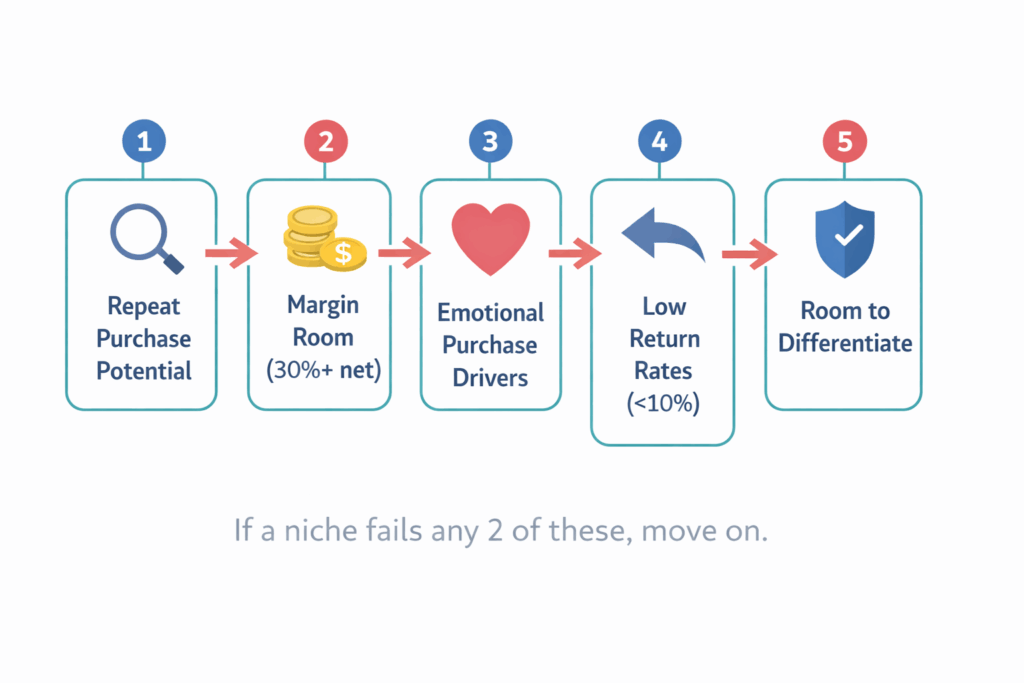
Before we get into the list, let’s kill a common myth: high search volume doesn’t equal high profit. I’ve watched sellers pour $20K into niches with massive search volume only to discover that margins were paper-thin and return rates were brutal.
Here’s what actually matters:
Repeat purchase potential. This is the big one. Niches built around consumables like supplements, coffee, skincare, and pet food create a predictable revenue loop. You’re not chasing a new customer for every single sale. Subscription models in ecommerce are projected to contribute to a market approaching $1 trillion by 2026 (Business Research Company).
Margin room. If your product costs $10, sells for $14, and shipping eats $5, you’re underwater before your first ad dollar. I look for niches where perceived value significantly exceeds production cost. Think beauty, wellness, specialty food, and custom products.
Emotional purchase drivers. People pay premium prices for things tied to identity, health, their kids, or their pets. Nobody haggles over organic baby food the way they do over USB cables.
Low return rates. Fashion and apparel can hit 30-50% return rates. Consumables and digital products? Under 5%. That difference is the gap between a profitable store and a stressful one.
Room to differentiate. If the niche is dominated by Amazon private label products selling at rock-bottom prices, run. You want niches where branding, storytelling, and expertise create a moat.
The 15 Most Profitable Ecommerce Niches for 2026
Let me be upfront: this isn’t one of those lists where I throw 50 random product categories at you and call it a day. Each niche below was selected based on market growth data, realistic margin ranges, and whether a new seller can actually compete.
| Niche | Avg. Margin | Growth Trend | Competition | Repeat Purchases |
|---|---|---|---|---|
| Health & Wellness Supplements | 60-80% | Strong | Medium-High | Very High |
| Sustainable/Eco Products | 40-65% | Strong | Medium | High |
| Pet Products (Premium) | 50-70% | Strong | Medium | Very High |
| Clean Beauty & Skincare | 60-80% | Strong | High | Very High |
| Home Fitness Equipment | 40-55% | Moderate | Medium | Moderate |
| Personalized/Custom Products | 50-75% | Strong | Low-Medium | Moderate |
| Digital Products & Templates | 80-95% | Strong | Medium | High |
| Baby & Childcare (Organic) | 45-65% | Steady | Medium | Very High |
| Smart Home Accessories | 35-50% | Strong | Medium-High | Moderate |
| Educational Toys & STEM Kits | 45-60% | Strong | Low-Medium | High |
| Subscription Boxes (Curated) | 40-60% | Strong | Medium | Very High |
| Phone & Tech Accessories | 60-80% | Moderate | High | Moderate |
| Specialty Coffee & Tea | 50-70% | Steady | Medium | Very High |
| Home Organization | 40-55% | Moderate | Medium | Moderate |
| Financial Literacy Products | 70-90% | Strong | Low | High |
1. Health and Wellness Supplements
This isn’t a new niche, but it keeps printing money for a reason. People don’t stop buying supplements once they start. And the margins are wild: 60-80% is standard when you go the private label route.
The catch? You need to earn trust. Nobody’s buying random supplements from a Shopify store with no reviews. The sellers crushing it here invest heavily in third-party testing, transparent ingredient sourcing, and education-first content.
Best angle for new sellers: Don’t try to compete with the big players on general multivitamins. Go narrow. Gut health for women over 40. Adaptogens for remote workers. Athletic recovery for weekend warriors. The more specific your audience, the less you spend to reach them.
2. Sustainable and Eco-Friendly Products
Here’s the thing about the sustainability niche. Customers in this space will pay more, and they’ll tell you that to your face. A recent PwC survey found consumers are willing to spend an average of 9.7% more for sustainably sourced products. That premium goes straight to your margin.
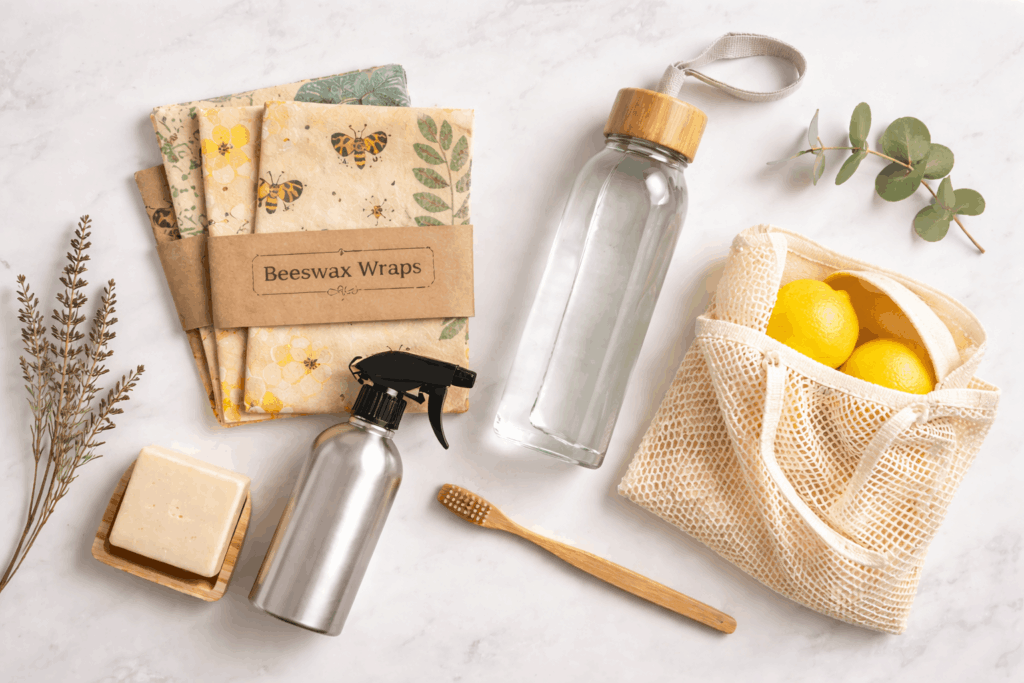
The green ecommerce market is projected to reach around 22.5% of global retail shares, and it goes way beyond metal straws and reusable bags. We’re talking biodegradable packaging, refillable home cleaning, zero-waste kitchen products, and sustainable fashion basics.
Where I see the opportunity: Eco-friendly product bundles and starter kits. A “Zero-Waste Kitchen Starter Kit” at $65 that costs you $18 to assemble? That’s a business.
3. Premium Pet Products
I’ll be honest. I didn’t expect pet products to be this profitable until I looked at the data. The global pet accessories segment topped $30 billion in 2024 (IMARC), and it’s still climbing fast.
Pet owners buy on emotion and they buy on repeat cycles. Food, treats, supplements, grooming products. These aren’t one-time purchases. And premium pet owners (the ones you want) don’t price-shop. They want the best for their dog, and they’ll pay for it.
The play: Niche down hard. “Organic dog treats” is competitive. “Grain-free treats for senior dogs with joint issues” is where the money is. Combine product sales with educational content and you’ve got a brand, not just a store.
4. Clean Beauty and Skincare
The clean beauty movement crossed from trend to mainstream a couple years ago. Now 68% of consumers actively seek products made with clean ingredients. That number keeps going up.
Margins in beauty are legendary, typically 60-80%. The subscription potential is huge (auto-ship for skincare routines). And the audience is passionate enough to drive organic word-of-mouth like crazy.
My take: The window for broad “clean beauty” stores is closing. The opportunity is in micro-niches: skincare for rosacea-prone skin, beard care with organic oils, natural deodorants that actually work. I’ve seen small Shopify stores outperform huge brands by owning one specific skin concern.
5. Personalized and Custom Products
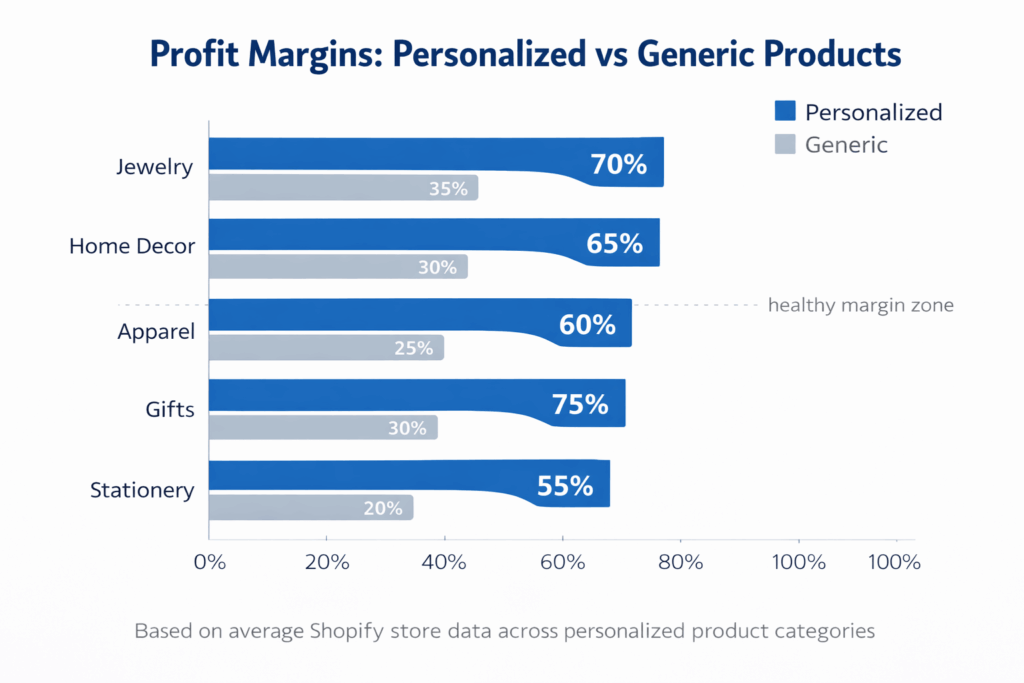
Print-on-demand made this accessible, but don’t sleep on true customization: engraved jewelry, monogrammed leather goods, custom portrait illustrations. The print-on-demand industry is growing rapidly, with the global market projected to grow significantly through 2026.
What I love about this niche: the perceived value massively exceeds the cost. A custom cutting board with a family name costs $8 to produce and sells for $45-65. Try getting that margin on commodity products.
Seasonal goldmine: Valentine’s Day, Mother’s Day, weddings, graduations, Christmas. These aren’t just purchase events. They’re gifting events with higher AOV and almost zero return rates. Who returns a personalized gift?
6. Digital Products and Templates
If you want the fattest margins in ecommerce, digital products are it. We’re talking 80-95% profit margins with zero inventory, zero shipping costs, and zero returns headaches.
Budgeting spreadsheets, Notion templates, Canva design templates, online courses, printable planners. The range is enormous. Financial planning templates and courses are especially hot right now as people navigate economic uncertainty.
Reality check: The margin is amazing but the marketing is different. You’re selling expertise and outcomes, not physical objects. Your content strategy IS your marketing strategy. Which is actually perfect if you’re building on eSellSphere’s framework.
7. Baby and Childcare (Organic/Premium)
Parents don’t comparison shop on baby products the way they do on everything else. Safety beats price every single time. The global baby care market exceeded $107 billion in 2024 (Global Market Insights), and organic/premium is the fastest-growing sub-segment.
Plus, babies grow fast. That means stage-based purchasing: new products needed every few months as development milestones change. It’s basically a built-in subscription model without needing to set one up.
8. Educational Toys and STEM Kits
Screen time guilt is real, and parents are throwing money at alternatives. The global educational toys market is projected to reach $118 billion by 2030. That’s not a niche. That’s a tidal wave.
Hot take: Most educational toy sellers market to parents’ guilt instead of kids’ excitement. The sellers winning here position their products as “learning disguised as fun.” Big difference in how the copy reads and how the ads convert.
9. Specialty Coffee and Tea
Here’s a niche that looks saturated until you realize the specialty segment is completely different from mainstream coffee. Single-origin, small-batch, direct-trade. These keywords command a 3-5x markup over grocery store brands.
And the repeat purchase rate is ridiculous. Coffee drinkers buy monthly, minimum. Build a subscription and your revenue becomes predictable in a way that most ecommerce sellers dream about.
10-15: Quick Takes on the Rest
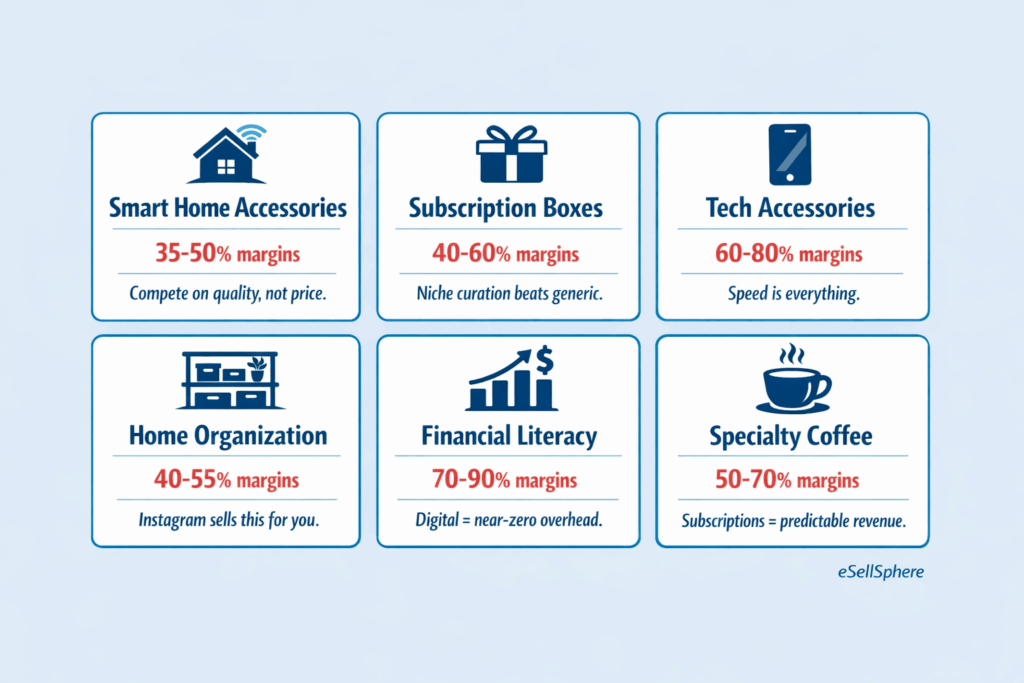
Smart Home Accessories: Growing fast, but watch out for cheap knockoffs on Amazon. Compete on ecosystem integration guides and premium quality, not price.
Subscription Boxes (Curated): The model works when curation is genuinely valuable. Niche boxes outperform generic ones. “Monthly Japanese snacks” beats “random snack box” every time.
Phone and Tech Accessories: New device launches create instant demand spikes. Margins are great but trends move fast. You need to be first or don’t bother.
Home Organization: The Marie Kondo effect is permanent now. Modular, aesthetic storage solutions sell themselves on Instagram and Pinterest.
Financial Literacy Products: Courses, templates, planners, apps. The global fintech market is projected to reach $644.6 billion by 2029. Digital products in this space print money with almost no overhead.
How to Validate Your Niche Before You Invest
Picking a niche from a list is step one. Validating it is where most people skip ahead and end up burning cash. Here’s the quick framework I use. For a deep dive, check out our guide on ecommerce niche research methods.
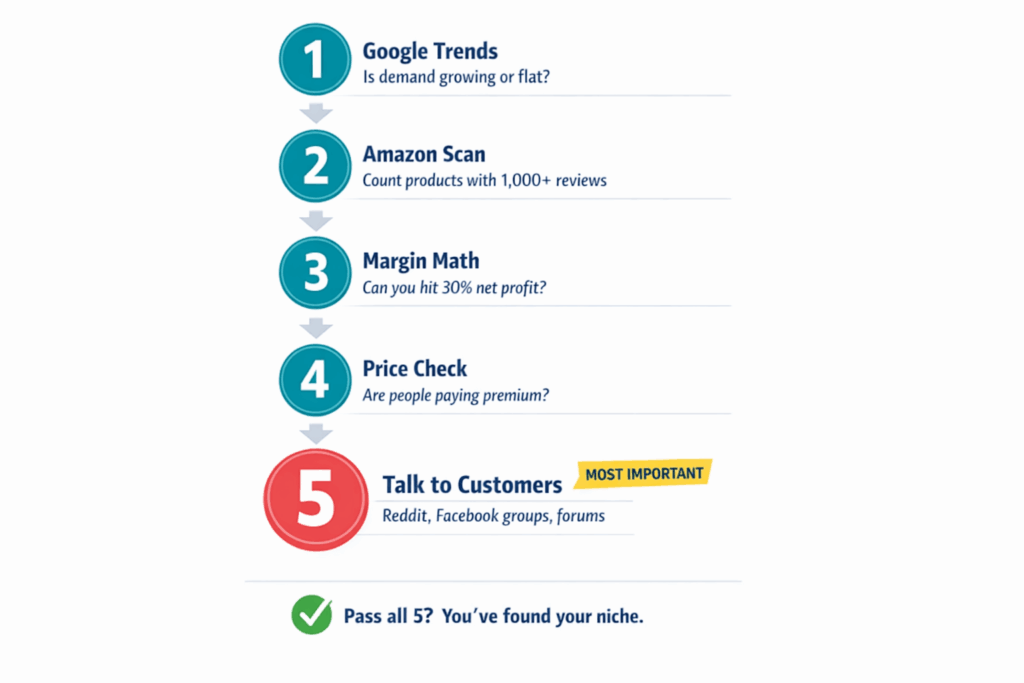
Step 1: Check Google Trends. Is interest flat, growing, or declining? You want steady or up. Seasonal is fine if you plan for it.
Step 2: Search the primary keyword on Amazon. Count the number of products with 1,000+ reviews. More than 20? That’s a crowded space. Under 10? Opportunity.
Step 3: Calculate realistic margins. Product cost + shipping + packaging + payment processing + returns + ad spend. If you can’t hit 30% net after all that, the niche doesn’t work.
Step 4: Check if people are already paying premium prices. If the top sellers are racing to the bottom on price, that’s a bad sign. If there are brands selling at 2-3x the cheapest option AND getting reviews? That’s your signal.
Step 5: Talk to actual potential customers. Reddit communities, Facebook groups, forums. What are they complaining about? What products do they wish existed? This is the validation that no keyword tool can give you.
For trending product ideas within these niches, see our trending ecommerce products guide. And once you’ve validated your niche, our niche validation framework walks you through the final checks before you commit money.
Niches to Avoid in 2026
Commodity electronics (USB cables, chargers, adapters). Amazon owns this. Margins are garbage. Returns are high. Don’t bother.
Fast fashion knockoffs. Returns can hit 50%, copyright issues are real, and the race to the bottom never ends.
Vape and nicotine products. Payment processor restrictions, advertising bans on every major platform, and shifting regulations make this a minefield.
Heavy or bulky items (furniture, large fitness equipment). Shipping costs destroy margins unless you have warehouse infrastructure already.
Anything trending purely on TikTok virality. Remember fidget spinners? Those sellers got wrecked when the trend died in months. Build on evergreen demand, not viral moments.
Frequently Asked Questions
What are the most profitable ecommerce niches in 2026?
The most profitable ecommerce niches in 2026 include health and wellness supplements, clean beauty and skincare, premium pet products, digital products, and personalized goods. These niches combine high margins (50-95%), strong repeat purchase rates, and growing consumer demand. Sustainability-focused products and educational toys also show strong growth trajectories heading into 2027.
How do I find a profitable niche for my online store?
Start with market research using Google Trends and keyword tools to verify demand. Check Amazon for competition density by counting products with 1,000+ reviews. Calculate realistic margins including ads, shipping, and returns. Then validate by talking to potential customers in Reddit communities and Facebook groups. The best niches combine your genuine interest with proven demand and healthy margins.
What ecommerce niches have the highest profit margins?
Digital products lead with 80-95% margins since there’s no inventory or shipping. Clean beauty and supplements typically hit 60-80%. Personalized products range from 50-75% because customization creates a perceived value premium. Financial literacy products (courses, templates) also deliver 70-90% margins. Physical product niches rarely exceed 65% after all costs are factored in.
Is it too late to start an ecommerce business in 2026?
Not even close. Global ecommerce sales are projected to reach $6.88 trillion in 2026, up 7.2% from 2025 (Statista). The key difference is that success now requires niche focus rather than trying to be a general store. Sellers who pick a specific audience and serve them deeply are consistently outperforming broad-catalog stores. There’s more money in ecommerce than ever.
What’s better for a new store: a trending niche or an evergreen niche?
Evergreen niches win for long-term businesses. Trending products like fidget spinners spike fast but die faster, leaving sellers with dead inventory. Evergreen niches including health, pets, baby products, and home essentials generate steady demand year after year. The smart play is building in an evergreen niche and occasionally adding trending products within that niche to capture short-term demand spikes.
How much money do I need to start in a profitable ecommerce niche?
You can start a niche ecommerce store for $500-$5,000 depending on your model. Print-on-demand and digital products require under $500 for platform fees, basic branding, and initial marketing. Private label physical products typically need $2,000-$5,000 for initial inventory, packaging design, and product photography. Budget at least $500-$1,000 for initial ad testing regardless of model.
Pick a Niche, Then Go Deep
The worst thing you can do right now is spend three more months “researching niches.” Analysis paralysis has killed more ecommerce businesses than bad niches ever will. Pick one that fits your budget, matches a real market need, and excites you enough to stick with it through the hard months.
Then go deep. Build the store. Source the products. Create content that makes you the go-to resource in that space. That’s exactly what our complete guide to starting an ecommerce business walks you through, step by step.
Ready to validate your niche idea?
Use our free interactive Niche Scorecard to rate any niche across 8 proven criteria including demand, competition, and margins. Get an instant score and a clear verdict. No email required.
Score Your Niche Idea Free →Related reads: How to Research Ecommerce Niches | Trending Ecommerce Products 2026 | Shopify vs WooCommerce Comparison | Finding Dropshipping Suppliers
Enjoying this? Get more like it every week.
One email per week with ecommerce strategies, tool picks, and seller insights. No spam.