
- The handmade market is growing at 10.5% CAGR and expected to reach $1.16 trillion by 2035 (Grand View Research). Demand for handmade products is rising, not falling.
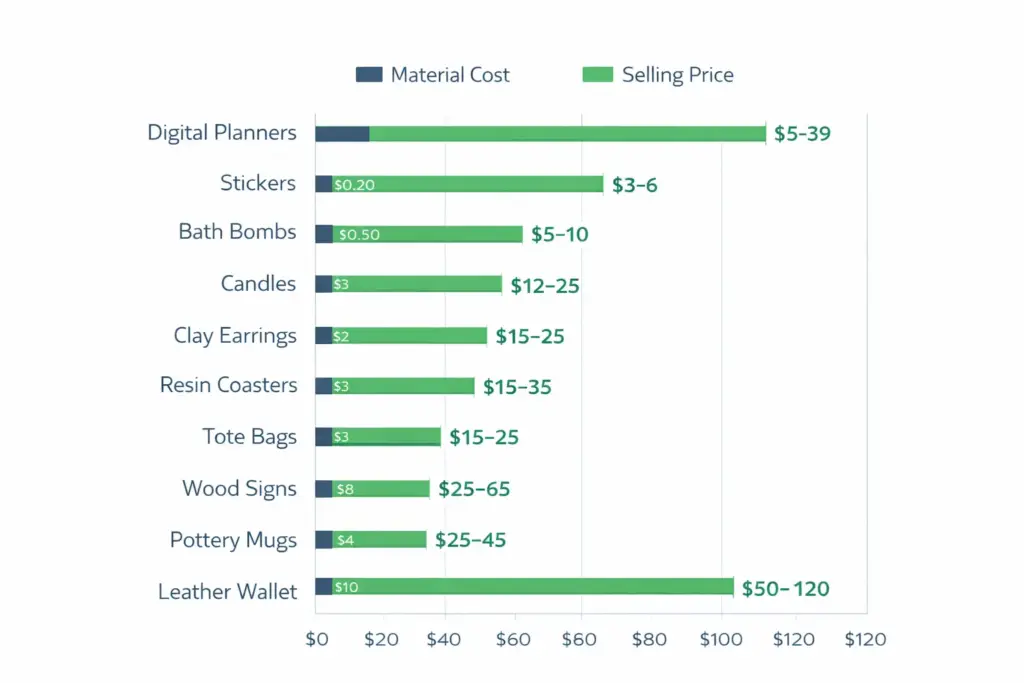
- The most profitable crafts to sell combine low material costs with high perceived value. Candles ($2-4 to make, sell for $12-25), jewelry ($1-5 to make, sell for $15-50), and digital planners ($0 to make, sell for $5-39) top the list.
- Etsy is the default marketplace for handmade sellers, but your own Shopify store, craft fairs, and Instagram/TikTok organic content are where the real margins live.
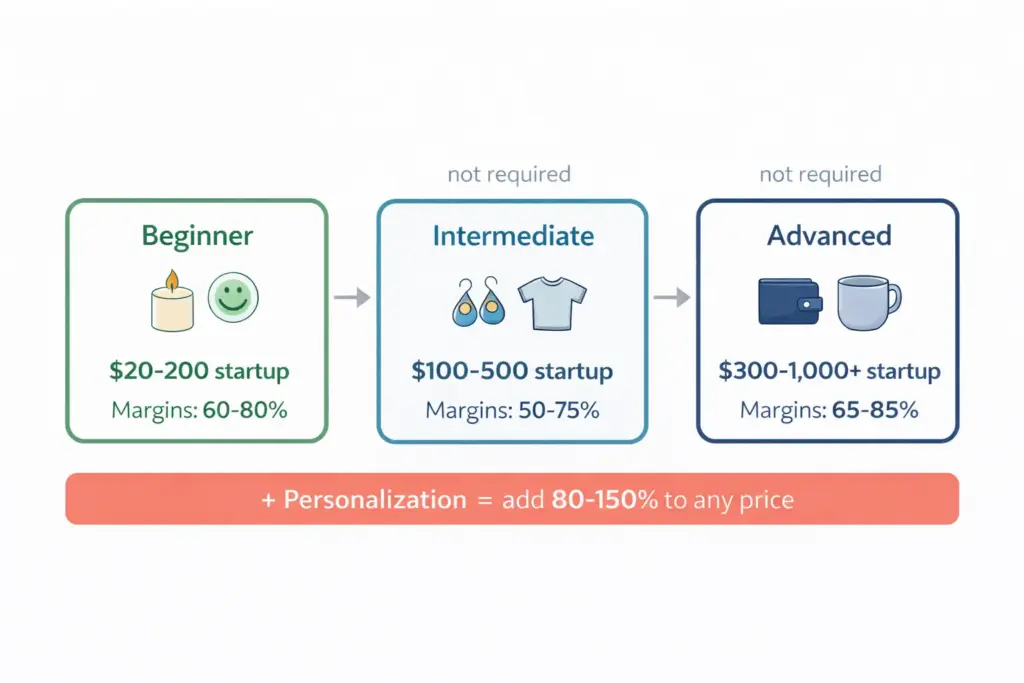
- Personalization is the single biggest profit lever. A plain mug sells for $8. A personalized one sells for $20-35. Same product, 3x the price.
I keep hearing people say the handmade market is oversaturated. The data says otherwise.
Things to make and sell refers to handmade, handcrafted, or self-produced physical and digital products that you create at home and sell online through platforms like Etsy, Shopify, Amazon Handmade, or at local craft fairs. The global handmade goods market is growing at a 10.5% compound annual growth rate and is expected to reach $1.16 trillion by 2035 (Grand View Research). That’s not a shrinking pie. That’s a market getting bigger every year as buyers actively seek out products with a personal, human touch over mass-produced alternatives.
The trick isn’t finding something to make. It’s finding something to make where the math works: low material cost, high perceived value, and an audience willing to pay for it. If you’re exploring ways to start an ecommerce business without needing thousands in startup capital, making and selling handmade products is one of the most accessible entry points.
I’ve organized everything below by skill level so you can jump straight to what makes sense for you.
Beginner Level: No Special Skills Required
These products can be made by anyone with basic supplies, a YouTube tutorial, and a free afternoon. Don’t let the simplicity fool you. Some of the highest-margin products in the handmade space are dead simple to produce.
1. Candles. Soy candles using the melt-and-pour method are genuinely one of the easiest things to make at home. Material cost per candle runs $2-4 (soy wax, wick, fragrance oil, container). Retail price: $12-25. Add essential oils and label them “aromatherapy” and the perceived value jumps further. Eco-friendly soy and beeswax candles sell especially well on Etsy.
2. Bath bombs and soap. Melt-and-pour soap bases cost about $1-3 per bar. Add dried flowers, essential oils, or activated charcoal and sell for $6-15 each. Bath bombs cost roughly $0.50-1.50 to make and sell for $5-10. Both have a loyal repeat-purchase audience because they’re consumable.
3. Stickers. A sheet of stickers costs pennies to produce with a basic sticker printer or through a print service. Packs sell for $3-6 on Etsy and TikTok Shop. The demand is enormous, especially for planner stickers, motivational quotes, and niche-themed designs. This is one of the lowest-risk products on this entire list because you can test dozens of designs cheaply.
4. Printed tote bags. A blank canvas tote costs $1-3. Add a heat-press design or screen print and sell for $12-25. They appeal to the eco-conscious market replacing plastic bags, plus they double as a walking billboard for your brand. Minimal sewing required (or none, if you buy pre-made blanks).
5. Digital planners and printables. Zero material cost. Create in Canva (free), sell as downloadable PDFs on Etsy. Budget planners, meal prep templates, fitness trackers, wedding planners. Price range: $3-19 for individual planners, $15-39 for bundles. This is the only item on this list with literally infinite inventory and zero shipping costs.
6. Gift baskets and curated boxes. Source products wholesale or from local makers, arrange them attractively in a box with tissue paper and ribbon. The curation IS the product. Material cost depends on contents but typical markup is 50-60%. Wedding gift boxes, “self-care Sunday” kits, and new baby baskets sell consistently year-round.
Intermediate Level: Some Practice Needed
These products take a bit more skill or equipment investment, but the margins and brand-building potential make them worth it.
7. Handmade jewelry. Beaded necklaces and polymer clay earrings are the entry point. Material cost: $1-5 per piece. Selling price: $15-50 depending on complexity and branding. The key differentiator I see in successful jewelry shops isn’t the craft itself but the cohesive brand. Sellers who design collections around themes (zodiac signs, botanical motifs, seasonal palettes) outsell those posting random one-off designs.
8. Resin art and accessories. Resin coasters, jewelry, trays, and bookmarks are trending hard on social media. Starter resin kits cost $30-50, and individual pieces cost $2-5 to make. Selling prices: $10-40. The process videos themselves drive organic traffic on TikTok and Instagram.
9. Macrame wall hangings and plant hangers. A roll of macrame cord costs $10-15 and produces several pieces. Material cost per item: $3-8 depending on size. Selling price: $20-60. The boho home decor trend shows no sign of fading, and macrame remains one of the top-selling home decor categories on Etsy.
10. Custom apparel (heat press/vinyl). Personalized t-shirts, hoodies, and hats. A blank tee costs $5-10, vinyl materials $1-3. Sell for $18-35. You’ll need a heat press ($150-300 investment) or you can outsource to a print-on-demand service. Personalized designs for events (bachelorette parties, family reunions, small businesses) command the highest premiums.
11. Embroidered items. Hand-embroidered hoops, patches, and clothing. Material costs are minimal ($2-5 per piece) but the time investment is higher. That time investment IS the value. A hand-embroidered pet portrait hoop sells for $40-80 on Etsy. Machine embroidery speeds up production if you invest in the equipment ($300+).
12. Baked goods and food products. Cookies, granola, hot sauce, spice mixes, jams. Material costs vary but margins are typically 60-70%. Cottage food laws in most US states allow home-based food sales with certain restrictions. Check your state’s specific rules. The consumable nature drives repeat purchases, which is the holy grail for any product-based business.
13. Pet accessories. Bandanas, bow ties, collar charms, name tags. Material cost: $1-5. Selling price: $8-25. Pet owners are emotional buyers who rarely comparison-shop for their dog’s birthday bandana. The niche is large enough to sustain a business and specific enough to build a loyal following.
14. Handmade wood signs. Use reclaimed wood or craft store planks, add vinyl lettering or hand-painting, finish with clear sealant. Cost per sign: $5-15. Selling price: $25-65. Custom family name signs, farmhouse quotes, and nursery signs sell consistently. A Cricut machine ($200-300) speeds up the vinyl cutting process significantly.
15. Pottery and ceramics. Mugs, planters, bowls, vases. This requires more equipment investment (kiln, wheel, or hand-building setup starting at $500+) but margins are excellent and the “handmade pottery” aesthetic has massive demand. A hand-thrown mug costs $3-5 in materials and sells for $25-45.
Advanced Level: Specialized Skills or Equipment
Higher barrier to entry, but also higher prices, stronger brand moats, and less competition.
16. Leather goods. Wallets, journal covers, belts, keychains. Leather working requires tools ($100-300 to start) and practice, but the products command serious prices. A hand-stitched leather wallet costs $8-15 in materials and sells for $50-120. The “buy it for life” audience pays premium prices gladly.
17. Custom furniture and woodworking. Cutting boards, shelving, small tables, wooden toys. Requires woodworking skills and a basic shop setup. But a custom walnut cutting board that costs $15-25 in materials sells for $60-150. The craftsmanship justifies the price in a way that mass-produced goods can’t touch.
18. Knitted and crocheted items. Blankets, baby clothes, amigurumi (crocheted stuffed animals), scarves. Material costs are low ($5-20 depending on yarn quality) but time investment is high. That’s the moat. Nobody’s undercutting your handmade baby blanket with a robot, at least not yet. Amigurumi in particular sells extremely well on Etsy ($20-60 per piece).
19. Illustration and custom art. Digital illustrations, custom portraits, pet portraits, family illustrations. If you have drawing skills (digital or traditional), custom art commands $50-300+ per piece. The key is offering specific formats that people want: wedding illustrations, house portraits, pet memorial art.
20. Natural skincare and beauty products. Face serums, lip balms, body butters, beard oils. Requires knowledge of formulation and potentially compliance with cosmetic regulations. But the clean beauty market is worth over $400 billion globally (Allied Market Research) and consumers actively seek small-batch, ingredient-transparent brands. Margins run 60-80%.
The Personalization Premium
This deserves its own section because it applies to almost everything above.
Personalization is the single biggest profit multiplier for handmade sellers. The math is stark:
| Product | Generic Price | Personalized Price | Premium |
|---|---|---|---|
| Ceramic mug | $8-12 | $20-35 | +150-190% |
| Candle | $12-18 | $22-35 | +80-95% |
| Cutting board | $25-40 | $45-80 | +80-100% |
| Tote bag | $12-18 | $22-35 | +80-95% |
| Baby blanket | $30-50 | $55-90 | +80-85% |
A name, a date, a custom color, a monogram. That’s often all it takes to nearly double the price. And here’s the kicker: personalized gifts have near-zero return rates. Who returns a blanket with their baby’s name on it?
If you’re making anything on this list and NOT offering a personalized version, you’re leaving money on the table.
Where to Sell What You Make
The platform matters as much as the product. Different channels work better for different product types.
Etsy is the default for handmade goods. 96 million active buyers already looking for handcrafted products. Best for: jewelry, candles, printables, stickers, home decor, personalized gifts. Fees: $0.20 listing + 6.5% transaction fee. The built-in traffic is the main advantage.
Your own Shopify/WooCommerce store gives you full control and higher margins (no marketplace commission). Best for: sellers who’ve validated on Etsy and want to build a brand. Requires driving your own traffic through social media and content. See our platform comparison for the full breakdown.
Craft fairs and farmers markets are underrated. You get immediate feedback, build local reputation, and make sales with zero ad spend. Best for: candles, soap, food products, wood signs, jewelry. The in-person experience creates trust that’s hard to replicate online.
TikTok Shop and Instagram are where many new handmade sellers are getting their first traction. Process videos (“watch me make this”) drive massive organic reach. Best for: anything visually satisfying to create like resin art, pottery, candle pouring, soap cutting.
Amazon Handmade gives you access to Amazon’s customer base but with stricter approval requirements and higher fees. Best for: sellers with established production capacity who want volume.
How to Price Handmade Products
Most makers undercharge because they only count material costs. Here’s the formula that actually works:
Materials + Labor + Overhead + Profit margin = Price
Track your time. If a candle takes 30 minutes including setup and cleanup, and you value your time at $25/hour, that’s $12.50 in labor alone. Add $3 in materials, $2 in packaging/shipping supplies, and a 30% profit margin, and your candle should sell for at least $22.75. Not $12.
Underpricing doesn’t attract more customers. It attracts bargain hunters who’ll never become loyal fans. Price for the audience who values craftsmanship, not the audience who wants the cheapest option. Those people will buy from Amazon anyway.
Frequently Asked Questions
What is the most profitable craft to sell?
Digital planners and printables have the highest margins (nearly 100%) since there’s no material cost. For physical products, candles ($2-4 cost, $12-25 sell price) and jewelry ($1-5 cost, $15-50 sell price) consistently deliver the strongest margins with low startup investment.
What handmade items sell best on Etsy?
Personalized gifts, stickers, digital planners, handmade jewelry, candles, and custom apparel are consistently among Etsy’s top-selling handmade categories. Items with personalization options tend to outperform generic versions by 80-150% in price.
Can I sell homemade food online?
Yes, under cottage food laws in most US states. These laws allow home-based food sales with specific restrictions on product types, labeling, and annual revenue limits. Rules vary significantly by state, so check your local cottage food regulations before selling.
How much money do I need to start making and selling crafts?
As little as $20-50 for simple crafts like stickers, soap, or tote bags. Most beginner-level products require $50-200 in initial materials. The lowest cost entry point is digital products (planners, printables) which require $0 in materials and only platform fees.
Do I need a business license to sell handmade goods?
Requirements vary by location. Most US sellers need a sales tax permit from their state. Some cities require a general business license or home occupation permit. Etsy and other platforms don’t require a license to list products, but your local government might. Our legal setup guide covers the specifics.
Related reads: Complete Guide to Starting an Ecommerce Business | Profitable Ecommerce Niches | Digital Products to Sell Online | Products to Resell for Profit | Ecommerce Business Models | How to Set Up an Etsy Shop
Enjoying this? Get more like it every week.
One email per week with ecommerce strategies, tool picks, and seller insights. No spam.