
- Shopify is the most popular platform for fashion ecommerce because of its visual themes, size chart apps, inventory management for multiple variants (size x color x style), and integrations with print on demand and wholesale clothing suppliers.
- The biggest challenges specific to clothing stores on Shopify: managing size/color variant combinations (a single t-shirt in 5 sizes and 8 colors = 40 SKUs), handling returns from sizing issues (fashion return rates run 20-30%), and creating product photography that sells without physical try-on.
- Three fashion business models work on Shopify: print on demand (zero inventory, custom designs), dropshipping from fashion wholesalers, and private label/own-brand manufacturing. Each has different margin profiles and startup costs.
- Successful shopify clothing brands share three traits: cohesive visual branding across the entire store, size guides that reduce returns, and lifestyle photography that shows clothes on real people in real settings rather than flat-lay product shots alone.
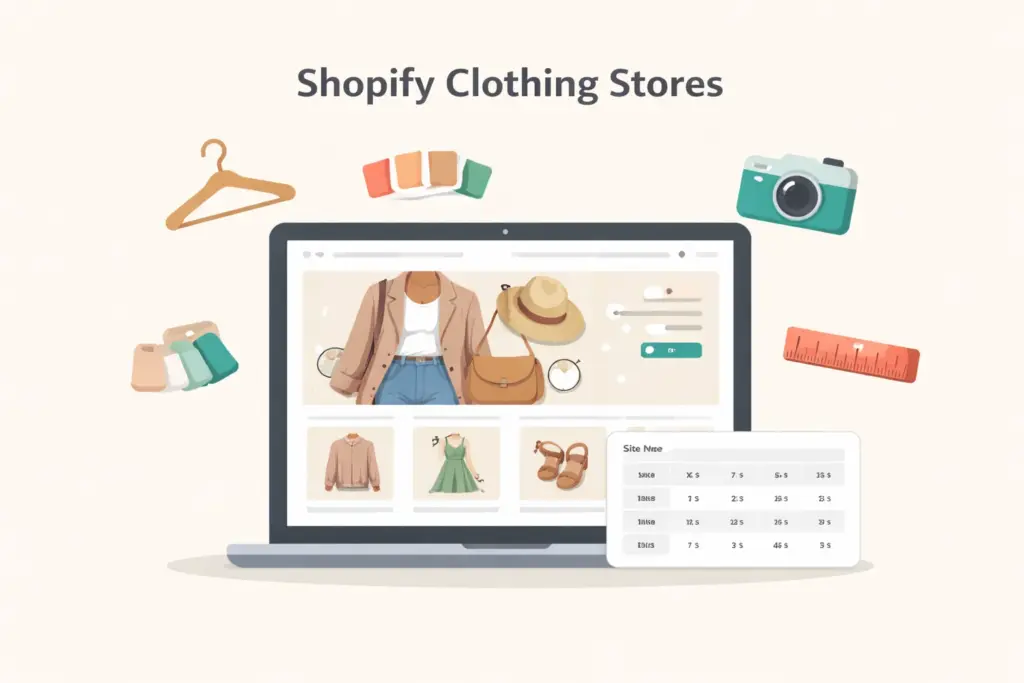
Shopify clothing stores are online fashion shops built on the Shopify platform, using its product variant system to manage size and color combinations, fashion-focused themes for visual storytelling, and integrations with clothing suppliers, print on demand services, and inventory management tools tailored to apparel-specific challenges like sizing, seasonal collections, and high return rates.
Fashion is one of the largest ecommerce categories globally, and Shopify powers thousands of shopify clothing brands from solo designers selling handmade pieces to venture-backed labels processing millions in annual revenue. The platform works for clothing because it handles the complexity that fashion demands: dozens of variants per product, lookbook-style galleries, and pre-order functionality for seasonal launches.
This guide covers the clothing-specific setup decisions, from theme selection to size chart configuration to fashion marketing tactics. If you need general Shopify setup help first, start with our how to sell on Shopify guide, then come back here for the fashion-specific layer.
Why Shopify Works for Clothing Brands
Several Shopify features solve problems that are unique to fashion ecommerce:
Variant management. A single product can have up to 100 variants across 3 options (Size, Color, Material). A dress available in 5 sizes and 4 colors creates 20 SKUs that Shopify tracks individually for inventory, pricing, and images. This variant depth is essential for clothing stores where every product comes in multiple combinations.
Visual themes built for fashion. Themes like Dawn, Prestige, Impact, and Sense from the Shopify Theme Store are designed with large image grids, lookbook pages, and editorial layouts that showcase clothing the way fashion buyers expect. Your shopify clothing website can look like a premium fashion magazine without custom design.
Fashion-specific apps. The Shopify App Store has apps for size recommendations (Kiwi Sizing), virtual try-on, fabric swatches, pre-orders for upcoming collections, and fashion-focused email marketing with product lookbook templates.
Multi-channel fashion selling. Sell on Instagram Shopping, Facebook Shop, TikTok Shop, and Google Shopping directly from your Shopify admin. Fashion discovery increasingly happens on social platforms, and Shopify’s native integrations let you sell where your audience browses.
Three Clothing Business Models on Shopify
1. Print on Demand Fashion (Zero Inventory)
Connect Printful or Printify to your Shopify store, upload your designs, and they produce and ship each item per order. You never hold inventory. Margins run 20-40% depending on the product and design complexity.
Best for: Graphic tees, streetwear, merch lines, and niche fashion where the design IS the brand. Startup cost: $0-200 for store setup. Production partner handles everything physical.
Limitations: Limited to the blank garments your POD partner offers. You can’t control fabric quality, fit, or construction details. Premium fashion customers notice the difference between POD basics and purpose-cut garments.
2. Dropshipping Fashion (Wholesale Suppliers)
Source clothing from wholesale dropshipping suppliers like Spocket (US/EU fashion brands), Trendsi (women’s apparel), or Modalyst (designer brands). Products ship from the supplier’s warehouse directly to your customer.
Best for: Curated boutiques that differentiate through selection and styling rather than product creation. Startup cost: $100-500. Margins: 25-50% depending on supplier pricing.
Limitations: You’re selling the same products other stores can access. Differentiation comes from branding, curation, and marketing rather than the products themselves. Our business model comparison covers when to graduate to private label.
3. Private Label / Own-Brand Fashion (Highest Margins)
Design your own clothing line and have it manufactured through domestic or overseas factories. You control everything: fabric, fit, construction, labels, packaging. Margins run 50-70% but require $2,000-20,000+ upfront for production runs.
Best for: Serious fashion brands building long-term equity. Private label is how the most successful shopify clothing brands operate because it creates a product nobody else can replicate.
Setting Up a Shopify Clothing Store
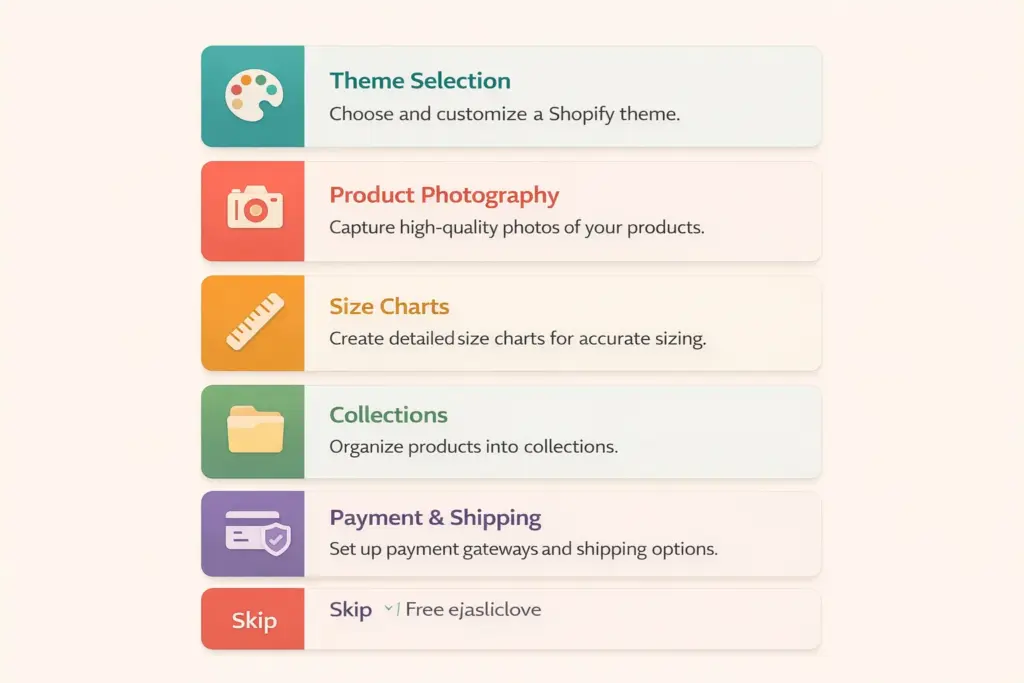
Theme Selection for Fashion
Your theme choice matters more for clothing than most other product categories because fashion is a visual purchase. Buyers need to see the garment from multiple angles, on different body types, and styled in context.
Best free themes for clothing: Dawn (clean, versatile, fast), Sense (wellness/lifestyle aesthetic), Craft (artisan/handmade feel). All support large image grids, product galleries, and mobile-optimized browsing.
Best paid themes for clothing: Prestige ($350, luxury fashion), Impact ($350, bold streetwear), Symmetry ($340, editorial lookbook layouts). Paid themes offer more layout options, built-in lookbook pages, and advanced filtering. Our web design guide covers choosing themes for different brand aesthetics.
Product Photography for Clothing
This is the single most important investment for a shopify clothing store. Fashion photography requires:
- On-model shots. Clothes on real bodies convert 3-5x better than flat-lay or mannequin shots. If professional models aren’t in budget, photograph on friends, family, or yourself.
- Multiple angles. Front, back, side, and detail shots for every product. Zoom on fabric texture, stitching, labels, and unique design elements.
- Lifestyle/context images. The outfit styled in a real setting (coffee shop, street, office) helps buyers picture themselves wearing it.
- Consistent aesthetic. Same lighting, same background style, same editing across all products. This consistency is what makes a store look like a brand rather than a thrift shop.
Size Charts and Fit Guides
Sizing issues are the number one cause of clothing returns. Fashion return rates run 20-30% versus 8-10% for general ecommerce. A clear size chart on every product page reduces returns, saves shipping costs, and improves customer satisfaction.
Install a size chart app (Kiwi Sizing is the most popular on Shopify, free tier available) that displays measurements for each size in your garments. Include both inches and centimeters. Add fit notes: “This runs small, size up for a relaxed fit” or “True to size, fitted cut.” These details prevent the “wrong size” returns that kill your margins.
Collections and Seasonal Organization
Fashion stores need more organizational structure than general stores. Set up collections for:
- Category: Tops, Bottoms, Dresses, Outerwear, Accessories
- Season/Collection: Spring 2026, Summer 2026, Fall Essentials
- Occasion: Workwear, Weekend, Evening, Activewear
- New Arrivals and Best Sellers: Auto-updating collections based on date added or sales volume
These collections create browse paths that fashion shoppers expect. Someone looking for “a dress for a wedding” navigates differently than someone browsing “new arrivals.” Both paths should lead to a purchase. Proper category page optimization ensures these collections rank in Google as well.
Marketing a Shopify Clothing Brand
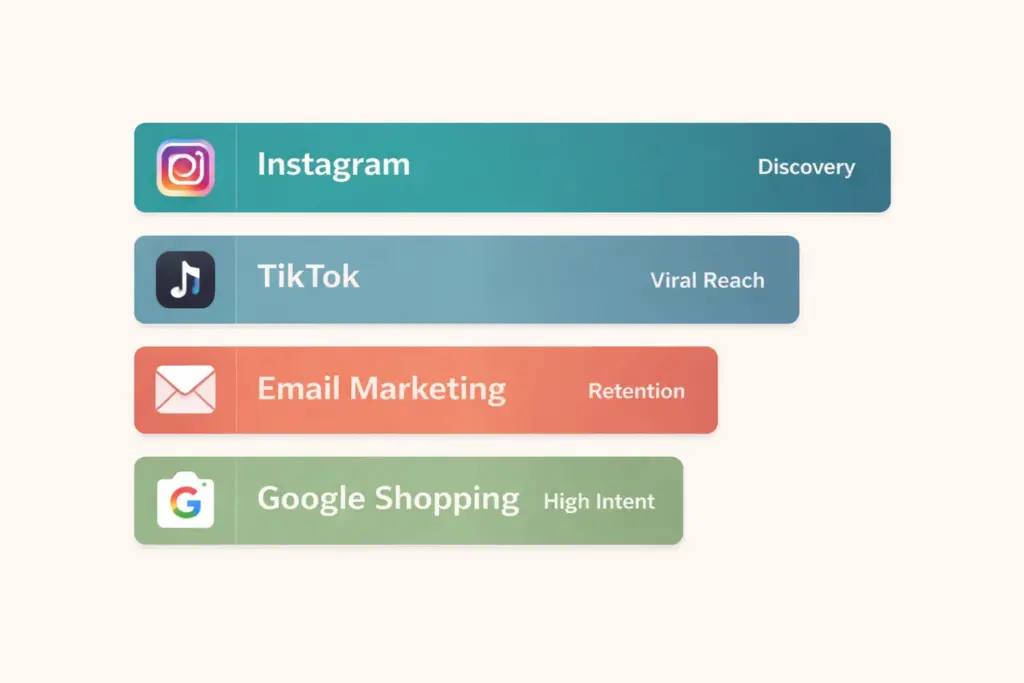
Instagram and TikTok: The Fashion Discovery Engines
Fashion is the most visual ecommerce category, which makes Instagram and TikTok the primary discovery channels. Organic content that works for shopify clothing brands:
- Outfit styling reels showing multiple ways to wear one piece (drives engagement and shows versatility)
- Behind-the-scenes content of design, fabric selection, and production (builds brand story)
- User-generated content reposting customers wearing your clothes (free social proof)
- Trend-riding creating content around fashion moments, seasonal changes, and style challenges
Connect your Shopify store to Instagram Shopping and TikTok Shop so viewers can buy directly from your content without leaving the platform. This reduces friction from discovery to purchase.
Email Marketing for Fashion
Fashion email marketing differs from general ecommerce because of seasonal cycles and lookbook-driven purchasing. Key email flows for clothing stores:
- New collection launch: Build anticipation with teasers, then send the full lookbook with direct product links
- Back in stock alerts: Popular sizes sell out fast. Automated alerts when items return convert at 10-15%
- Style guides: “5 Ways to Style the [Product Name]” emails showcase versatility and drive add-on purchases
- Size exchange follow-up: When a customer returns for sizing, automatically suggest the correct size with a direct link to reorder
Our retention guide covers the full email automation framework that works across all product types.
Fashion SEO on Shopify
Clothing stores have specific SEO opportunities that general guides miss:
Long-tail product keywords. “Black midi dress with pockets” is more searchable than “Dress #47.” Write product titles that include fabric, color, style, and key features.
Style guide content. “What to Wear to a Summer Wedding 2026” or “How to Build a Capsule Wardrobe” articles attract fashion searchers who become customers. Content marketing drives 30-50% of organic traffic for top-performing fashion stores.
Image SEO. Fashion relies on images. Descriptive alt text (“women’s organic cotton oversized crew neck tee in sage green”) and compressed file sizes help your product images rank in Google Image search, which drives meaningful traffic for visual products.
Essential Shopify Apps for Clothing Stores
| Function | App | Pricing | Why Clothing Stores Need It |
|---|---|---|---|
| Size charts | Kiwi Sizing | Free-$6.99/mo | Reduces sizing returns by 15-25% |
| Reviews with photos | Loox | $9.99/mo | Customer outfit photos are the best social proof for fashion |
| Back in stock | Back In Stock | Free-$19/mo | Popular sizes sell out; alerts recover lost sales |
| Lookbook pages | Lookbook (Jepto) | Free-$6.99/mo | Shoppable editorial layouts for collection launches |
| Loyalty program | Smile.io | Free-$49/mo | Fashion repeat purchase rates increase 20-30% with loyalty points |
| Email marketing | Klaviyo | Free-$20/mo | Segment by purchase category, size preferences, and style |
Keep your app stack lean. Six focused apps beat fifteen generic ones for both store speed and management simplicity. See the full tools guide for more recommendations across all store functions.
Common Mistakes With Shopify Clothing Stores
Poor product photography. This kills more fashion stores than any other factor. A $50 dress photographed poorly looks like a $10 dress. Invest in photography before ads, before apps, before anything else.
No size guide. Every product page needs measurements. “S/M/L” without corresponding measurements guarantees a 25%+ return rate. Returns eat your margins and your time.
Too many products at launch. Start with 15-25 products in a focused collection. A curated selection looks intentional. 200 random items look like a flea market. Add products as your brand identity clarifies.
Ignoring mobile shopping. Over 70% of fashion browsing happens on phones. If your product images don’t load fast, your size selector is hard to tap, or your checkout requires pinch-to-zoom, you’re losing the majority of potential sales.
Copying competitor pricing instead of calculating margins. Knowing what competitors charge tells you the market rate. Knowing your COGS, shipping, returns, ad spend, and platform fees tells you whether you can profitably sell at that rate. Our pricing strategy guide covers the full margin calculation.
Frequently Asked Questions
Use Shopify’s $1/month trial for 3 months and connect a print on demand app like Printful (free, charges per order). Upload your designs, and Printful produces and ships each item only when a customer orders. Total startup cost is $3 for three months of a live store. Drive traffic with organic TikTok and Instagram content.
Dawn (free) is the best starting point for most shopify clothing stores. For premium fashion brands, Prestige ($350) offers luxury editorial layouts. Impact ($350) works for streetwear and bold aesthetics. Choose based on your brand’s visual identity: minimal and clean versus bold and editorial versus artisan and organic.
Successful shopify clothing brands reduce returns to 15-20% (versus 25-30% industry average) by installing detailed size charts with real garment measurements, showing clothes on multiple body types in photos, including fit notes in product descriptions, and offering free exchanges instead of refunds to keep the revenue while solving the sizing issue.
Yes. Spocket, Trendsi, and Modalyst integrate with Shopify and connect you to fashion suppliers who ship directly to your customers. You curate the selection and brand the store, suppliers handle inventory and fulfillment. Margins run 25-50%. The trade-off is less control over product quality and shipping speed compared to holding your own inventory.
Instagram and TikTok drive the most fashion discovery through styling reels, outfit content, and user-generated photos. Email marketing with Klaviyo handles retention through new collection launches, back-in-stock alerts, and style guides. Google Shopping captures high-intent searches. Start with organic social content, add email on day one, and test paid ads after your first 50 sales.
Launch with 15-25 products in a focused collection. This looks curated and intentional rather than scattered. Include a mix of statement pieces (higher margin, lower volume) and basics (lower margin, higher volume). Expand based on what sells. Most successful shopify clothing brands started narrow and expanded into adjacent categories after proving demand.
Related Reads
- How to Sell on Shopify
- Best Shopify Apps Guide
- Best Ecommerce Platform Comparison
- Print on Demand Guide
- Things to Make and Sell
- Ecommerce Business Ideas by Budget
Enjoying this? Get more like it every week.
One email per week with ecommerce strategies, tool picks, and seller insights. No spam.